9,000-Year-Old Hunter-Gatherer Workshop Found in Senegal

Archaeologists have uncovered rare traces of some of West Africa’s final hunter-gatherer communities, offering new insight into how these groups lived and sustained themselves around 9,000 years ago. The discovery comes from the Ravin Blanc X in the Falémé Valley of Senegal. The site provides valuable evidence of stone-tool production during the early Holocene, a time that followed nearly 10,000 years of severe drought across the region.
Unlike prehistoric regions in Europe, Asia, and parts of southern and eastern Africa, ancient West Africa has remained difficult to study. Harsh climatic and geological conditions have destroyed many layered archaeological deposits, which normally help researchers reconstruct settlement patterns and long-term cultural change.
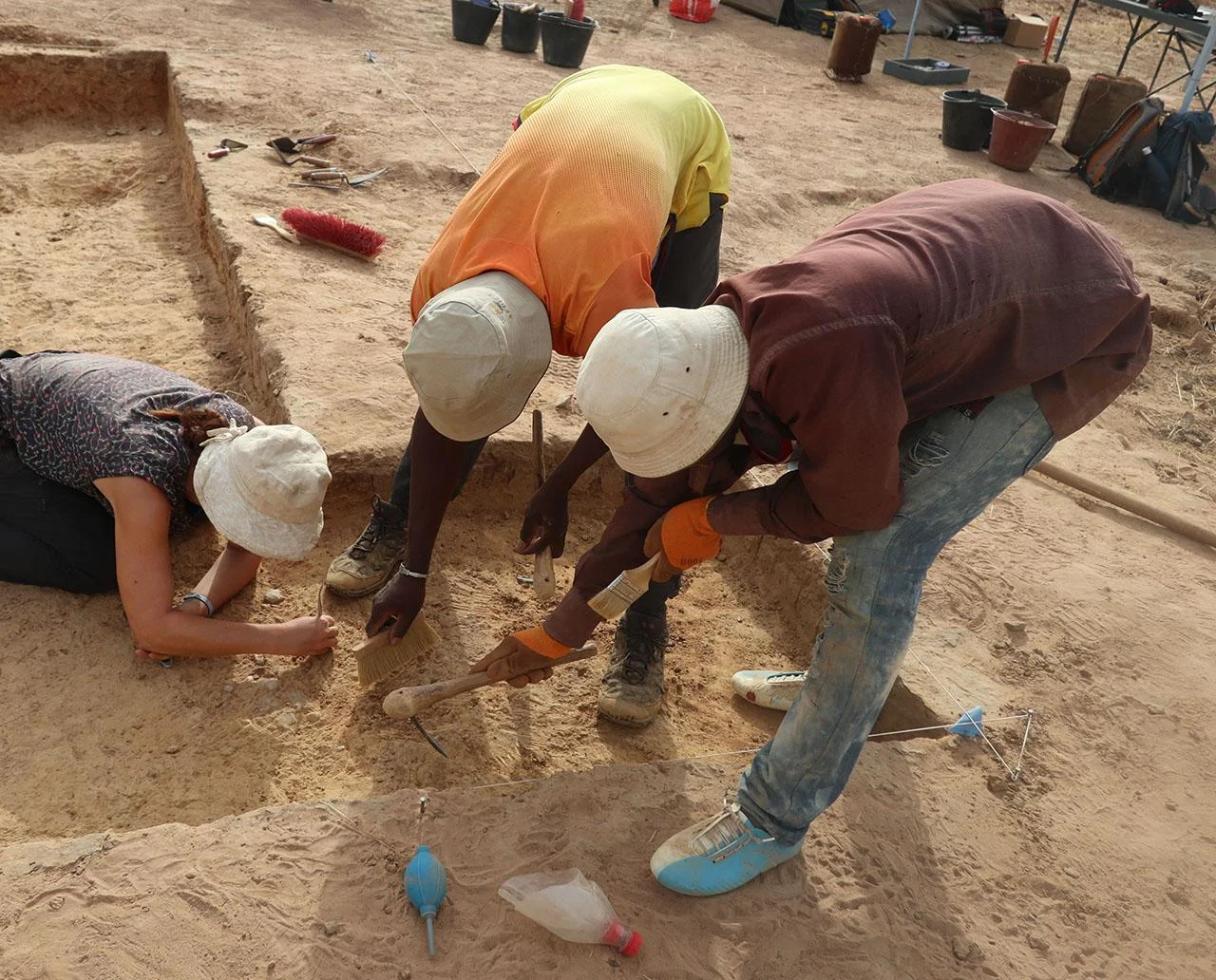
The Ravin Blanc X site, first identified in 2017 by a team led by researchers from the University of Geneva, is therefore especially significant. Although the excavation area measures only about 25 square meters, its deep sediment layers—preserved beneath a later Neolithic deposit—offer one of the clearest records yet of life in West Africa during the early Holocene.
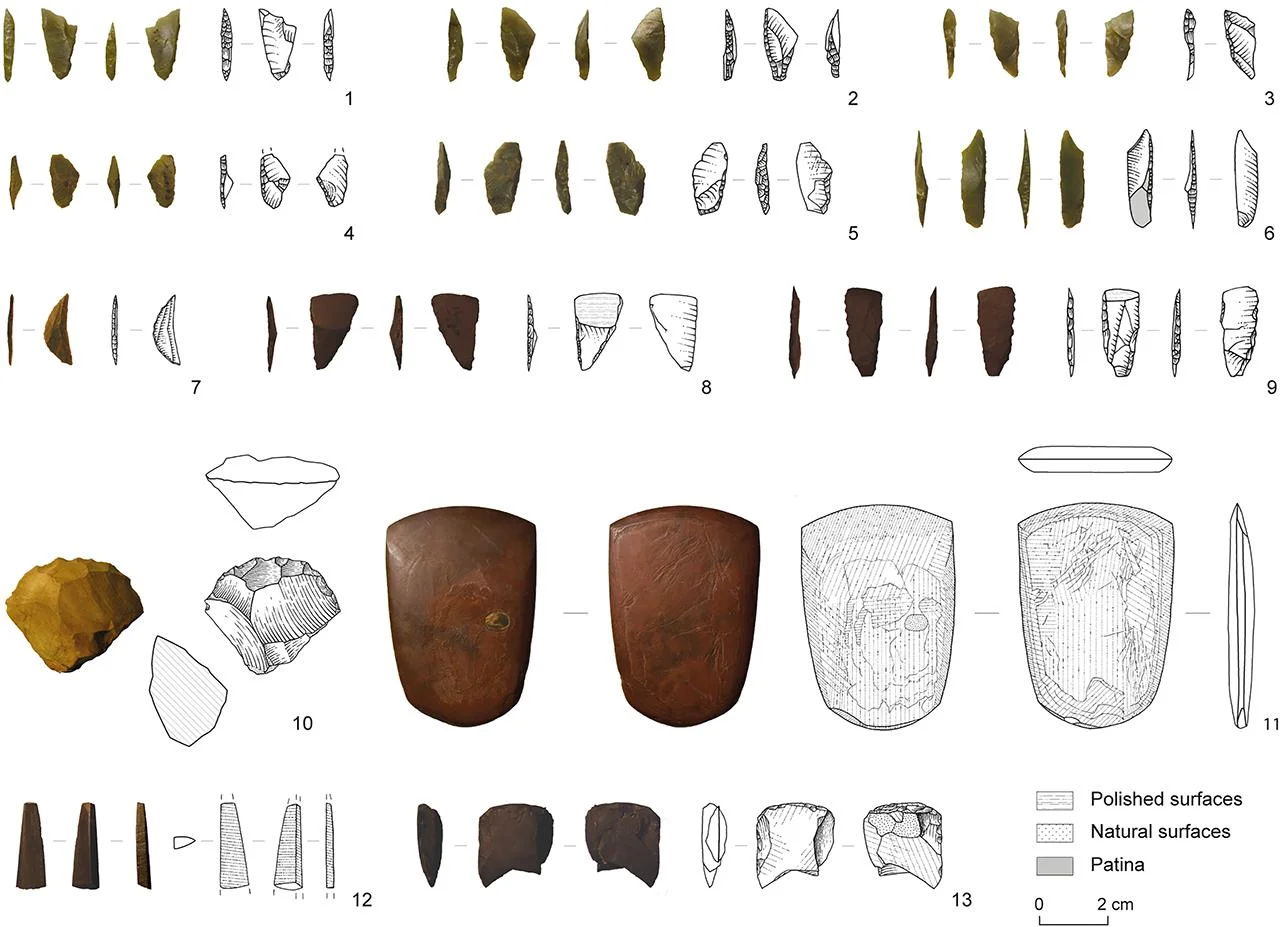
Excavations conducted by scientists from the University of Geneva together with the Institut Fondamental d’Afrique Noire uncovered the remains of a quartz knapping workshop and a hearth. While no completed tools were found, archaeologists recovered large amounts of production debris, including flakes and discarded stone cores left behind during tool manufacture. By refitting these fragments, specialists were able to reconstruct the methods used to select high-quality quartz and shape it into tools, revealing a sophisticated level of craftsmanship.
The analysis shows that these hunter-gatherers produced small stone implements known as microliths, likely used as components of hunting weapons. The tools display a remarkable level of standardization—similar to those found at other savannah sites in West Africa—suggesting that widely separated groups shared common technological traditions. By contrast, sites farther south in tropical forest regions reveal less uniform tool-making strategies and more opportunistic production methods, reflecting cultural adaptations shaped by different environments.
The Ravin Blanc X discovery also highlights the importance of interdisciplinary research in reconstructing ancient lifeways. Charcoal recovered from the hearth was examined to identify the types of wood burned, while geomorphologists, sedimentologists, and paleoenvironmental specialists analyzed soils and plant remains to understand the surrounding landscape. Together, these studies help reveal both the technological abilities of these communities and the ecological conditions that influenced their daily lives.
The findings capture a pivotal moment in human history when traditional hunter-gatherer lifeways were gradually being replaced by new practices such as pottery production, animal herding, and agriculture. In West Africa, however, this transition appears to have followed a unique path, leaving behind only scattered traces of the people who once inhabited the region.
The study describing the discovery was published in the journal PLOS One and involved collaboration between research institutions in Switzerland, Senegal, France, and Germany.