This Incredible Dinosaur Sported The Spikiest Armor The World Has Ever Seen
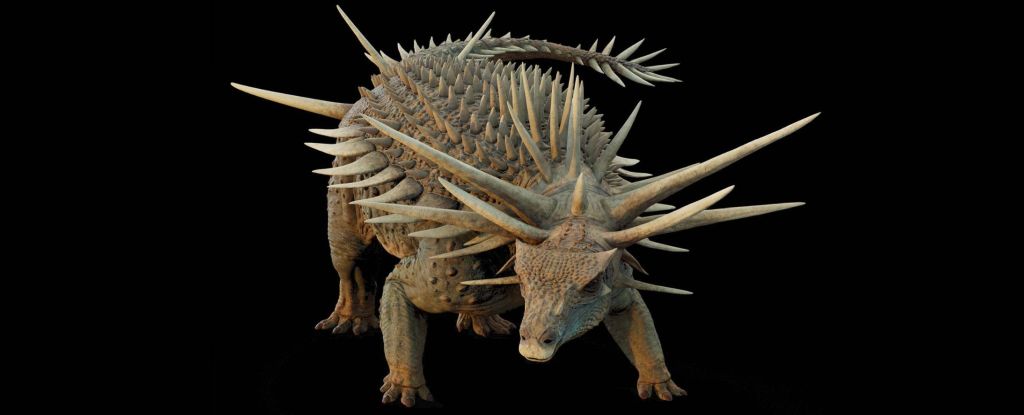
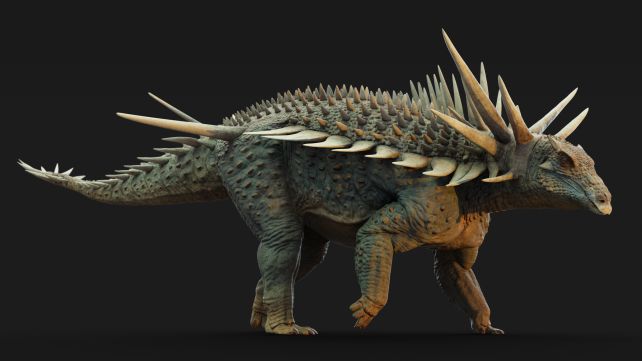
One of the earliest known armored dinosaurs possessed some of the most extreme body ornaments ever recorded in a vertebrate. The species, known as Spicomellus afer, lived more than 165 million years ago during the Middle Jurassic and displayed an unusual array of spikes unlike those seen in any other dinosaur.
Unlike later armored dinosaurs, this species did not just have spikes along its body and tail. Instead, it carried dramatic rings of large spikes around its neck and hips, along with numerous other unusual bony structures.
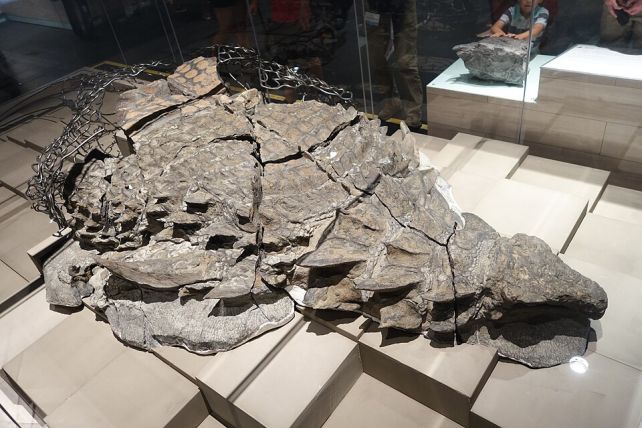
According to paleontologist Susannah Maidment from the Natural History Museum, the fossils revealed an astonishing diversity of shapes. Some spikes were fused together into complex clusters, while others were attached directly to ribs. Researchers also identified tear-drop shaped plates and a collar-like bone bearing spikes that may have reached a meter in length.
Ankylosaurs are among the most recognizable dinosaurs, known for their heavy armor made of thick bony plates, spikes, and knobs that protected them from predators. Many species also had powerful clubbed tails used for defense. One of the most famous armored dinosaurs belongs to the group Ankylosaurus, which flourished later during the Cretaceous Period.
However, Spicomellus afer represents a much earlier stage in the evolution of armored dinosaurs. The species was first described in 2021 based on a single partial rib discovered in Morocco—making it the first ankylosaur known from the African continent.
In 2023, a local farmer reported finding several unusual bones that had been exposed by flooding. Researchers later examined the site and began excavations, uncovering additional fossils that revealed the dinosaur’s extraordinary anatomy.
Paleontologist Richard Butler from the University of Birmingham said the fossils were immediately striking. As more rock was removed, the skeleton revealed increasingly bizarre features.
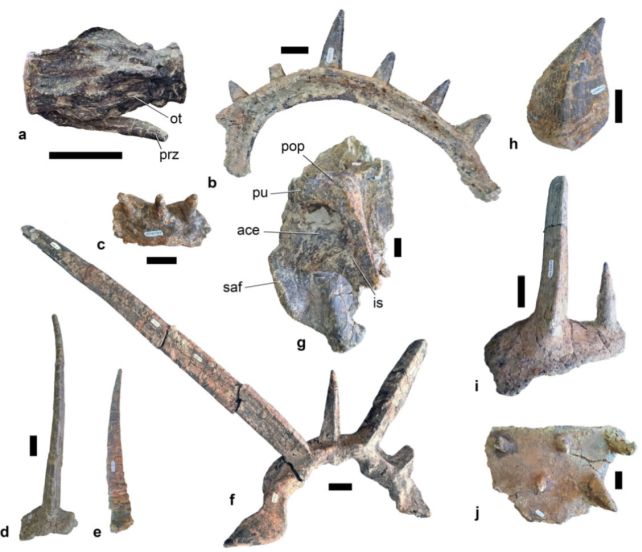
The dinosaur’s ribs each carried three or four large spikes projecting outward, a structure never previously seen in any known animal. In addition, the pelvis was covered by a shield of armor bearing more spikes, while the neck was surrounded by a bony collar lined with long spines that may have exceeded a meter in length.
Although ankylosaur armor is generally interpreted as a defensive adaptation, the extreme features of this species may have served another purpose. Researchers suggest that such large and elaborate spikes may have been used for display rather than protection.
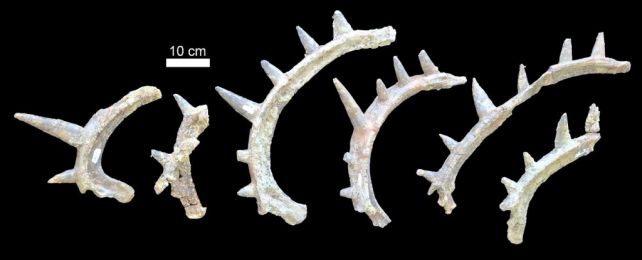
Modern animals often evolve dramatic structures—such as deer antlers or peacock tails—to attract mates or signal dominance. Scientists believe the striking armor of Spicomellus may have functioned in a similar way, possibly playing a role in courtship displays or competition between individuals.
The discovery is particularly surprising because such elaborate features appear in one of the earliest known members of the ankylosaur lineage. Later armored dinosaurs often developed more practical armor suited for defense against powerful predators such as Tyrannosaurus rex.
Researchers also note that the unusual anatomy of Spicomellus may represent just one branch of a more diverse group of early armored dinosaurs that has yet to be fully discovered.
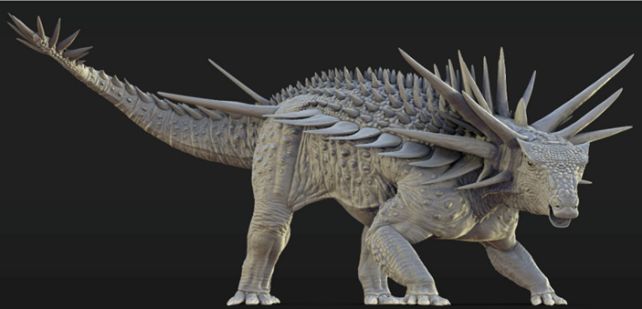
For now, the exact location of the fossils is being kept confidential due to concerns about fossil poaching in the region. Scientists hope that future excavations in the Middle Atlas Mountains will uncover additional remains—including, ideally, a skull—that could reveal even more about this remarkable dinosaur.
The study describing the discovery was published in the journal Nature.