Forget 3I/ATLAS — The Real “Planet Killer” May Be Comet Swift-Tuttle
In 2025, much of the public’s attention has been focused on the mysterious interstellar visitor 3I/ATLAS. Social media and news outlets have been fascinated by this rare object arriving from outside our solar system.
But while people are watching this unusual visitor, astronomers know that another cosmic object poses a far greater long-term threat—one that has been known for more than a century.
That object is Comet Swift–Tuttle, one of the largest and potentially most dangerous comets that regularly passes through the inner solar system.
A Giant Among Comets
Unlike many comets that measure only a few kilometers across, Comet Swift–Tuttle is enormous.
Scientists estimate its diameter at roughly 26 kilometers (about 16 miles). That makes it dramatically larger than most comets commonly observed near Earth.
Its size alone makes it significant, but its speed is equally impressive. When moving through the inner solar system, the comet travels at approximately 60 kilometers per second, or more than 130,000 miles per hour.
An impact from an object of that size and speed would release an extraordinary amount of energy—far greater than the asteroid responsible for the Cretaceous–Paleogene extinction event, which wiped out the dinosaurs after the Chicxulub crater impact.
Fortunately, scientists emphasize that Swift-Tuttle is not currently on a collision course with Earth.
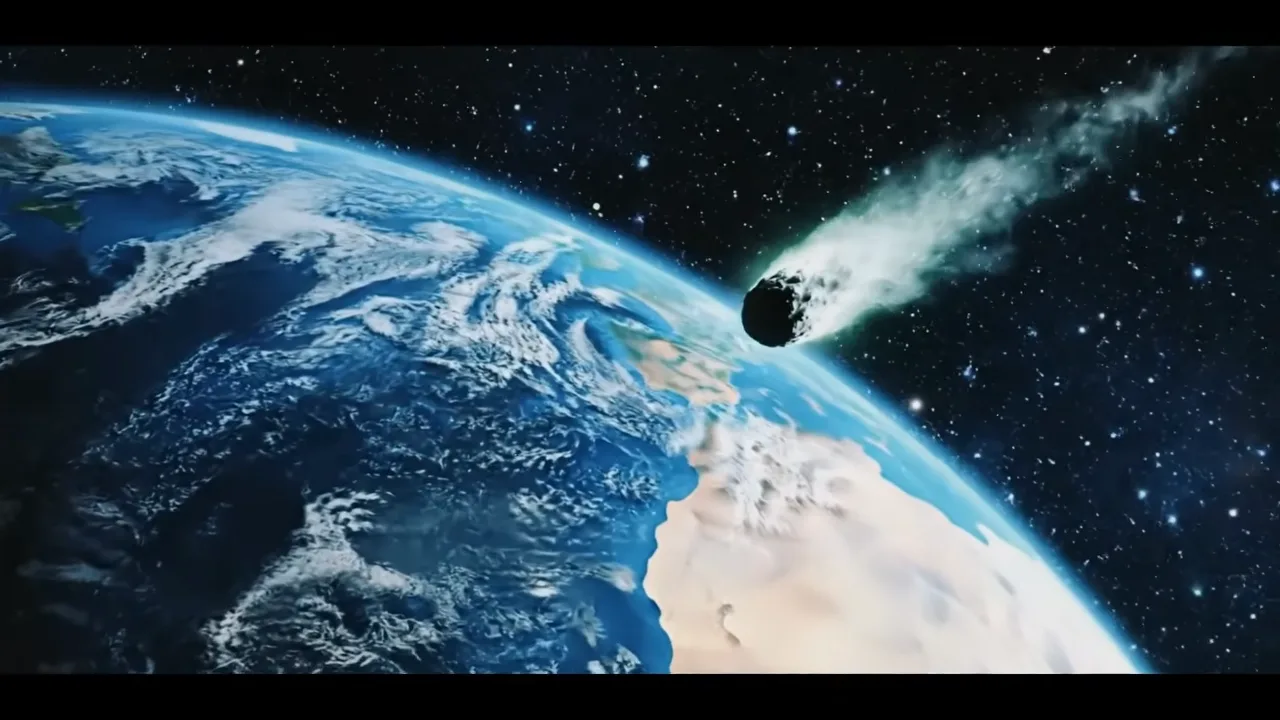
A Predictable but Powerful Orbit
The comet follows a long elliptical orbit around the Sun that takes roughly 133 years to complete.
It was first discovered independently by astronomers Lewis Swift and Horace Parnell Tuttle in 1862.
Its most recent return occurred in 1992, when it passed safely through the inner solar system. The next expected return will occur in 2126, when astronomers will once again observe the comet closely.
Because the comet’s orbit crosses Earth’s orbital path, scientists monitor it carefully. However, detailed calculations show no significant impact risk for at least the next several thousand years.
Why It Still Matters
Even though the comet poses no immediate danger, objects like Comet Swift–Tuttle remain extremely important in planetary defense research.
Large comets are harder to detect far from the Sun because they often remain dark and inactive until solar heat causes their icy surfaces to vaporize. That means some could potentially be discovered with relatively short warning times.
For this reason, scientists continue developing better detection systems and defense strategies through organizations such as NASA and international planetary defense programs.
The Comet Behind a Famous Meteor Shower
Interestingly, Swift-Tuttle is also responsible for one of the most beautiful astronomical events visible from Earth.
Every August, debris left behind by the comet creates the Perseids meteor shower. When Earth passes through this stream of dust and ice particles, the fragments burn up in our atmosphere, producing bright streaks of light across the sky.
What appears as a peaceful meteor shower is actually a reminder of the enormous comet that produced it.
A Reminder of Cosmic Risks
While current calculations show that Comet Swift–Tuttle poses no immediate threat, it highlights the importance of monitoring large objects that cross Earth’s orbit.
Space agencies worldwide are improving detection systems, developing asteroid-deflection technologies, and building international cooperation to protect our planet from potential future impacts.
Events like the Double Asteroid Redirection Test have already demonstrated that humanity may one day be capable of altering the path of dangerous objects.
Looking Toward the Future
For now, Swift-Tuttle remains a distant traveler that will return to the inner solar system in the next century.
But its immense size and powerful orbit remind scientists—and the public—that Earth exists in a dynamic cosmic environment filled with objects moving across the vastness of space.
Understanding and tracking these objects will be essential for the future of planetary defense and the long-term safety of our world.