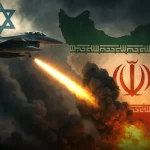
Iran Threatens Regional Energy Infrastructure as Middle East Conflict Disrupts Global Economy
Tensions in the Middle East escalated sharply this week as Iran issued warnings about potential attacks on regional energy infrastructure while global oil markets reacted to growing instability. Iranian officials and military leaders have signaled that energy facilities across the region could become targets if Iranian oil sites are struck, raising fears of widespread economic disruption.
At the center of the crisis is the strategic Strait of Hormuz, one of the world’s most important shipping routes for oil and natural gas. A statement attributed to Iran’s newly appointed supreme leader called for the strait to remain closed as a “tool of pressure,” a move that analysts warn could send energy prices soaring and disrupt global trade.
The rising tensions come amid expanding military activity across the region, including new airstrikes in Lebanon and a U.S. military aircraft incident in Iraq.
Iran Issues Warning Over Energy Infrastructure
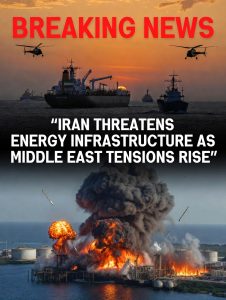
Iran’s powerful Islamic Revolutionary Guard Corps (IRGC) delivered one of the most serious threats yet in the unfolding crisis. The group warned that if Iranian energy facilities are attacked, it could retaliate by targeting oil and gas infrastructure across the region.
Energy infrastructure throughout the Middle East—including pipelines, refineries, and export terminals—plays a critical role in supplying global markets. Any large-scale disruption could have immediate consequences for oil prices and international supply chains.
The warning has intensified concerns among governments and financial markets that the conflict could expand beyond isolated incidents and begin to directly affect global energy production.
Message Attributed to New Iranian Leader
Iranian state media also broadcast what it described as the first public message from the country’s new supreme leader, Mojtaba Khamenei. According to the statement, the closure of the Strait of Hormuz could be used as a strategic measure to apply pressure on Iran’s adversaries.
However, the new leader has not appeared publicly since assuming the role, which has fueled speculation about internal developments within Iran’s leadership.
The strait, located between Iran and Oman, is widely considered one of the most critical waterways in the global energy system. Approximately one-fifth of the world’s oil supply passes through the narrow channel each day. If shipping traffic were halted or restricted, global energy markets could face immediate and severe consequences.
Energy analysts warn that even the threat of closure could trigger sharp increases in oil prices and cause instability in financial markets.
Oil Markets React to Rising Risk
Global oil markets have already begun to show signs of volatility as the situation develops. Traders and governments are closely monitoring the possibility that shipping through the Strait of Hormuz could be disrupted.
The Middle East is responsible for a large share of the world’s oil exports. Countries including Saudi Arabia, Iraq, Kuwait, and the United Arab Emirates rely on the strait as a key route for transporting crude oil to global markets.
Any conflict that threatens tanker traffic in the region could lead to supply shortages and rising fuel prices worldwide. Economists warn that such disruptions could affect transportation costs, inflation levels, and economic growth across multiple continents.
U.S. Military Aircraft Incident in Iraq
Adding to the uncertainty, the United States military reported that an American refueling aircraft crashed in western Iraq. According to the United States Department of Defense, the aircraft was not shot down and was not struck by hostile or friendly fire.
Officials did not immediately release details about the cause of the crash or whether crew members were injured or killed.
The incident occurred as U.S. forces remain on heightened alert across the region amid the escalating tensions.
Military analysts say the presence of American forces throughout Iraq, the Persian Gulf, and surrounding areas reflects Washington’s efforts to monitor the crisis and deter further escalation.
Israeli Operations Expand in Lebanon
Meanwhile, the conflict has also intensified in Lebanon. Israeli forces launched fresh strikes targeting suburbs of Beirut after Israel’s defense minister instructed the military to prepare for expanding operations against Hezbollah, the Iran-backed paramilitary organization based in Lebanon.
The strikes mark another escalation in the long-running confrontation between Israel and Hezbollah. Israeli officials argue that the group poses a significant security threat due to its large arsenal of rockets and close ties to Iran.
Regional observers warn that expanded fighting in Lebanon could further complicate an already volatile situation across the Middle East.
Broader Regional Impact
The overlapping crises—ranging from Iranian threats to energy infrastructure to military operations in Lebanon—have created a complex geopolitical environment with global implications.
The Middle East remains one of the most strategically important regions in the world due to its energy resources and key trade routes. Instability there often has immediate ripple effects on global markets, diplomatic relations, and security policy.
Governments across Europe, Asia, and North America are watching the situation closely, particularly because of the potential economic consequences.
If oil shipments were significantly disrupted, industries dependent on fuel—such as aviation, shipping, and manufacturing—could face rising costs and logistical challenges.
Concerns About Escalation
Diplomatic experts warn that the current situation carries a high risk of escalation. If energy infrastructure were attacked or if the Strait of Hormuz were blocked, it could provoke military responses from multiple countries.
Such developments could quickly transform the crisis into a broader regional conflict involving several major powers.
At the same time, analysts emphasize that many governments still hope to prevent the situation from spiraling further. Diplomatic channels remain active, though public statements from various actors have grown increasingly confrontational.
Uncertain Outlook
As the conflict continues to unfold, the global economy faces significant uncertainty. Energy markets, financial systems, and international trade routes could all be affected depending on how events develop in the coming weeks.
For now, military activity, political messaging, and economic reactions are closely intertwined in a rapidly evolving situation.
While no large-scale disruption to oil shipments has occurred yet, the possibility alone has been enough to alarm markets and policymakers.
With tensions rising across several fronts—from Iran’s energy warnings to military operations in Lebanon—the coming days may prove critical in determining whether the region moves toward further confrontation or renewed efforts at de-escalation.