Israel Expands Strikes on Beirut as Middle East Conflict Intensifies
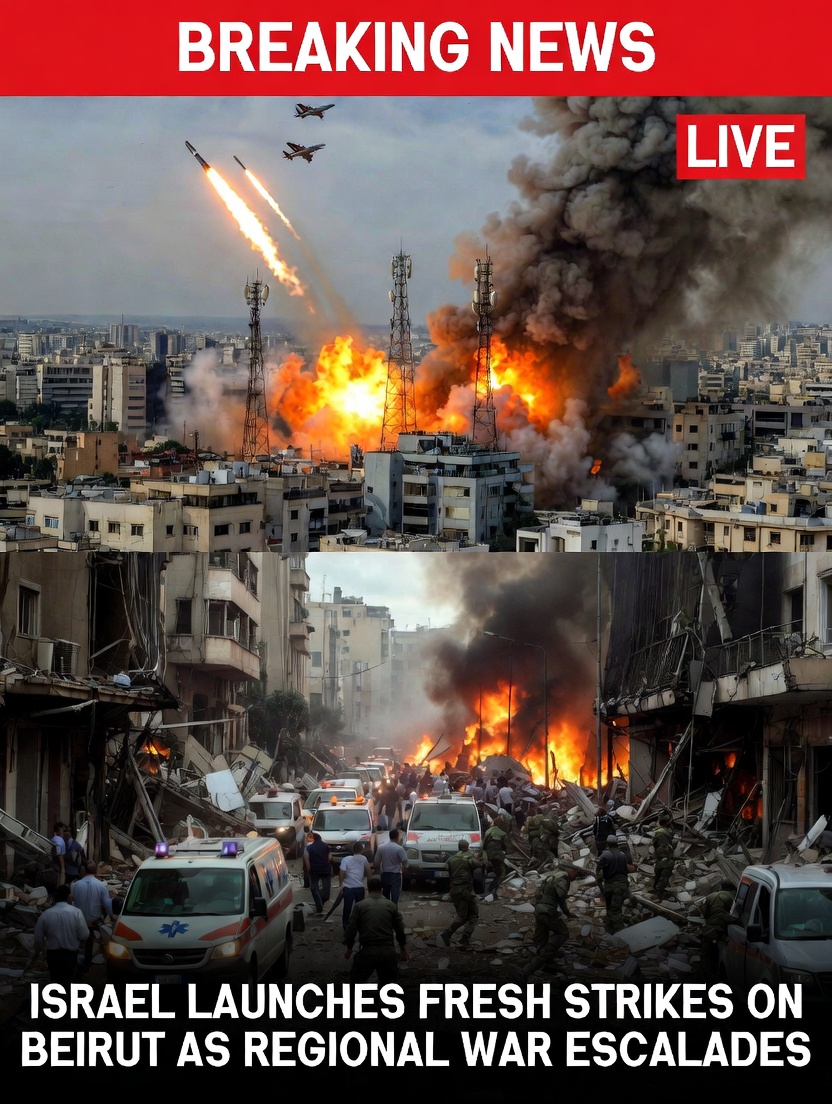
The conflict in the Middle East escalated further this week as Israel launched new airstrikes on the suburbs of Beirut, targeting positions linked to the Iran-backed militant group Hezbollah. The latest attacks come amid a broader regional confrontation involving Iran, Israel, and international forces, raising concerns about a prolonged and widening conflict.
Military activity across several countries, including Lebanon, Iraq, and Israel, has increased sharply in recent days. At the same time, tensions between Iran and Western powers continue to grow, with both sides issuing warnings and threats that could further destabilize the region.
Israel Expands Operations Against Hezbollah
Israeli officials announced that the country’s military operations are expanding as part of efforts to weaken Hezbollah, which Israel considers one of its most dangerous adversaries.
New airstrikes targeted suburbs of Beirut, areas where Hezbollah maintains strong influence and infrastructure. According to Israeli officials, the strikes were aimed at military facilities and weapons storage sites used by the group.
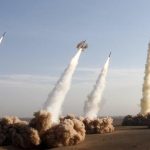
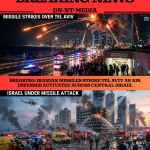
Hezbollah responded by firing rockets into Israel overnight from Wednesday into Thursday. Several rockets struck areas in central Israel, damaging homes and raising alarms across nearby communities. Although emergency services responded quickly, officials have not yet provided a full assessment of the damage or potential injuries.
The exchange of attacks highlights the growing intensity of hostilities between Israel and Hezbollah, which have long been adversaries in the region.
Casualties Reported Across the Region
The broader conflict has resulted in casualties in several countries, illustrating how the violence has spread beyond a single battlefield.
In northern Iraq, six French soldiers were wounded in a drone attack targeting a base that hosts Kurdish forces and troops from the international coalition. The incident occurred near Erbil, according to the regional governor.
Meanwhile, Lebanese officials reported that two academics were killed when an Israeli airstrike struck a university south of Beirut. The identities of the victims were not immediately released.
In Iraq, the Popular Mobilization Forces (PMF), a state-affiliated coalition of militias that includes several Iran-backed factions, said that U.S. airstrikes targeting its headquarters in multiple provinces had killed at least 27 fighters and wounded dozens more since the beginning of March.
These incidents demonstrate the increasingly complex nature of the conflict, with multiple armed groups and foreign forces involved across several countries.
Iran Issues New Warnings
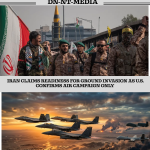
Tensions escalated further after Iran’s Islamic Revolutionary Guard Corps issued a stark warning about possible retaliation.
The powerful military organization stated that if Iranian energy infrastructure or ports were attacked, it would respond by setting the region’s oil and gas facilities “on fire.” Such a threat has alarmed energy markets and governments worldwide because of the potential impact on global fuel supplies.
The Middle East remains the world’s most important oil-producing region, and any widespread disruption to energy infrastructure could lead to sharp increases in oil prices and economic instability.
Netanyahu Issues Warning to Iran’s New Leader
Amid the escalating tensions, Benjamin Netanyahu issued a warning directed at Iran’s newly appointed supreme leader, Mojtaba Khamenei.
Netanyahu stated that Khamenei “cannot show his face in public,” suggesting that Iran’s leadership may face direct consequences if hostilities continue to escalate.
The statement came shortly after Iranian media broadcast what it described as the first public message from Khamenei since his appointment as supreme leader. However, he has not appeared publicly, and details about his current activities remain unclear.
The exchange of public warnings between Israeli and Iranian leaders reflects the increasingly confrontational tone that has characterized the current crisis.
Debate Over the Strait of Hormuz
Another point of tension involves the Strait of Hormuz, one of the world’s most important maritime routes for oil transportation.
Earlier reports suggested that Iran might close the strategic waterway as a form of pressure on its adversaries. However, Iran’s ambassador to the United Nations later stated that the country would not close the strait.
The conflicting messages have created uncertainty in global energy markets. Nearly one-fifth of the world’s oil supply passes through the Strait of Hormuz, meaning any disruption could have immediate consequences for international trade and fuel prices.
U.S. Military Aircraft Incident in Iraq
Adding to the region’s instability, the Boeing KC-135 Stratotanker, a U.S. Air Force refueling aircraft, crashed in western Iraq.
According to the United States Department of Defense, the aircraft was not brought down by hostile fire or friendly fire. However, officials have not yet disclosed the cause of the crash or whether any service members were injured or killed.
The incident occurred as U.S. forces remain deployed across the Middle East, supporting coalition operations and monitoring the escalating conflict.
Experts Warn of Prolonged Conflict
Foreign policy experts say the crisis could evolve into a long and costly confrontation. Richard Haass, president emeritus of the Council on Foreign Relations, suggested that Iran believes it may be able to endure the pressures of a long war better than the United States and its allies.
According to Haass, Iranian leaders may calculate that Western countries will eventually face domestic pressure to reduce their involvement in the conflict.
This strategic calculation could influence how long the conflict continues and how aggressively each side pursues its objectives.
Growing Risk of Regional War
The overlapping conflicts involving Israel, Hezbollah, Iranian-backed militias, and international forces have created a volatile environment across the Middle East.
Military analysts warn that the combination of airstrikes, rocket attacks, and political threats increases the risk that the fighting could expand into a broader regional war.
At the same time, global markets and governments are closely watching developments because of the potential economic consequences, particularly related to energy supplies.
As the situation continues to evolve, diplomatic efforts to prevent further escalation remain critical. However, with military activity increasing on multiple fronts, the path toward de-escalation remains uncertain.