Saab jas39 Gripen Assembly
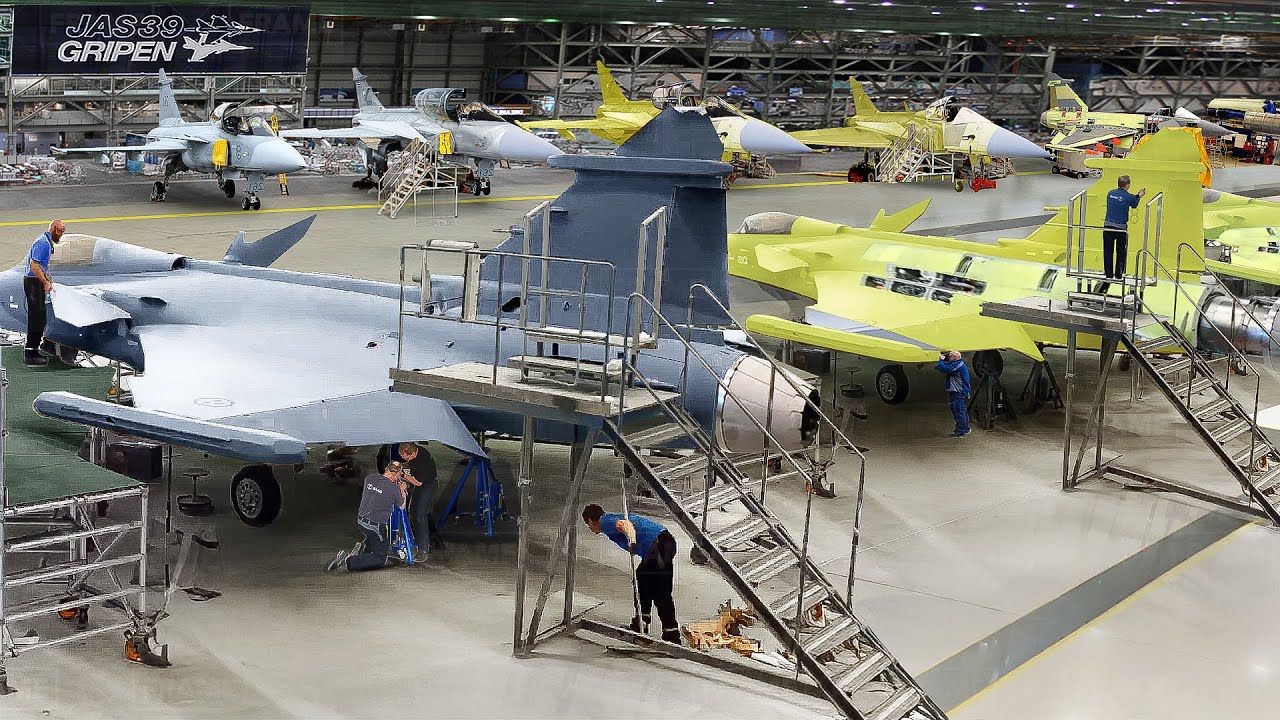
The assembly of the Saab JAS 39 Gripen reflects Sweden’s focus on efficiency, innovation, and high-performance design. Built to be agile, cost-effective, and easy to maintain, the Gripen is engineered with a modern, modular approach that simplifies production and upgrades.
The process begins with the construction of the airframe, where lightweight materials such as advanced composites and aluminum alloys are used to ensure both strength and reduced weight. The fuselage, wings, and canards are manufactured separately before being carefully joined together with precision alignment.
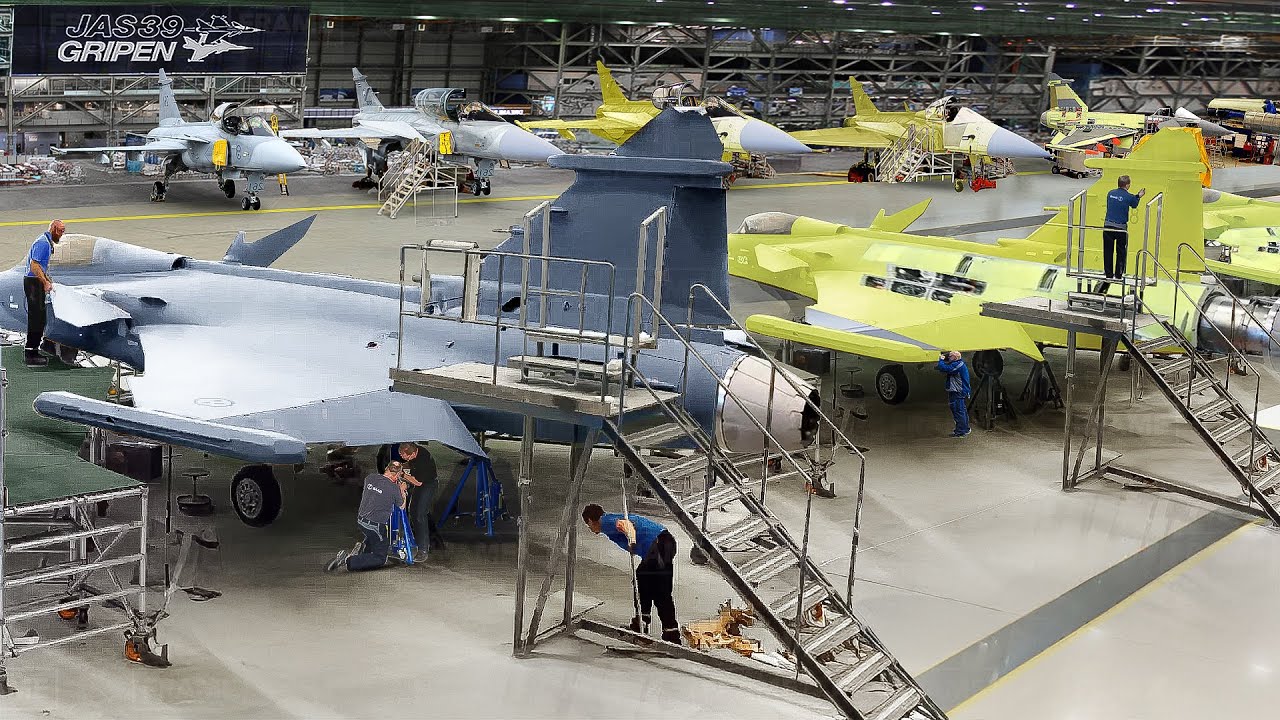
Next comes the integration of core systems. Engineers install avionics, flight control systems, wiring, and hydraulic components. The Gripen is known for its advanced digital architecture, allowing different systems to communicate seamlessly and making future upgrades easier to implement.
The engine, typically a Volvo RM12 (derived from the GE F404), is then installed. This step requires exact calibration to ensure optimal performance, fuel efficiency, and reliability during high-speed operations.
Once the major components are in place, the aircraft undergoes surface finishing and stealth-related treatments, including radar-reducing design elements. While not a stealth aircraft like fifth-generation fighters, the Gripen incorporates features to reduce its radar signature.
The final stages include rigorous ground testing and system checks. Every subsystem is evaluated—from avionics to engine performance—to ensure full operational readiness. After passing these tests, the aircraft proceeds to flight trials, where pilots assess handling, stability, and combat capability.
Overall, the assembly of the Saab JAS 39 Gripen emphasizes flexibility, speed of production, and long-term sustainability—making it one of the most practical and adaptable fighter jets in modern service.