Robot Minesweepers & Drone Boats Deployed — UK Moves to Clear Iran’s Sea Mines in Hormuz

The United Kingdom is preparing to deploy advanced robotic minesweepers and drone boats as part of a multinational effort to secure and reopen the Strait of Hormuz—one of the world’s most vital oil transit routes. The move follows mounting reports that Iran has laid naval mines across the narrow waterway, escalating tensions and disrupting global energy flows.
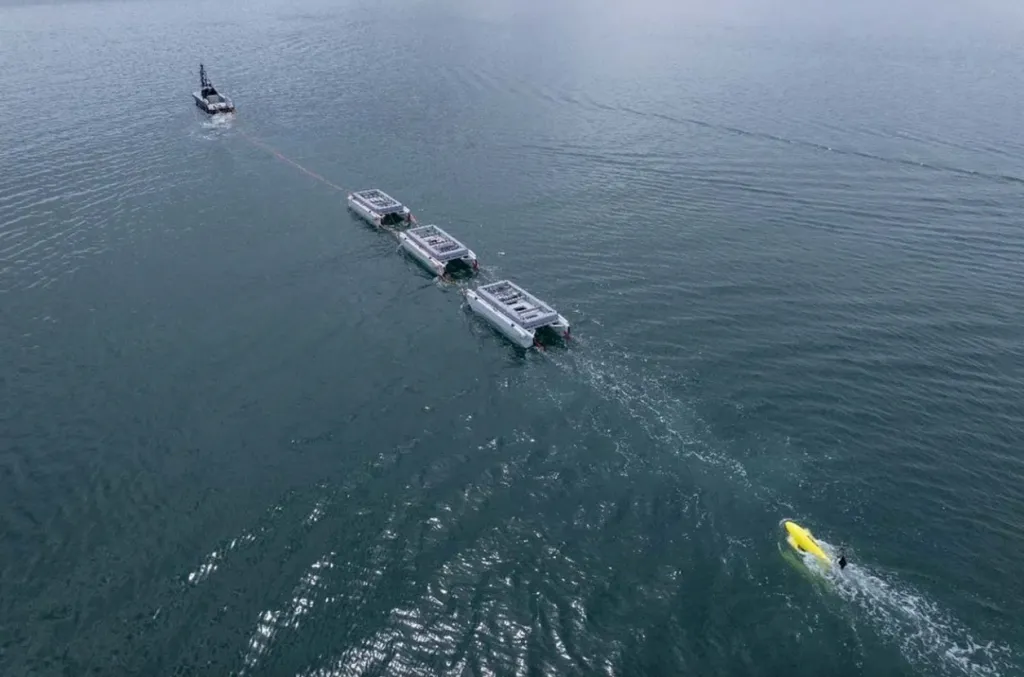
At the center of the operation is the Royal Navy’s next-generation autonomous system, designed to detect and neutralize sea mines without putting human crews at risk. These unmanned platforms can mimic the acoustic and magnetic signature of large ships, triggering mines safely from a distance. Drone boats equipped with defensive systems may also be deployed to counter threats such as explosive-laden vessels and kamikaze drones.
The UK is expected to lead a broader coalition of around 30 nations—including key European and global partners—aimed at restoring freedom of navigation through the strait. Military planners emphasize that clearing mines is a complex and dangerous process, especially in an active conflict zone where new mines could be laid even as others are removed.
The Strait of Hormuz carries roughly 20% of the world’s oil supply, making any disruption a major global concern. Even limited mining operations can effectively choke maritime traffic, as uncertainty alone is enough to halt commercial shipping and spike insurance costs.
Despite the planned deployment, officials caution that full-scale clearance operations may only begin once hostilities ease. Until then, the region remains highly volatile, with the risk that further mining, drone attacks, or military escalation could deepen the crisis and prolong the blockade.