
👶 “Why Cold Sores Can Be Dangerous for Newborns: A Medical Reminder About HSV-1 and Infant Safety”
- SaoMai
- April 30, 2026
👶 “Why Cold Sores Can Be Dangerous for Newborns: A Medical Reminder About HSV-1 and Infant Safety”
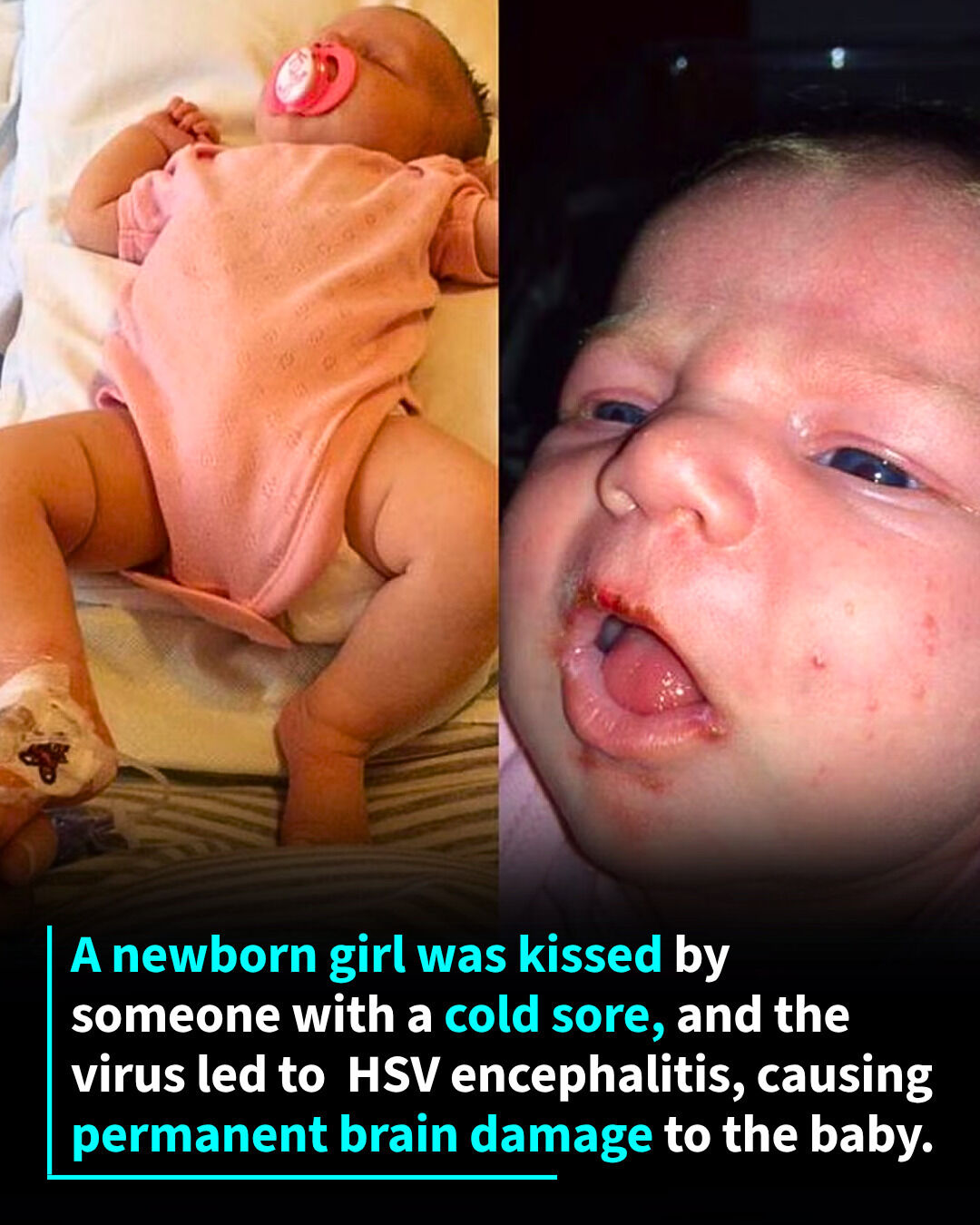
A recent pediatric case has drawn attention to an important but often overlooked health risk for newborns: exposure to the herpes simplex virus type 1 (HSV-1), commonly associated with cold sores in adults.
In this case, a healthy newborn baby girl developed a serious medical complication shortly after birth following exposure to the virus. The source of transmission was believed to be a simple kiss from an individual with an active cold sore—something that may seem harmless in everyday life but can carry significant risks for infants.
In adults and older children, HSV-1 is typically a mild infection that causes small blisters around the mouth. Many people carry the virus without severe symptoms. However, in newborns, the situation is fundamentally different.
 A newborn’s immune system is still in its earliest stages of development, making it far less capable of controlling viral infections. As a result, HSV-1 can spread beyond the initial point of contact and, in rare but serious cases, affect internal organs, including the brain. This can lead to a condition known as herpes simplex encephalitis, an inflammation of brain tissue that may result in seizures, neurological complications, and long-term health impacts.
Because of these risks, neonatal health specialists emphasize the importance of prevention. One of the most critical recommendations is avoiding direct kissing of newborns on the face, especially by individuals who have visible cold sores or are experiencing symptoms such as tingling or irritation around the lips.
Additional precautions include thorough handwashing before handling a newborn, avoiding close facial contact when unwell, and limiting exposure to individuals with active infections during the early weeks of life.
While such severe outcomes are rare, they highlight how viruses that are generally mild in adults can behave very differently in infants. Medical professionals stress that awareness, not fear, is key. Simple preventative actions can dramatically reduce the risk of transmission and protect vulnerable newborns during this critical stage of development.
This case serves as a reminder that newborn safety often depends on small but important choices made by those around them. What may seem like an affectionate gesture can carry unintended consequences when a baby’s immune system is still developing.
Ultimately, education and awareness remain the strongest tools in preventing avoidable infections in newborns.
💙 A gentle reminder: protecting a baby sometimes starts with something as simple as keeping a little distance.