“A 9-YEAR-OLD SAW WHAT ADULTS MISSED… AND BUILT A SOLUTION” 🎒💙✨
“A 9-YEAR-OLD SAW WHAT ADULTS MISSED… AND BUILT A SOLUTION” 🎒💙✨
At just 9 years old, Ledger Greyson Mann noticed something most people never think about until they’re inside it: how overwhelming an emergency can feel—especially for a child.
Loud sirens. Rapid voices. Bright lights. Strangers moving quickly. For many kids, especially those with autism, moments like these can be confusing, frightening, and disorienting.
Ledger understood that feeling personally.
Living with autism himself, he knew what it was like when the world suddenly becomes too loud, too fast, and too hard to interpret. But the idea that sparked everything didn’t come from him alone—it began with a real-life moment his father experienced on the job.
Ledger’s father, a police sergeant, once responded to a call involving a missing child with autism. In an effort to calm the child, he used something simple and familiar—a video the child recognized. That small act helped ease fear in a critical moment.
That story stayed with both of them.
Back at home, what started as a conversation between father and son turned into something far more meaningful. Ledger began thinking about a simple question: What if first responders already had tools like that ready to use?
From that idea, the concept of “comfort kits” was born.
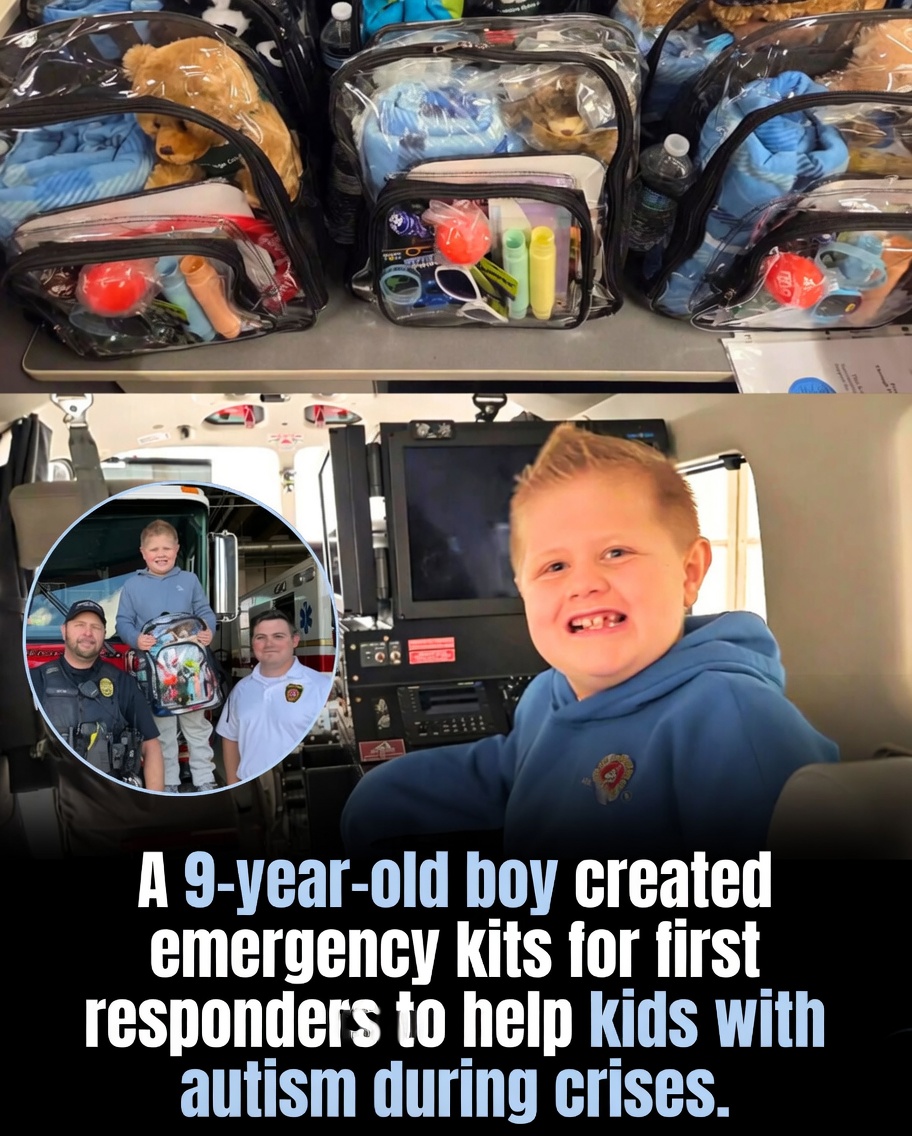
Together, they designed clear backpacks meant to help first responders support children during emergencies—especially those who struggle with communication or sensory overload. Inside each kit were carefully chosen items: noise-canceling headphones to reduce overwhelming sound, sensory toys to provide grounding, a soft stuffed animal for comfort, a small blanket for reassurance, flash cards for communication, and a dry-erase board for children who may not be able to speak.
These weren’t just objects. They were bridges—between fear and calm, confusion and understanding.
Ledger didn’t just suggest the idea. He contributed to it in a real way, even using $100 of his own savings to help create the first five kits. A small amount, but a powerful statement: this mattered to him enough to give what he had.
What happened next showed how one idea can grow when it meets purpose.
With support from the community and first responders, the initiative expanded. More than 60 kits have now been distributed, placed in the hands of those who are often first on the scene during emergencies.
Each kit represents something bigger than supplies. It represents understanding. It represents preparation for a kind of need that is often overlooked in crisis situations.
Ledger’s story isn’t about age. It isn’t about recognition. It’s about noticing a gap in the world and choosing to fill it—not with complexity, but with empathy.
What began as a conversation between a father and his 9-year-old son became a practical tool that helps children feel safer when everything around them feels overwhelming.
And sometimes, that’s how meaningful change starts—not with authority or experience, but with someone young enough to ask a simple question adults may have stopped thinking to ask:
“What if we made this easier for them?”