The Polar Bear: The Ocean’s Giant Hunter

Did you know that polar bears are officially classified as marine mammals? Their scientific name, Ursus maritimus, literally means “sea bear” — a perfect title for an animal whose entire life revolves around the Arctic Ocean and its shifting sea ice.
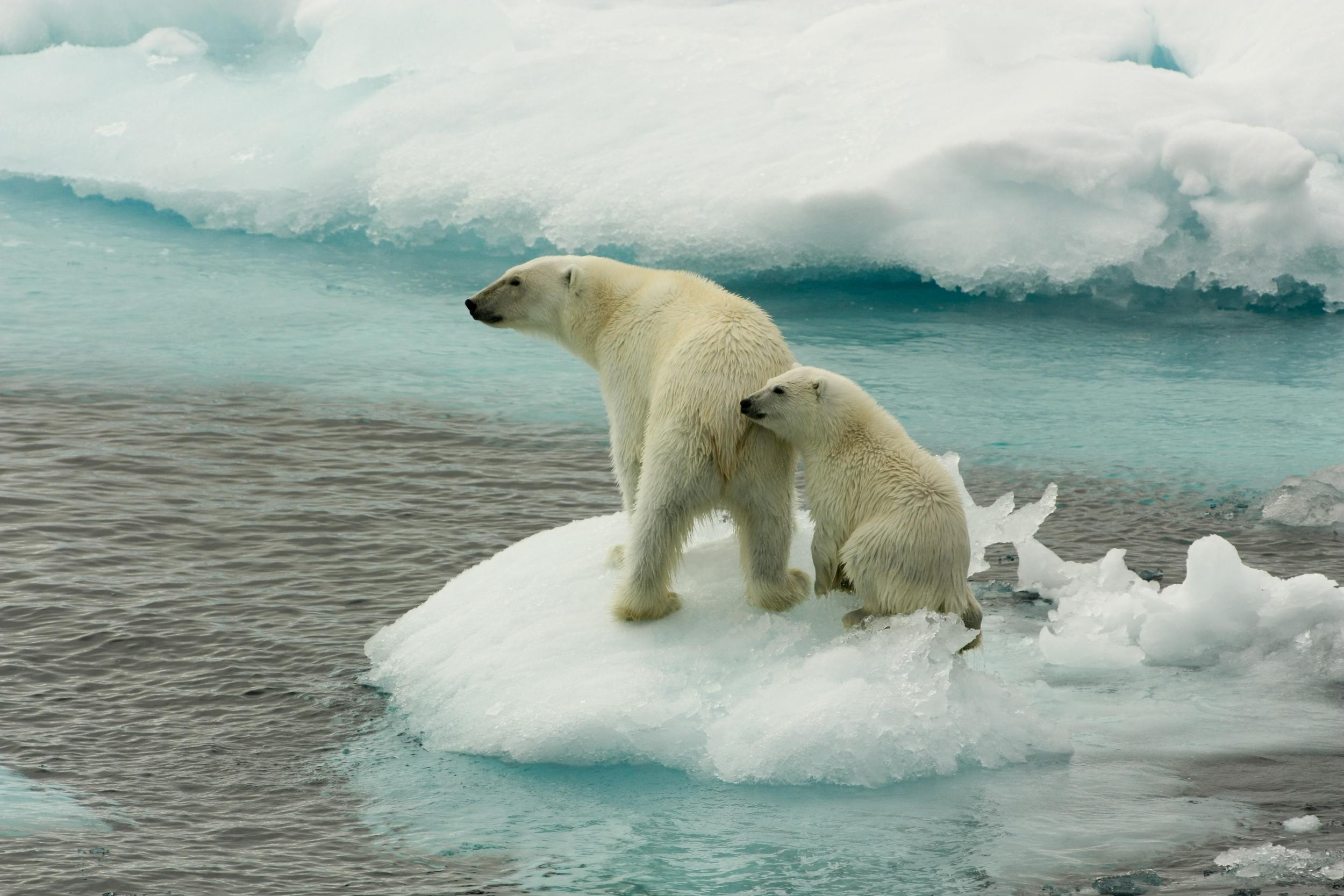
Polar bears are the largest land carnivores on Earth, with adult males weighing up to 800 kg (1,760 lbs) and standing over 3 meters tall when on their hind legs. Yet they depend almost entirely on the ocean for survival. Sea ice serves as their primary hunting platform, where they patiently wait by breathing holes to ambush ringed and bearded seals. Without stable ice, they cannot hunt effectively.
These magnificent predators are incredibly strong swimmers. Scientists have recorded polar bears swimming distances of more than 700 km (435 miles) in search of stable ice floes. Their thick layer of blubber — up to 11 cm (4 inches) — provides excellent insulation and buoyancy in freezing waters. Their massive, slightly webbed front paws act like powerful paddles, allowing them to swim at speeds of up to 10 km/h (6 mph). They can even hold their breath for nearly two minutes while diving to sneak up on prey.
From drifting ice floes to t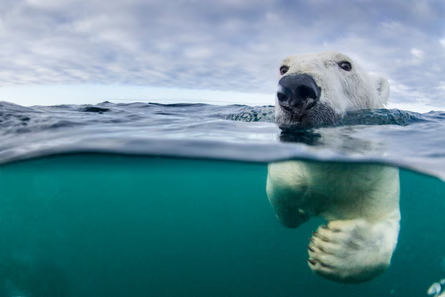 he open Arctic waters, polar bears rule the frozen North. However, climate change is rapidly melting their sea ice habitat, making their future increasingly uncertain.
These iconic “sea bears” are not just symbols of the Arctic — they are powerful reminders of how deeply connected life on Earth is to our changing oceans.