Entire Village Vanishes Without a Trace, Leaving Only One Mysterious Word Carved on a Tree
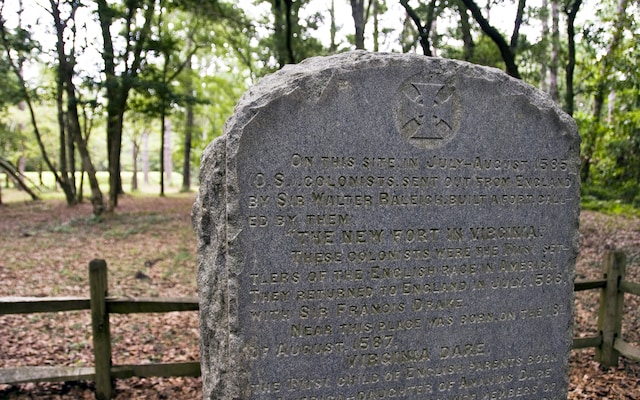
One of the greatest unsolved mysteries in American history is the sudden disappearance of the entire Roanoke Colony in 1590.
In 1587, a group of English settlers arrived on Roanoke Island, off the coast of present-day North Carolina, hoping to establish a permanent colony in the New World. Just three years later, more than 100 men, women, and children had completely vanished without any signs of struggle or violence.
The only clue left behind was the word “CROATOAN” carved into a large wooden post, and the letters “CRO” etched into a nearby tree.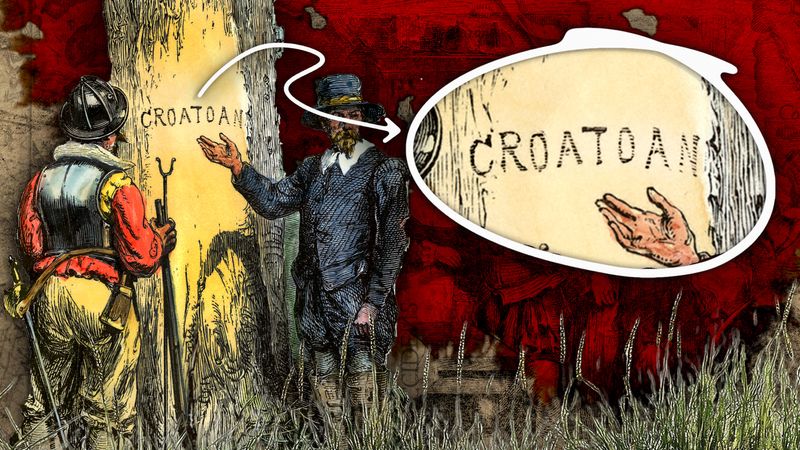
A Desperate Governor’s Return
The colony was led by John White, an artist and governor appointed by Sir Walter Raleigh. White’s daughter, Eleanor Dare, gave birth to Virginia Dare — the first English child born in the Americas — during the settlement.
Facing severe food shortages and tense relations with local Native American tribes, White sailed back to England in late 1587 to request supplies and reinforcements. Due to the Anglo-Spanish War, he was delayed for three years and could not return until 1590.
When White finally reached Roanoke on his granddaughter’s third birthday, he found the settlement completely abandoned. The houses had been carefully dismantled, suggesting an organized departure rather than a sudden attack. There were no graves, no signs of battle, and no cross symbol — which White had instructed the colonists to carve if they had been forced to leave under duress.
The Meaning of “Croatoan”
“Croatoan” was the name of a nearby island (now Hatteras Island) and the Native American tribe living there. The most widely accepted theory is that the colonists, desperate for food and survival, moved to join the Croatoan people.
Archaeological evidence found in the 1990s, including English artifacts from the 16th century in Hatteras villages, supports the idea that the settlers may have integrated with the local tribes.
Other darker theories suggest they were killed by hostile tribes or Spanish forces patrolling the area. Some also point to the controversial “Dare Stones,” inscribed rocks supposedly left by Eleanor Dare detailing their struggles, though most are believed to be hoaxes.
Still Unsolved After Centuries
Despite modern technology, including ground-penetrating radar and DNA analysis, the fate of the Lost Colony remains unknown. Did they perish from disease or starvation? Were they massacred? Or did they assimilate into Native American communities, potentially leaving descendants with European features in the region?
The word “Croatoan” carved on that tree continues to haunt historians — a silent message from a community that vanished into history without a clear goodbye.