When Doctors Asked If They Wanted to End the Pregnancy, These Parents Chose Life for Their Son with HLHS and a Cleft
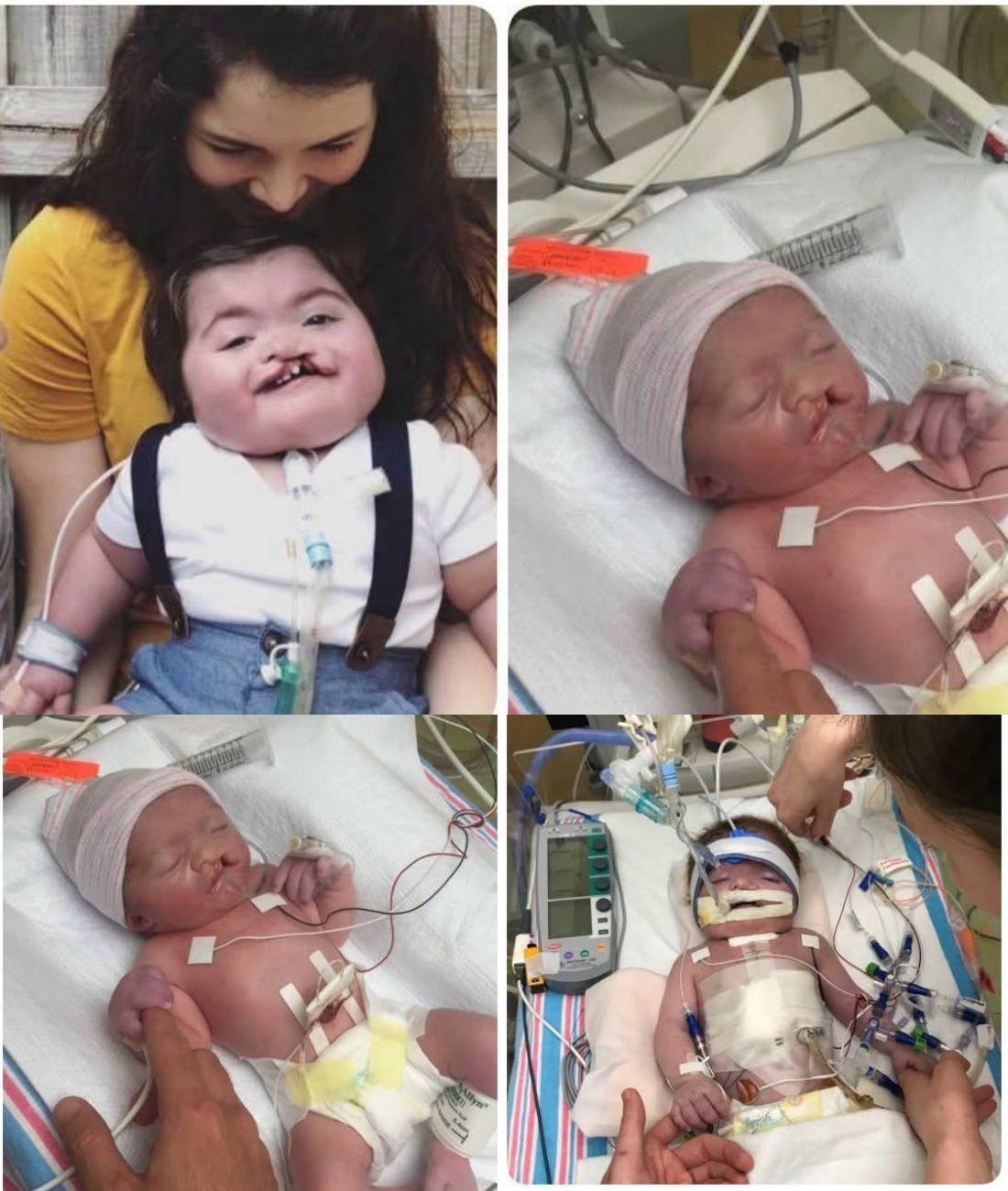
What was supposed to be a joyful 18-week anatomy scan turned into every parent’s worst fear. Micheleen Clancy and her husband Tyler were excited to learn more about their baby when the ultrasound technician suddenly grew quiet. Micheleen asked, “What does a baby’s heart look like at 18 weeks?” She already sensed something was wrong. The images were unclear, and a follow-up appointment soon confirmed their fears: their unborn son had Hypoplastic Left Heart Syndrome, a rare and life-threatening congenital heart defect in which the left side of the heart is severely underdeveloped. Further testing revealed a cleft lip and palate as well, raising the possibility of a serious genetic condition incompatible with life. Before the couple could even process the news, a doctor asked if they wanted to terminate the pregnancy. Micheleen and Tyler looked at each other and immediately agreed that ending the pregnancy was not an option for them.
An amniocentesis later ruled out the most feared genetic syndromes, giving them a measure of hope. They researched treatment options for HLHS, which typically requires a series of open-heart surgeries beginning shortly after birth, and traveled more than twelve hours to meet a specialist they trusted. They temporarily relocated so their baby could be delivered and cared for in a hospital equipped for complex cardiac cases. At 35 weeks, intrauterine growth restriction led to a planned C-section. Theodore, nicknamed Tad, was born on a Sunday evening weighing just four pounds. He entered the world screaming before he was fully delivered, already showing the fighting spirit that would define his first year.
Tad spent his first seven months in the hospital. He underwent his first open-heart surgery at only three days old. At one month he suffered cardiac arrest. Breathing difficulties led to a tracheostomy and feeding tube at three months. A second open-heart surgery followed at four months while he was still critically ill; days later a pacemaker was implanted to regulate an irregular heartbeat. Infections and setbacks came one after another, yet Tad continued to fight. When he finally went home, he was still dependent on a ventilator, oxygen, continuous monitoring, and multiple machines. The early months after discharge brought frequent hospital readmissions, but gradually his condition stabilized.
By fifteen months of age, Tad had become an energetic, happy, and resilient little boy who exceeded the expectations of both his parents and his medical team. He no longer needed full-time ventilator support and had undergone successful cleft lip repair. More heart surgeries still lay ahead, along with ongoing specialist care, but his progress was unmistakable. Micheleen has reflected that this was never the life she imagined, yet she would not change a single thing. “Tad was created for this battle,” she has said, “and I was created to be his mother for this journey of ours.”
Their decision to continue the pregnancy, made in a moment of profound shock and fear, opened the door to a life filled with both extraordinary challenges and extraordinary love. Tad’s story stands as a testament to the strength of a child who refused to give up and to parents who chose to meet every uncertainty with determination and hope.
Sources Love What Matters personal essay by Micheleen Clancy detailing Tad’s prenatal diagnosis, birth, and early medical journey