Amelia’s Own Way: Learning to Stand and Walk
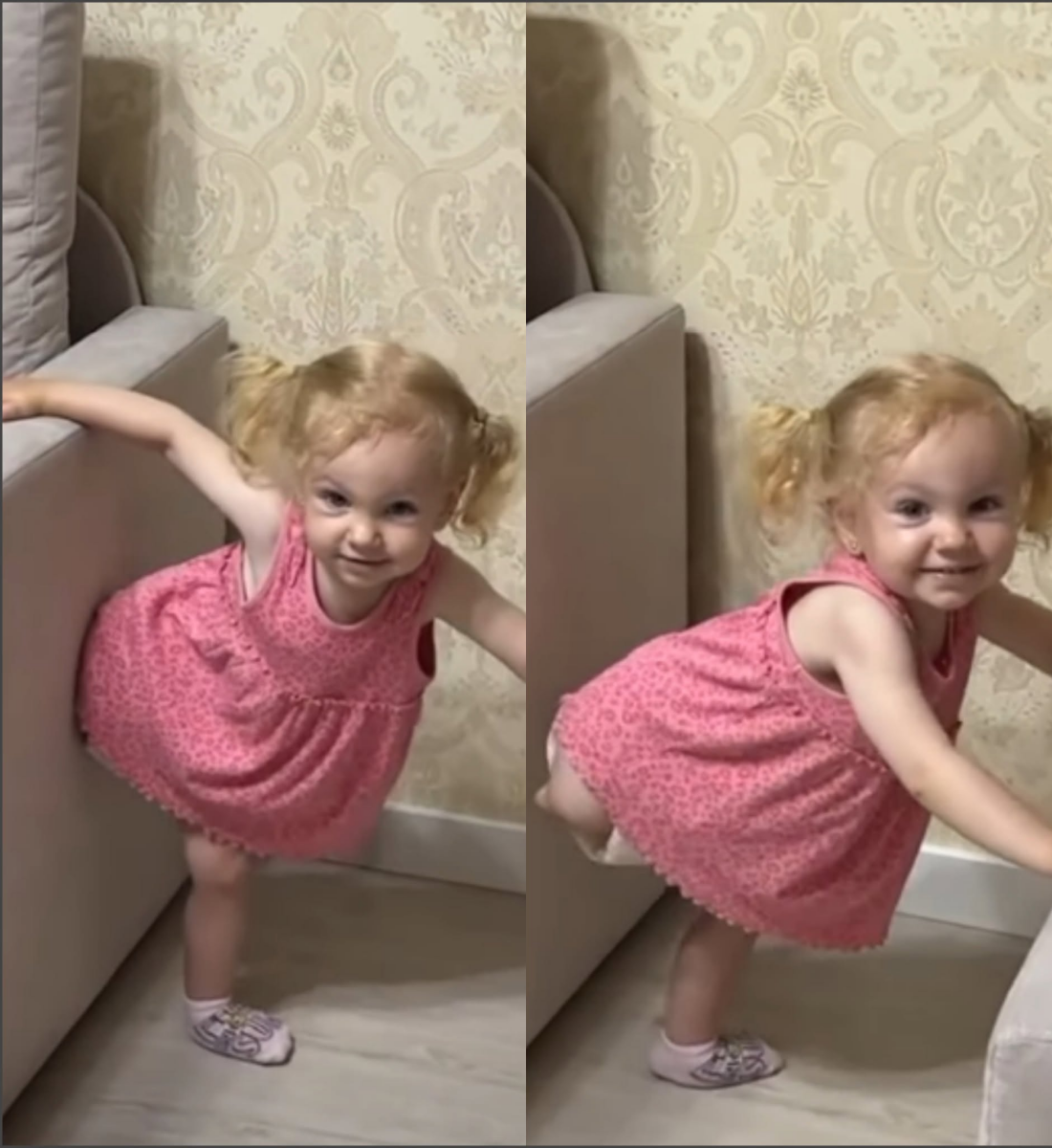
Born without one leg, little Amelia is rewriting the rules of how a toddler learns to move. While other children her age race across rooms and playgrounds, she is carefully mastering balance, weight transfer, and the courage to get back up after every fall.
In a quiet living room, the blonde-haired girl in a bright pink patterned dress practices daily. Holding onto the arm of a sofa for support, she shifts her weight, steadies herself, and takes tentative steps in her own unique way. Her family watches with pride as she refuses to give up.
“She just wants to walk like the other kids,” her family shared. And no matter how many times she loses her balance, Amelia keeps trying.
Congenital limb differences such as Amelia’s occur when a limb does not fully form during early pregnancy. These conditions can range from partial absence of a leg or foot to more complex presentations. Early intervention is key: physiotherapy helps build core strength, improve balance, and prepare the residual limb for a future prosthesis. Many children eventually receive custom-fitted prosthetic legs that grow with them, enabling greater mobility and participation in everyday play.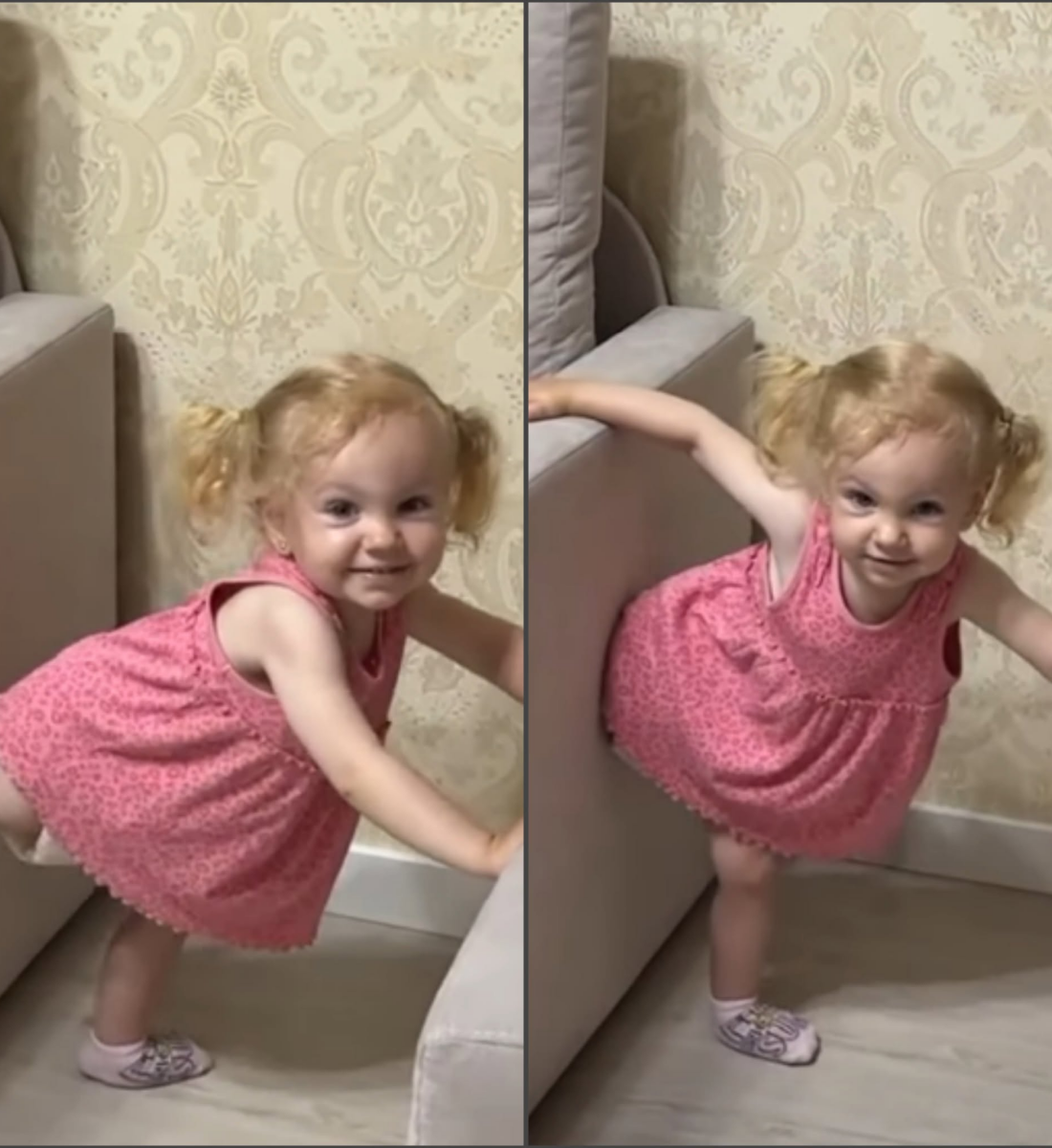
For now, Amelia’s path is one of small, determined victories. Each successful stand, each recovered fall, builds the confidence and muscle memory she will need as she grows. Her story reflects the resilience often seen in young children with limb differences—they adapt quickly, approach challenges with curiosity, and remain focused on the simple goal of moving freely like their peers.
With continued support from her family and specialists, Amelia is already proving that her journey, though different, is full of possibility. Step by step, she is finding her own way forward.
Sources
- Family statement accompanying the photographs of Amelia
- General paediatric orthopaedic information on congenital limb deficiencies, early mobility training, and prosthetic readiness