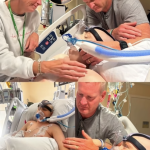
Born With Hands Close to the Shoulders: Understanding the Rare Condition Phocomelia

Born with an incredibly rare condition called phocomelia, some children enter the world with arms that develop differently, their hands positioned close to their shoulders or chest.
Phocomelia is an extremely uncommon congenital limb condition that develops during the earliest stages of pregnancy. In this disorder, the intermediate segments of the arms or legs—such as the upper arms or forearms—fail to form properly or are completely absent. As a result, the hands or feet may attach directly or nearly directly to the trunk, creating a distinctive appearance sometimes described as “seal-like.” The condition can affect one limb, both upper limbs, the lower limbs, or, in the rarest cases, all four extremities.
While phocomelia became widely known in the late 1950s and early 1960s following the thalidomide tragedy—when the drug, prescribed for morning sickness, caused thousands of severe birth defects—most cases seen today are unrelated to that medication. Modern instances are typically linked to other rare developmental disruptions, genetic factors, vascular interruptions during limb formation, or unknown causes. True phocomelia is estimated to occur in roughly 0.62 out of every 100,000 births, making it one of the rarest congenital limb differences.
Children born with the condition often require multidisciplinary care from birth. Early assessment focuses on overall health, as some may have associated issues involving the heart, kidneys, or craniofacial structures, though many cases are isolated. As they grow, support typically includes occupational and physical therapy, adaptive equipment, and, when appropriate, prosthetic devices tailored to their unique anatomy. Many individuals with phocomelia develop remarkable independence and functional skills using the limbs they have.
Advances in prenatal ultrasound have improved the ability to detect significant limb differences before birth, allowing families and medical teams more time to prepare. Genetic counseling may also be offered, particularly if a syndromic cause such as Roberts syndrome is suspected.
Though rare and visually striking, phocomelia does not define a child’s potential. With modern medical support, adaptive technology, and family advocacy, many children born with this condition go on to lead active, fulfilling lives.
Sources
- WebMD and StatPearls (NCBI) overviews of phocomelia definition, prevalence, and causes
- Journal of Hand Surgery and clinical case reports on modern (non-thalidomide) presentations
- Medical literature on congenital limb deficiencies and historical context of the thalidomide epidemic