Kayla Wheeler Has Only One Limb, but Enough Talent to Compete in Swimming on the World Stage
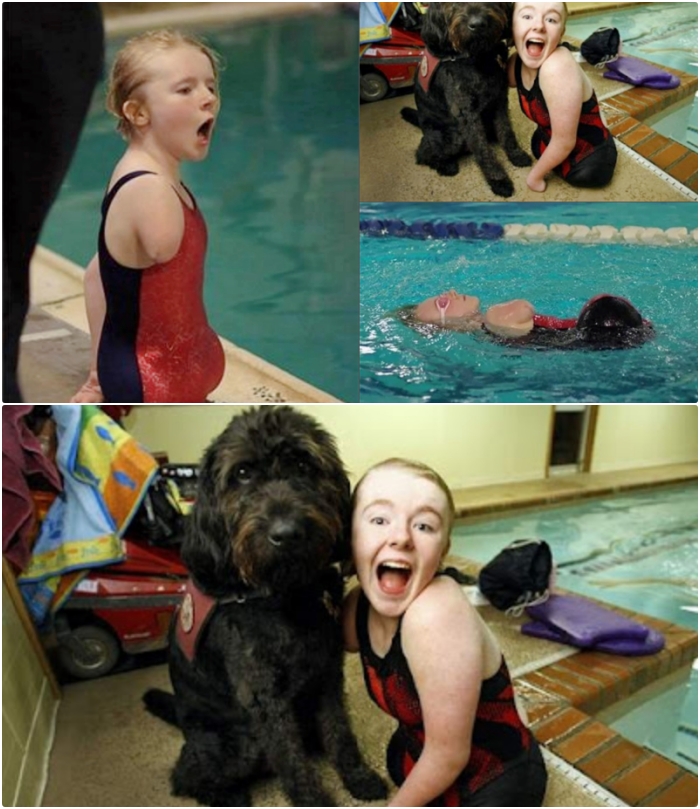
For as long as she can remember, Kayla Wheeler has loved to swim. She was first introduced to the water when she was about 8–18 months old as part of a hydrotherapy program recommended by doctors. Born a congenital amputee in the Lynnwood/Mountlake Terrace area of Washington state, Kayla has no legs and is missing her right arm (or has only a short residual limb). Her left arm is also significantly affected, with a fused or limited elbow and limited hand function (often described as having just three fingers, two of them fused). In daily life she uses a wheelchair, yet in the water she has become one of the most accomplished Paralympic swimmers in the most severe disability classifications.
The original goal of the hydrotherapy was practical: to help her learn how to move, balance, and get herself upright. Therapists worked on those skills in the water, and once she mastered them she transferred the abilities onto land. Her parents, Joyce and Dean Wheeler, quickly noticed how much she enjoyed the sessions. The freedom of the water stood in sharp contrast to the physical limitations she faced on land.
“I feel different in the water. I don’t feel any limits or anything like that. I feel totally weightless,” Kayla has said. In earlier interviews she described the sensation of floating and moving without the usual constraints: “It makes me feel free because I don’t necessarily have all the limitations that I do out of the water.” With no leg weight she is highly buoyant, and she generates propulsion almost entirely with her one functional arm.
Kayla progressed from therapy to formal swimming lessons and then to competitive training with the Shadow Seals, a local team for athletes with physical disabilities. By her mid-teens she was setting U.S. and world records in multiple disability classes (particularly the S1–S3 range, the most severe physical classifications in Paralympic swimming). Reports from 2013 documented 32 national records and world records in the 50-meter butterfly across classifications. She has competed internationally in places including Brazil, the Netherlands, Mexico, and Canada, earned medals at world championships and other major meets, and represented the United States at events such as the Parapan American Games.
She can swim all four competitive strokes, though backstroke is the most difficult because of limited shoulder rotation. Butterfly has been one of her strongest events. Classification challenges sometimes limited her opportunities—there were occasions when she posted qualifying times but lacked enough competitors in her highly restricted class to field an event at the Paralympic Games.
Beyond the pool, Kayla has been an academically strong student involved in robotics and rocketry, and she has expressed interest in disability-rights advocacy and law. Her parents encouraged her without imposing artificial limits, supporting activities ranging from skiing and baseball to music and academics. Coaches and teammates have described her determination and independence from a young age.
Kayla’s story illustrates how early exposure to water through therapy evolved into elite athletic achievement. What began as a practical intervention for mobility became a lifelong passion and a platform on which she has competed at the highest levels of Paralympic sport—proving that talent, drive, and the unique freedom of the water can overcome profound physical differences.
Sources for this account include contemporary reporting from the Herald (2013), FOX 13 Seattle, ABC News, local Washington outlets covering the Shadow Seals and her record-setting performances, and Team USA / Paralympic athlete profiles. Details of exact limb descriptions and early therapy ages vary slightly across interviews, but the core facts of her congenital limb differences, hydrotherapy introduction, love of swimming, and international competitive success are consistently documented.