Understanding Giant Congenital Melanocytic Nevus: A Rare Birthmark
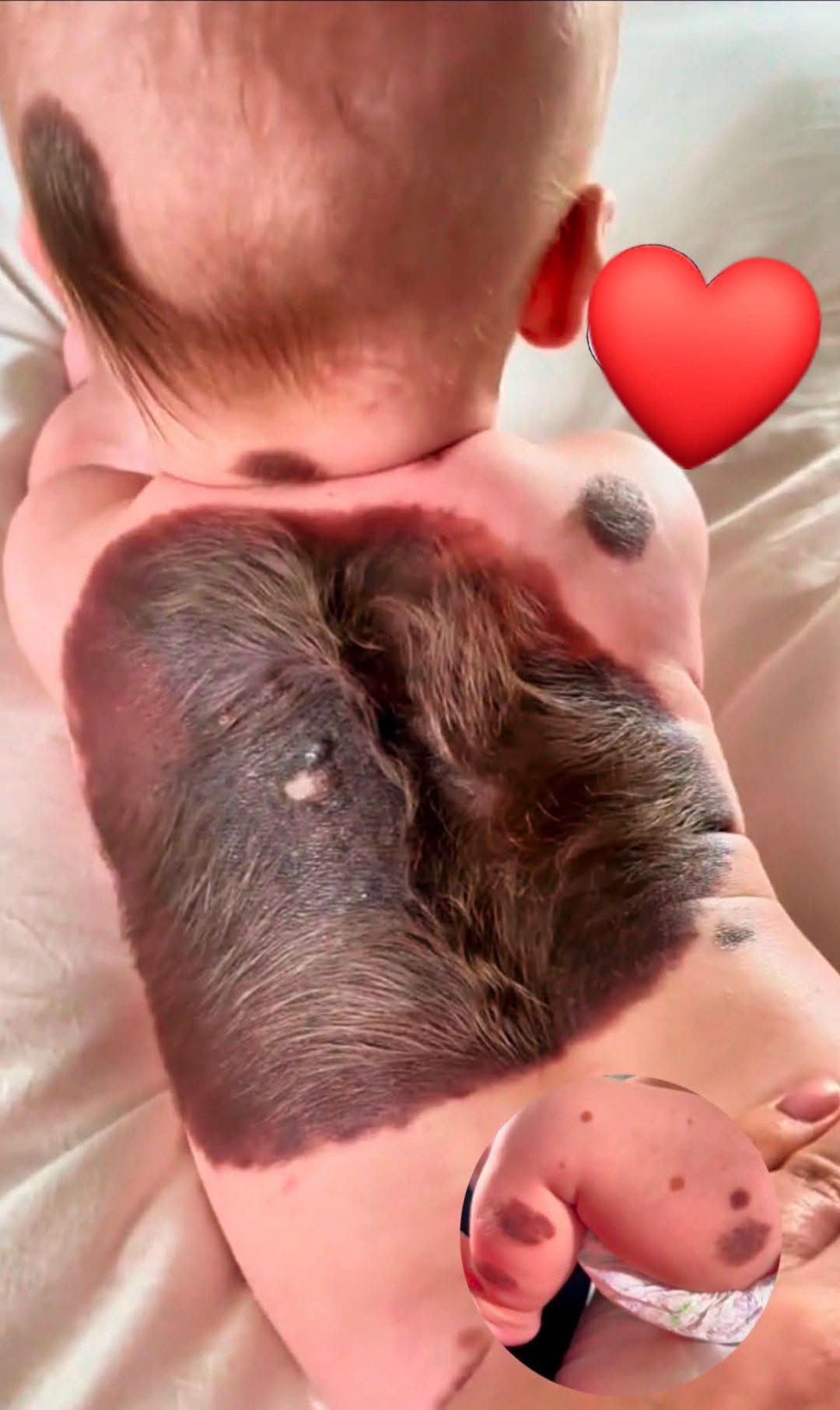
Giant Congenital Melanocytic Nevus (GCMN) is a large pigmented birthmark that develops before birth. It may appear as dark brown to black areas of skin, and in some cases it can have hair growth and be accompanied by smaller surrounding moles known as satellite nevi.
These lesions are present at birth or become noticeable shortly afterward. They are caused by an overgrowth of melanocytes, the pigment-producing cells in the skin. GCMN is rare, occurring in roughly 1 in 20,000 to 50,000 newborns. Size classification is based on the projected adult diameter: giant nevi typically measure 20 cm or more (often over 40 cm) in adulthood. The nevus usually grows proportionally with the child.
The surface can be flat, raised, rough, or nodular, and color may range from light brown to deep black. Hypertrichosis (excess hair) is common, especially as the child grows. Satellite nevi—smaller similar spots—are frequently present elsewhere on the body.
Having GCMN does not mean a person has melanoma. Most cases remain benign throughout life. However, larger nevi carry a higher lifetime risk of developing melanoma compared with the general population, estimated in the range of a few percent. There is also a possible association with neurocutaneous melanosis in some cases, particularly when the nevus is very large or involves the midline of the back. For these reasons, regular monitoring by a dermatologist is strongly recommended.
Parents and caregivers should watch for any changes in color, shape, size, texture, or the appearance of sores, bleeding, or new nodules. Prompt evaluation by a medical professional is advised if such changes occur. Management options may include close observation, laser therapy in selected cases, or staged surgical excision and reconstruction when medically or cosmetically indicated. Decisions are highly individualized and depend on the size, location, and characteristics of the nevus as well as the child’s overall health.
Children with GCMN are otherwise typically healthy. With appropriate medical follow-up and family support, many grow up leading full, active lives. Increased awareness helps ensure early detection of any concerning changes and reduces unnecessary anxiety for families.
Sources
- Clinical descriptions from MedlinePlus, DermNet NZ, Healthline, StatPearls/NCBI, and NORD.
- Medical literature on classification, incidence, appearance (including hypertrichosis and satellite nevi), and melanoma risk associated with giant congenital melanocytic nevi.
- The provided image illustrating a characteristic presentation of GCMN on the back with satellite lesions.