Abby Wright: Living Beyond the Limits of a Rare Condition
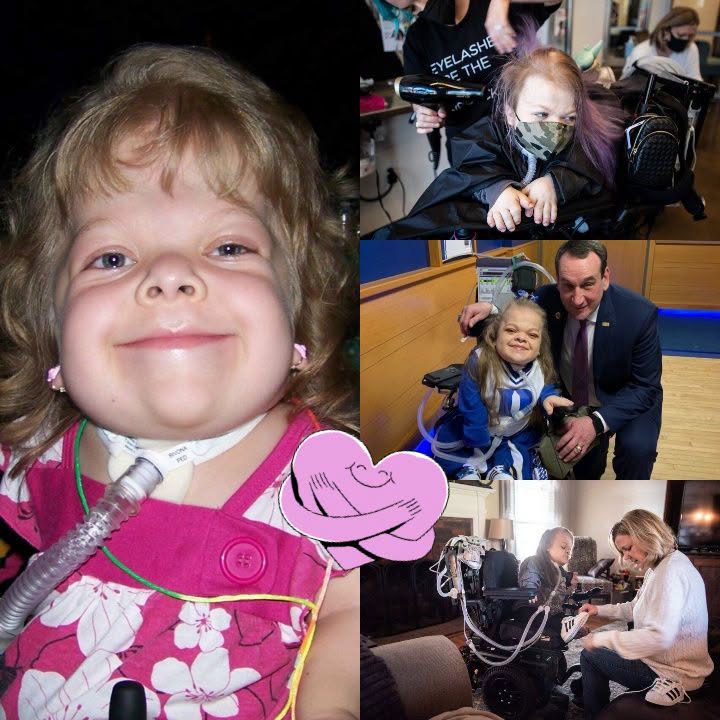
To the outside world, Abby Wright’s small stature was often the first thing people noticed. But behind her three-foot frame was a young woman with her own personality, ambitions, frustrations and dreams—and a determination to live life on her own terms.
Born with opsismodysplasia, an exceptionally rare skeletal dysplasia, Abby grew up facing medical challenges that went far beyond her height. By adulthood, she was approximately 3 feet tall and weighed about 48 pounds. She used a power wheelchair for mobility and depended on a ventilator around the clock to breathe.
Her story is not simply about living with a rare disorder. It is about growing up in a body that required extraordinary medical support while still wanting many of the same things other young adults want: independence, self-expression, friendships and the freedom to make choices for herself.
A Rare Diagnosis
Opsismodysplasia is a rare genetic skeletal disorder characterized by severe short stature, shortened limbs, small hands and feet, delayed bone development and distinctive skeletal changes. People with the condition can also experience respiratory problems, recurrent infections and respiratory failure.
Because the disorder is so uncommon, Abby’s parents, Jim and Lisa Wright, initially faced considerable uncertainty about what her future would look like.
When Abby was three years old, doctors at Cedars-Sinai Medical Center in Los Angeles diagnosed her with opsismodysplasia after years of respiratory problems. Her parents were warned that the condition could severely limit her lifespan.
But Abby repeatedly outlived expectations.
When Breathing Became a Lifelong Challenge
One of the most serious complications of Abby’s condition involved her respiratory system.
At eight years old, a severe case of influenza caused respiratory distress serious enough that doctors performed a tracheotomy and placed her on a ventilator. After recovering from the acute illness, Abby continued to require both a tracheostomy and mechanical ventilation around the clock.
This level of medical dependence profoundly shaped everyday life.
Her wheelchair allowed her to move through the world, while the ventilator helped keep her breathing. She also required trained supervision because of the complexity of managing a tracheostomy and ventilator.
Medical literature confirms that respiratory complications can be a major concern in opsismodysplasia. A 2025 GeneReviews overview notes that respiratory insufficiency may result from several factors, including a narrow chest, scoliosis, pulmonary abnormalities, recurrent infections and airway problems. Some affected individuals require mechanical ventilation or a tracheostomy.
A Childhood That Refused to Be Defined by Medicine
Despite the medical challenges surrounding her, Abby’s childhood was not entirely about hospitals.
Her parents made a conscious effort to give her experiences and memories rather than allowing medical predictions to define her future.
When Abby was three and a half, she received a wish through the Make-A-Wish Foundation to meet The Wiggles. Her parents had been uncertain how much time they would have with their daughter, so they focused on making the most of the time they had.
As the years passed, Abby continued to surprise the people who had once expected her life to be much shorter.
By the time she turned 16, local television station WBTV described her as having already defied the expectations doctors had given her as a child.
“She’s 21”—Not a Child
One of the most important parts of Abby’s story was not medical at all.
It was how other people perceived her.
Because of her extremely small stature, strangers sometimes assumed she was a young child. Abby found this deeply frustrating. She was an adult who enjoyed getting dressed up, styling her hair, playing video games and making her own choices, yet people often responded to her physical appearance rather than recognizing her age.
Her parents understood this tension.
They encouraged Abby to express herself as an adult, including letting her choose how she wanted to style her hair and how she wanted to spend her time. For Abby, these seemingly ordinary decisions represented something much larger: identity and independence.
Her physical body might have required extensive assistance, but that did not make her emotionally or intellectually a child.
Finding Purpose in Helping Others
Perhaps one of the most inspiring parts of Abby’s story was the way she turned her own difficult experiences into an opportunity to support other children.
Abby became involved with The Sandbox, a Charlotte organization supporting children and families affected by serious illnesses and other life-changing conditions.
She had originally participated in the organization’s programs as a child. Later, rather than simply returning as an honoree, she chose to become a mentor to other children.
According to her parents, Abby continued helping with the organization’s prom program and became one of its longest-serving and most popular mentors.
That decision reveals something important about her character.
Abby was not defined solely by the care she received.
She also became someone who could give care, encouragement and companionship to others.
More Than Her Size
Living with a rare condition can mean constantly being viewed through a medical lens.
People may notice the wheelchair, the ventilator, the tracheostomy or the unusually small stature before they notice the person.
Abby’s story challenges that way of seeing disability.
Her life demonstrates that requiring significant medical support does not erase adulthood, personality or ambition. A person can need a ventilator and still want independence. A person can use a wheelchair and still want adventure. A person can have a rare skeletal disorder and still have favorite hobbies, friendships, dreams and a sense of humor.
The medical equipment is part of the story—but it is not the whole story.
A Life Measured in More Than Inches
At around three feet tall, Abby was physically much smaller than most adults.
But the significance of her story cannot be measured in inches.
She survived years beyond the prognosis her family initially received. She found ways to express herself. She sought greater independence. She supported other children facing difficult circumstances. And, most importantly, she continued to live as Abby—not as a diagnosis.
Her journey is a reminder that disability does not erase adulthood, individuality or dreams.
A person’s body may shape the way they experience the world, but it does not determine their worth, their identity or the size of their dreams.
Sources
- The Charlotte Observer — “What it’s like to be 21 years old, 3 feet tall, and inextricably tied to your parents” — detailed profile of Abby Wright, her diagnosis, respiratory support, family life, desire for independence and work with The Sandbox.
- WBTV — “Mo’s Hero: Abby Wright – Sweet 16 never felt so good!” — coverage of Abby’s childhood, opsismodysplasia diagnosis and dependence on a tracheostomy and ventilator.
- NIH Genetic and Rare Diseases Information Center (GARD) — Opsismodysplasia — medical information about the disorder, including short stature and respiratory complications.
- GeneReviews / NCBI Bookshelf — INPPL1-Related Opsismodysplasia — current clinical information on skeletal abnormalities, respiratory complications, mobility and supportive care.
- Orphanet — Opsismodysplasia — rare-disease classification, clinical characteristics and prevalence information.