163 Children Are Home — But Florida’s Biggest Child-Recovery Operation May Be Only the Beginning
FLORIDA — The five-day operation has ended.
The children have been located.
But the investigation is far from over.
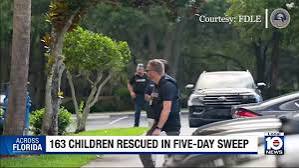
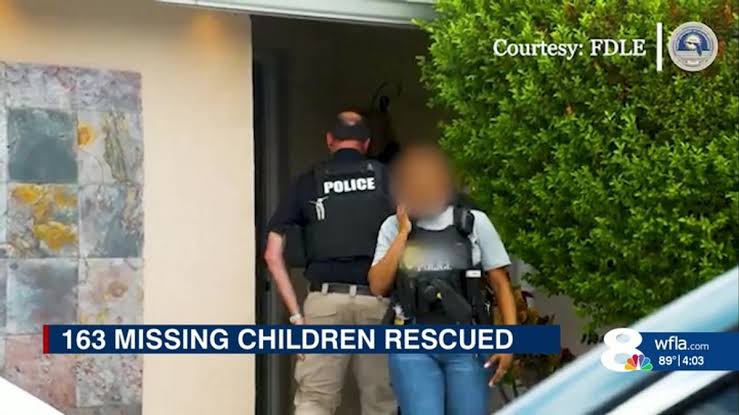
That is the message emerging from Operation Statewide Shield, the massive Florida-led effort that resulted in the recovery of 163 missing children during August 17–21.
The announcement shocked the public because of its scale.
One hundred and sixty-three children.
Ages ranging from two months to 17 years.
Recoveries stretching across Florida, other parts of the United States and international locations.
And behind those recoveries, authorities say, were cases involving children who had experienced abuse, neglect, exploitation or exposure to other criminal activity.
But the number 163 can be misleading if it is treated as one single case.
It is not.
It represents a collection of individual missing-child cases investigated simultaneously through a coordinated statewide effort.
The Florida Department of Law Enforcement led the initiative with assistance from numerous state, local and federal partners. Officials described it as Florida’s first state-led statewide child-recovery operation and one of the largest such operations in American history.
The regional breakdown shows how broad the effort was.
Tampa Bay accounted for 46 recoveries.
Miami had 41.
Jacksonville had 32.
Orlando had 21.
Fort Myers had 12.
Pensacola had eight.
Tallahassee had three.
The operation also reached children connected to six other U.S. states, one U.S. territory and 12 foreign countries.
That international component is now attracting even more attention.
On September 4, the family of José Arthur Sousa Barros, a two-year-old boy who disappeared in Brazil in March, reportedly asked Brazil’s Federal Police to determine whether he might be among the children recovered during the Florida operation.
The family has asked for his information to be compared with information involving children recovered in the United States. Reports say identification methods could include facial recognition and fingerprints.
But there is an important limitation:
No official authority has confirmed that José Arthur was among the 163 children.
For now, it remains a request for investigation—not a confirmed recovery.
That distinction should not be lost in the rush to publish dramatic headlines.
The same caution applies to another viral claim surrounding the operation.
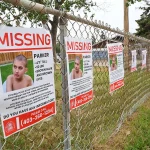
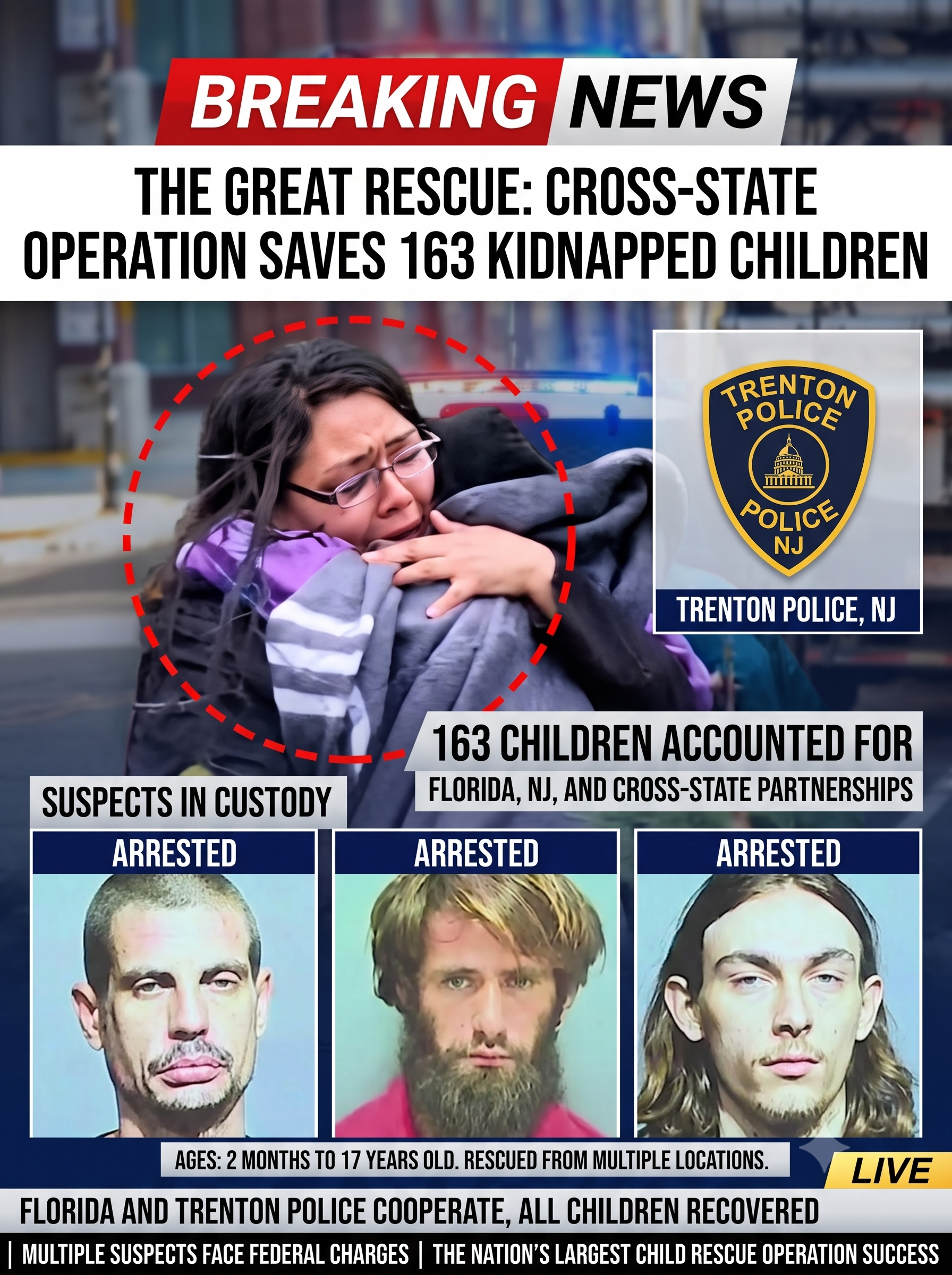
Social-media posts have circulated mugshots of three men and suggested they were responsible for kidnapping all 163 children.
That claim has been debunked.
Fact-checkers found that Michael Prescott, Jayden Harwood and Robert Allison were linked to separate criminal allegations involving individual victims. There is no evidence they acted together to abduct or hold all 163 children.
The reality is more complicated.
And, in some ways, more troubling.
Because authorities do not need one massive kidnapping conspiracy for the operation to reveal serious failures and vulnerabilities.
The cases themselves reportedly involved different circumstances.

Some children had experienced abuse.
Some faced neglect.
Some were exposed to exploitation.
Some had connections to other criminal activity.
And some cases resulted in felony investigations.
The next stage is therefore about accountability.
Who committed crimes?
Who enabled them?
Who failed to protect vulnerable children?
Were there warning signs that could have been detected earlier?
Could better coordination have prevented some of these children from becoming missing in the first place?
Those questions may be examined as investigators continue reviewing individual cases.
Florida Attorney General James Uthmeier has publicly pledged that the state will continue pursuing people who prey on vulnerable children and prosecuting abusers.
But prosecutors face an important responsibility.
Every allegation must be supported by evidence.
Every suspect must be treated according to the legal process.
And every child’s identity and privacy must be protected.
That is especially important because many of the children are minors.
Authorities have therefore released only limited details about individual recoveries.
What they have disclosed is that children needing assistance were transported to designated recovery hubs, where they could receive medical care, social services, child-welfare support and assistance from victim advocates.
The recovery hubs highlight an important truth:
A rescue is not necessarily the end of a crisis.
For a child who has experienced trauma, returning to safety can be the beginning of recovery.
Some children may need counseling.
Some may need medical attention.
Some may require temporary protective arrangements.
Others may need help reconnecting with safe family members.
And some cases may eventually end up in court.
This is why the success of Operation Statewide Shield should not be measured solely by the number 163.
The real measure will come later.
How many children remain safe?
How many receive long-term support?
How many cases lead to convictions?
How many dangerous situations are identified before another child disappears?
And how much better prepared are authorities for the next missing-child investigation?
There is another lesson from the operation: social media can be both helpful and dangerous.
Information can spread quickly.
So can misinformation.
Lead Stories recently found that several viral videos claiming to show Operation Statewide Shield recoveries actually used unrelated older footage. Some clips were traced to previous incidents, including a 2018 Texas car accident.
That means viewers should not assume that emotional footage accompanying a headline is authentic.
The verified story is powerful enough without fabricated images.
One hundred and sixty-three children were recovered.
That is real.
The children ranged from infants to teenagers.
That is real.
Many had reportedly experienced dangerous circumstances.
That is real.
Criminal cases emerged.
That is real.
And investigations continue.
That is also real.
What remains unknown is what the next stage will reveal.
Could additional suspects be identified?
Could prosecutors announce additional charges?
Could international cases produce new information?
Could families of other missing children come forward seeking confirmation?
And could investigators uncover connections that were invisible before the children were located?
No one can responsibly answer those questions yet.
But the possibility is precisely why Operation Statewide Shield should not disappear from public attention simply because the five-day operation has ended.
The search may be over.
The children may have been found.
But the pursuit of answers has only begun.
For 163 children, August 2026 brought the moment their families had been waiting for: they were located.
Now comes the harder question.
What happens next?
For the children, the priority is safety, stability and healing.
For families, it is answers.
For prosecutors, it is justice.
And for investigators, it is determining exactly what happened in every individual case.
The operation may have recovered 163 children.
But the full story behind those 163 recoveries has yet to be told.