From a Baseball-Sized Jaw Tumor to a New Face: Ousmane’s Surgery Aboard Mercy Ships
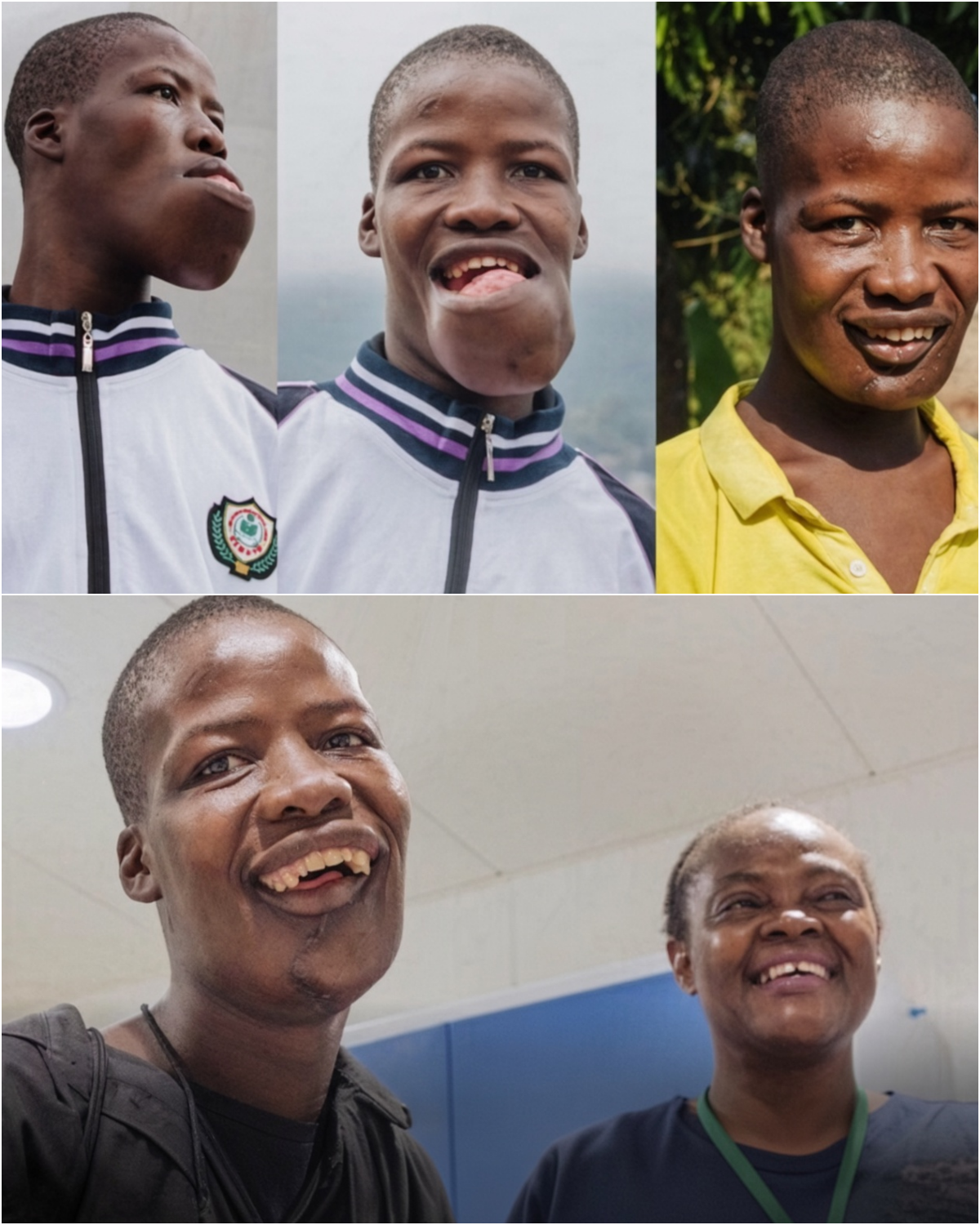
A lump that began quietly on Ousmane’s mandible grew for years until it reached the size of a baseball, pushing outward through his cheek and chin. The mass—an ameloblastoma, a locally aggressive but typically benign odontogenic tumor that arises from tooth-forming tissue—made eating painful, threatened his airway, and isolated him socially. Without money for private specialty care in Senegal, he lived with the weight of the growth and daily discomfort.
Hope arrived when the hospital ship Africa Mercy docked in Dakar. Volunteer maxillofacial surgeons accepted his case at no cost. They performed a segmental mandibulectomy to remove the entire tumor while protecting branches of the facial nerve, then stabilized the remaining jaw with osteosynthesis plates. After the operation Ousmane could smile freely again and look ahead without the constant physical burden that had defined his recent years.
Ameloblastomas are uncommon worldwide yet appear with striking frequency among Mercy Ships maxillofacial patients in West Africa. They expand slowly, destroy bone, and can eventually obstruct eating or breathing if left untreated. In high-income countries they are often found early on dental X-rays; in settings with few oral surgeons they become large, disfiguring masses. Standard treatment is complete surgical removal of the involved segment of jaw, followed by reconstruction with plates and, when possible, later bone grafts. Recurrence is a recognized risk if any tumor cells remain, so long-term follow-up is essential.
Ousmane’s story, circulated with before-and-after photographs, fits a pattern documented by Mercy Ships during its Senegal field services: young adults and teenagers who spent years traveling from clinic to clinic, spending scarce family resources, only to be told the specialized operation was unavailable—until a hospital ship provided it. Parallel published cases from the same missions include other mandibular tumors treated with comparable resections and plate reconstruction.
The photographs show both the scale of the original deformity and the restoration of a natural facial contour. For patients like Ousmane the change is not merely cosmetic; it restores the ability to eat, speak, and move through the world without pain or stigma.
Sources
- Family and social-media account accompanying the photographs of Ousmane
- Mercy Ships Africa patient stories from Senegal field services (maxillofacial tumor resections aboard Africa Mercy and Global Mercy)
- Medical descriptions of ameloblastoma prevalence, growth pattern, and surgical management in sub-Saharan Africa (Journal of Stomatology Oral and Maxillofacial Surgery; Mercy Ships clinical reports)
- Published accounts of similar mandibular reconstructions performed by volunteer surgeons including Dr. Mark Shrime and Dr. Gary Parker