Years of Searching, One Ship: Christella’s Facial Reconstruction in Madagascar
Christella grew up in Madagascar with a progressive facial malformation that isolated her and defeated every local attempt at treatment. The defect—consistent with a severe craniofacial cleft or related congenital anomaly involving the mid-face, orbit, and nasal region—left one eye compromised and the architecture of her face distorted. Her family traveled long distances after hearing that the hospital ship Africa Mercy was docked on the Malagasy coast.
Volunteer maxillofacial surgeons, neurosurgeons, and nurses accepted the case. In a multidisciplinary operation they removed abnormal tissue, repaired the cranial and facial bony defect, repositioned the globe where possible, and reconstructed the mid-face so she could see more normally and live without the constant stigma of an untreated deformity. Afterward she walked the ship’s decks with a calmer expression and a face that no longer defined her only as a patient.
Mercy Ships’ recent Madagascar field services (Toamasina/Tamatave, 2024–2026) have treated thousands of patients for conditions local hospitals cannot manage: large facial tumors, clefts, and complex congenital deformities. Volunteer teams that include long-serving surgeons such as Dr. Gary Parker routinely combine tumor or mass excision with orbital and nasal reconstruction. For children like Christella the journey often includes days of travel, a period of nutritional preparation, then surgery that lasts hours and recovery that lasts weeks.
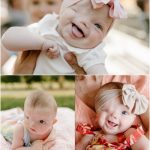
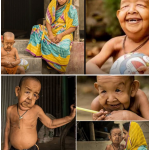
The photographs show both the original deformity and the reconstructed result beside a smiling Mercy Ships clinician. They illustrate a pattern repeated across the organization’s maxillofacial program: families who spent years hearing “we cannot operate” finally finding a floating operating theater that can. Vision, speech, and social acceptance are the practical measures of success; the child’s ability to walk upright and smile without fear is the human one.
Follow-up remains necessary. Craniofacial growth continues through childhood, and some patients need later revisions. Yet the first reconstruction is the step that turns a hidden life into an ordinary one.
Sources
- Family and social-media account of Christella’s surgery aboard Africa Mercy
- Mercy Ships Madagascar field-service reports (maxillofacial and reconstructive cases, 2024–2026)
- Published Mercy Ships patient stories of comparable mid-face and orbital reconstructions in Madagascar (Marie Elisa, Armella, Rosalinda, and others treated by volunteer maxillofacial teams)