The Karate Kid: The Legend Lives On
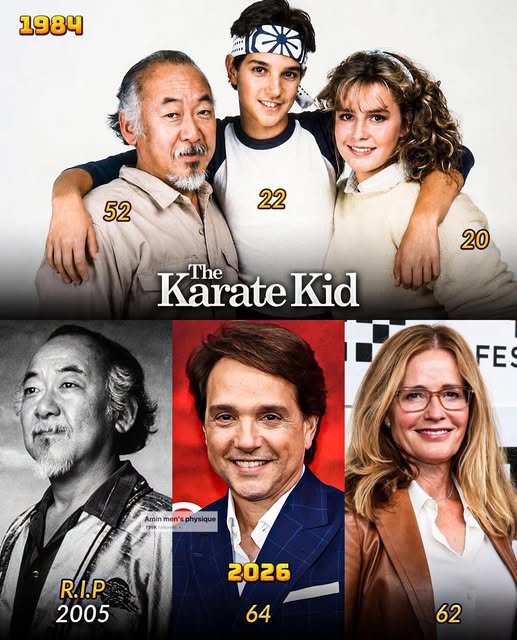
In 1984 they were Mr. Miyagi, Daniel-san, and Ali. In 2026, the story still kicks.
Forty years after The Karate Kid first arrived in theaters, the faces have changed and one beloved mentor is gone. The story has not faded. It has only found new rooms in which to teach the same lesson: balance, mercy, and the long work of becoming someone worth following.
1984: A Sensei, a Student, a First Love
When John G. Avildsen’s film opened in 1984, Noriyuki “Pat” Morita was fifty-two, already a familiar comic presence, and about to become something rarer: a popular culture mentor whose gentleness felt as formidable as any kick. Ralph Macchio, twenty-two, played Daniel LaRusso, the new kid from New Jersey who learns that strength without character is only noise. Elisabeth Shue, twenty, was Ali Mills—the girl who saw Daniel before the tournament trophies did.
The movie was never only about karate. It was about a lonely boy finding a father figure, about a man who had survived war and loss choosing patience over spectacle, and about a first romance that treated a young woman as more than a prize. Wax on, wax off became a punch line and a philosophy at the same time. Audiences left the theater believing that discipline could look like kindness.
The Mentor Who Never Left
Pat Morita died in 2005. Two decades later, Mr. Miyagi remains one of cinema’s greatest mentors—not because he was invincible, but because he was human. He scolded. He joked. He mourned. He taught Daniel that the point of a fight is often not to win it. In an age of louder heroes, Miyagi’s quiet authority has only grown. His absence is part of the legend now: the empty dojo that still feels occupied.
2026: Daniel Returns, and So Does Ali
Ralph Macchio did what few child-star inheritances manage. In Cobra Kai, he brought Daniel LaRusso back to a new generation without sanding off the original film’s sincerity. The series let the adult Daniel be proud, stubborn, generous, and occasionally wrong—the same boy, older, still learning balance. Macchio, sixty-four in 2026, became both custodian and co-author of a myth he first entered in his early twenties.
Elisabeth Shue returned as Ali. That return mattered. Ali was never a footnote; she was the first person who chose Daniel when choosing him cost something. Seeing Shue, sixty-two, step back into that history closed a circle the 1984 film left open. It told viewers that first loves can remain part of the story without being asked to freeze in time.
Why the Story Still Kicks
Franchises survive on sequels. Legends survive on meaning. The Karate Kid endures because its central relationship is simple enough to remember and deep enough to revisit: a teacher who refuses to make a weapon of a child, and a student who discovers that winning is smaller than becoming decent. Cobra Kai proved the idea could stretch across class, generation, and the internet age without discarding the original’s heart.
Look at the two portraits forty years apart and the arithmetic is plain. One man is remembered. Two actors kept faith with the parts that made them famous. A film that once belonged to a single summer now belongs to parents who show it to their children and to teenagers who found Daniel through streaming instead of a multiplex.