Pediatric Cardiology, Pentalogy of Cantrell, and Life: The Remarkable Case of Virsaviya Borun and Her Visible Heart
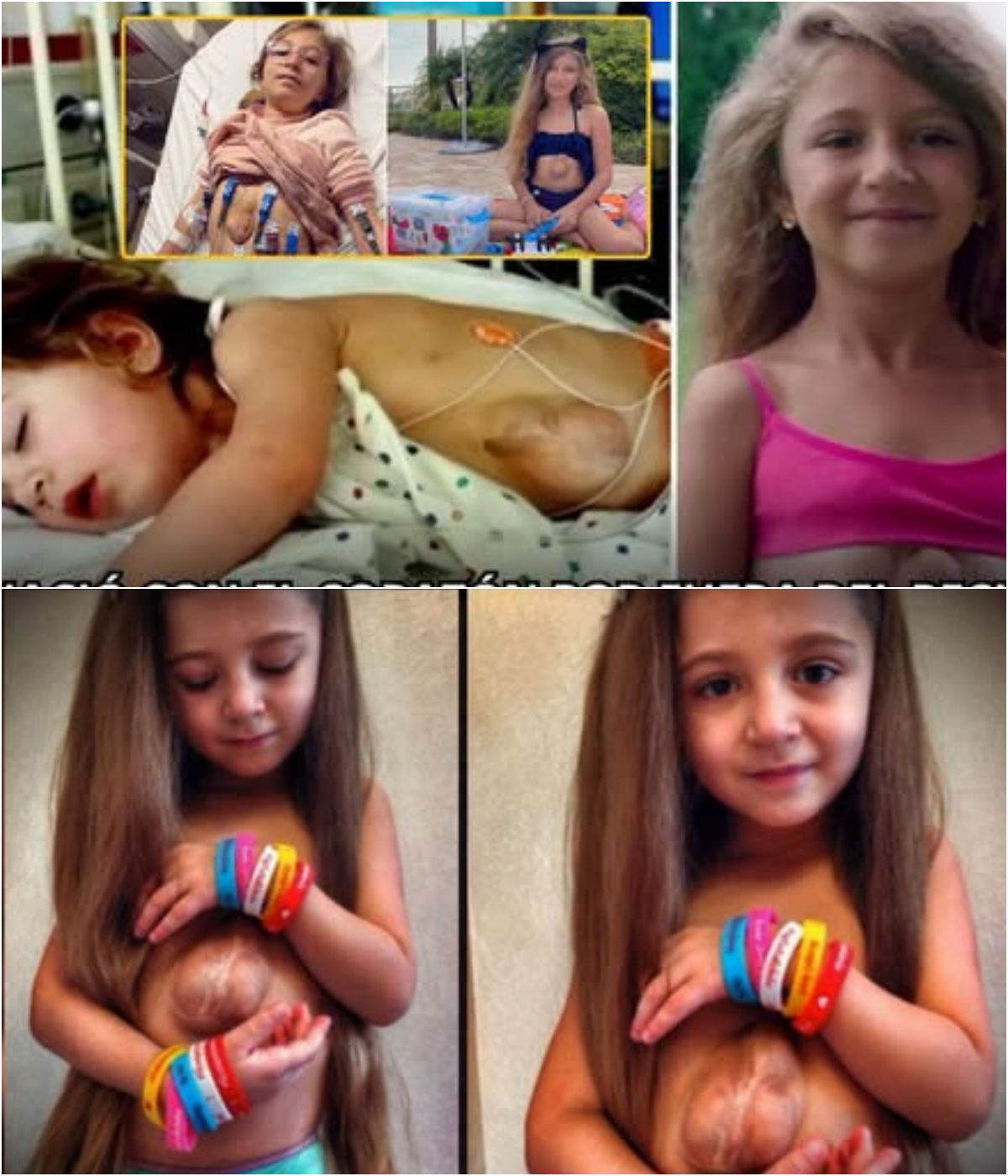
Virsaviya Borun-Goncharova was born in Novorossiysk, Russia, with one of the rarest combinations of congenital defects known to medicine: pentalogy of Cantrell with ectopia cordis. Her heart developed outside the chest cavity. The sternum, anterior diaphragm, pericardium, and abdominal wall failed to form a complete protective enclosure. Only a thin layer of skin covered the beating organ. She also had a ventricular septal defect and later developed pulmonary hypertension.
The condition occurs in roughly one in 65,000 to one in a million live births. Survival past the first hours or days is uncommon. Prenatal counseling typically emphasizes the high risk of trauma to the exposed myocardium, fatal arrhythmias, and heart failure. Doctors in Russia told her mother, Dari Borun, that the baby was unlikely to live through pregnancy or birth.
Virsaviya survived. She grew. Her heart remained visible with every systole and diastole, rising and falling beneath the skin. She learned to live with the constant need for protection: padded clothing, careful movement, and avoidance of blows to the chest. She also learned to dance, sing, draw, and speak about her condition with striking composure.
In 2015 the family left Russia for the United States, first seeking evaluation at Boston Children’s Hospital. Surgeons there considered reconstructing the chest wall and returning the heart to a more protected position, but pulmonary hypertension made the timing unsafe. The family settled in Hollywood, Florida. Surgery was deferred until adolescence or later, if pulmonary pressures improved.
In the years that followed, Virsaviya attended school activities, took dance classes, and appeared in a BBC documentary. Videos of her laughing—her heart visibly pulsing outward—circulated widely. She described the organ without self-pity: she liked when her mother touched it. She wore soft clothes so nothing would press against it. She wanted to keep the heart that made her, in her words, a miracle.
Medical literature on pentalogy of Cantrell stresses that complete forms carry a poor prognosis. Incomplete or milder expressions, careful supportive care, and the absence of catastrophic early complications can allow longer survival. Virsaviya’s case belongs to that small group. She has required hospitalizations, oxygen at times, and lifelong caution. She has not, as of the most recent public reports in 2024, undergone the major reconstructive operation once hoped for in Boston.
By then she was fifteen, still living with a heart that sits just beneath the skin, still dancing, still singing. Her story does not rewrite the statistics of a lethal malformation. It shows what one child and one determined parent can extract from those statistics: years of ordinary joy made extraordinary by the fact that they were never supposed to happen.
Sources
- 7NEWS Australia, “Rare condition Pentalogy of Cantrell means 11-year-old girl’s heart developed outside her chest cavity,” January 2021
- Newsweek, “Rare Condition Causes Girl’s Heart To Push Out Of Her Chest,” November 2017
- The Straits Times, “Russian girl, 8, born with heart outside her chest,” September 2017
- Inverse / contemporaneous 2015 reporting on the family’s move to the United States
- Orphanet and NORD summaries of pentalogy of Cantrell
- Russian regional reporting (Novorossiysk / Утренний ЮГ), 2024 updates on Virsaviya at age 15
- BBC series Incredible Medicine: Dr Weston’s Casebook (feature on Virsaviya)