PARENTS CHARGED AFTER 5-YEAR-OLD GIRL IS FOUND IN SOUTH CAROLINA WATERS DURING INTENSIVE SEARCH

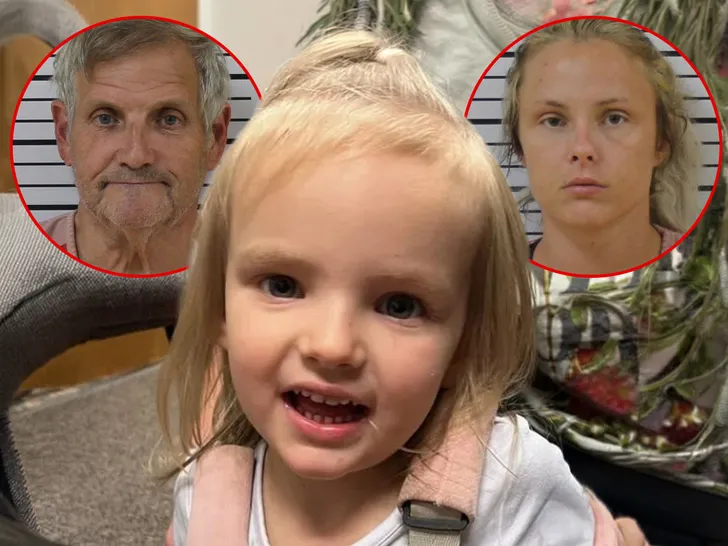
The search for a missing 5-year-old Virginia girl ended in tragedy in South Carolina, and investigators are now examining the actions of her parents after authorities say they were given misleading information during the search.
Saylor Hayes, from Bristol, Virginia, was reported missing on Sunday, August 30, after she wandered away from her family’s rental property in the Pawleys Island area of Georgetown County, South Carolina.

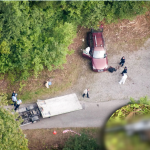
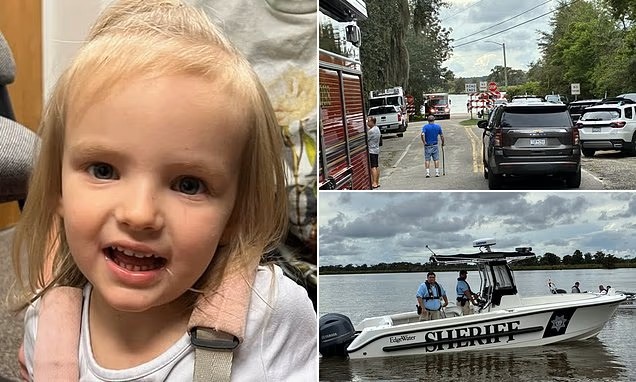
The search quickly expanded into a major multi-agency operation involving deputies, search teams, divers, helicopters, drones, K-9 units, marine patrols and hundreds of members of the community.
The following morning, authorities found Saylor in nearby waters.
On September 1, her parents, John Herb Hayes III, 70, and Geordyn Nichole Hayes, 31, were arrested in Carter County, Tennessee. Both face charges of unlawfully placing a child at risk or causing harm and/or willfully abandoning a child in connection with Saylor’s disappearance and death.
The allegations contained in the arrest warrants have not been proven in court.

THE SEARCH BEGAN AFTER SAYLOR LEFT THE RENTAL PROPERTY
Authorities said Saylor was staying with her family at a rental home in Hagley Estates in Pawleys Island when she went missing.
According to the arrest documents, Saylor was severely nonverbal, had autism, had a known attraction to water and had a history of wandering away from caregivers.
Those characteristics immediately made the search especially urgent.
The Georgetown County Sheriff’s Office launched an extensive operation after she was reported missing.
Searchers worked through the surrounding neighborhood and waterways while additional agencies were brought in to help locate her.
Authorities used:
K-9 teams
Drones
Marine patrols
Divers
Ground search teams
Helicopters
Specialized tracking equipment
Volunteers and residents searching nearby properties
A helicopter from the Charleston County Sheriff’s Office was equipped with technology associated with Project Lifesaver, the tracking program Saylor had participated in while living in Virginia.
But the technology did not produce the signal investigators expected.

SAYLOR HAD A TRACKING DEVICE — BUT IT WASN’T WITH HER
One of the most important developments in the investigation involves a tracking transmitter Saylor had been wearing through Project Lifesaver.
The Washington County Sheriff’s Office in Virginia said Saylor had been enrolled in the program since June 2024.
Project Lifesaver is designed to help locate people who may wander because of cognitive conditions or other special needs.
Participants wear a small transmitter that sends out an individualized radio frequency. Specially trained law-enforcement personnel can use receiving equipment to locate the signal if someone goes missing.
When Saylor disappeared in South Carolina, Georgetown County investigators contacted Virginia authorities and requested information about her assigned transmitter.
The information was provided.
But the signal could not be detected around Pawleys Island.
That initially created the possibility that the tracking system was not functioning properly.
Investigators later discovered something very different.
The transmitter was still in Virginia.
AUTHORITIES FOUND THE TRANSMITTER MORE THAN 300 MILES AWAY
Washington County deputies were asked to check Saylor’s home in Bristol.
According to the sheriff’s office, officers eventually located her transmitter inside a vehicle at the Virginia residence.
The discovery meant the device had not been traveling with Saylor when she disappeared in South Carolina.
The Washington County Sheriff’s Office emphasized that the transmitter is designed for continuous wear.
According to the agency, the device is attached using a specialized band that cannot simply be unclasped. The band must be physically cut in order to remove the transmitter.
The agency also said responsibility for keeping the transmitter properly secured rests with the parent, guardian or caregiver.
Sheriff Blake Andis said the technology itself had worked as designed when deputies searched for the transmitter in Virginia.
But because Saylor did not have it with her, investigators in South Carolina could not use it to locate her.
THE ARREST WARRANTS RAISED A MORE SERIOUS QUESTION
The discovery of the transmitter became particularly significant after investigators obtained information about what happened during the search.
According to the arrest warrants, Saylor’s parents knew that she was not wearing the device.
Yet investigators allege that the parents encouraged search efforts to focus on the tracking technology.
The warrants also allege that the parents directed search efforts away from a nearby body of water where investigators say Saylor had allegedly been left without adequate supervision.
Those allegations form a major part of the case against the couple.
Authorities have not said that the tracking technology itself failed.
Instead, Virginia officials have stated that the equipment detected the transmitter when deputies searched the family’s home.
The problem was that the transmitter was not on Saylor.
THE SEARCH CONTINUED THROUGH THE NIGHT
As investigators tried to determine where Saylor had gone, the search expanded across the Pawleys Island area.
According to a timeline reported by WPDE, authorities were attempting to use Project Lifesaver equipment by approximately 2:25 p.m. on August 30.
K-9 teams, drones, marine patrols and volunteers were also involved.
A Charleston County Sheriff’s Office helicopter was brought in to assist with the specialized tracking effort.
Divers from Horry County searched docks and underwater areas, while additional agencies continued searching from the air and on the ground.
The operation continued into the night.
Residents also joined the effort, searching properties and watching nearby docks and waterways.
Hundreds of people ultimately became involved in the effort to locate the child.
SAYLOR WAS FOUND THE NEXT MORNING
At approximately 9:45 a.m. on August 31, South Carolina Department of Natural Resources personnel found Saylor in waters near the area where she had last been seen.
Her recovery ended the search but immediately shifted the investigation toward determining how she reached the water and what happened before her death.
At that stage, authorities had not publicly released a cause of death.
The investigation into the circumstances surrounding her death continued.
THE PARENTS WERE ARRESTED IN TENNESSEE
The following day, September 1, authorities announced that Saylor’s parents had been arrested.
John Herb Hayes III and Geordyn Nichole Hayes were taken into custody in Carter County, Tennessee, where they remained while extradition proceedings were initiated.
They are expected to be returned to Georgetown County to face the charges in South Carolina.
The charges are based on allegations that the parents failed to provide the level of supervision and safeguards investigators say were appropriate for Saylor’s circumstances.
The warrants specifically refer to her being severely nonverbal, autistic, having an affinity for water and having a history of elopement.
The parents have not been convicted of the charges.
AUTHORITIES SAY THE CASE FOLLOWED THE EVIDENCE
Georgetown County Sheriff Carter Weaver said investigators followed the evidence as the case developed.
The sheriff described Saylor as a vulnerable child who depended on the adults responsible for her care and protection.
He also acknowledged the efforts of deputies, first responders, partner agencies and community members who spent hours searching for her.
The sheriff’s office said the case has now entered the judicial process.
Authorities have emphasized that the arrests followed an investigation rather than being made simply because Saylor’s parents were her caregivers.
The evidence cited in the warrants will now be examined through the court system.
WHY PROJECT LIFESAVER HAS BECOME CENTRAL TO THE CASE
The case has also drawn attention to how Project Lifesaver works.
The program is specifically designed for people who may be at increased risk of wandering.
The transmitter is not a GPS phone and does not operate like a conventional smartphone location service.
Instead, it broadcasts a radio signal that can be detected by specialized equipment operated by trained personnel.
The Washington County Sheriff’s Office said the system has successfully assisted in searches involving other participants.
Sheriff Andis said that when his personnel searched for Saylor’s assigned frequency in Virginia, the equipment detected the transmitter and led officers to its location.
But he also emphasized that no technology can guarantee an outcome in every missing-person case.
In Saylor’s case, the critical issue was that the transmitter remained behind.
OFFICIALS SAY THE DEVICE WAS NOT SIMPLY REMOVED BY THE CHILD
The Washington County Sheriff’s Office addressed another important detail after questions arose about why the transmitter was not with Saylor.
According to the agency, the transmitter’s specialized band is intended for continuous wear and cannot simply be unclasped by the person wearing it.
The band must be physically cut to remove the device.
That information is now relevant to the investigation because authorities allege that Saylor’s parents knew she was not wearing the transmitter when she went missing.
Exactly when and how the transmitter was removed remains part of the broader investigation.
THE WATER BECAME A CRITICAL LOCATION
Investigators’ attention ultimately focused heavily on the waterways around the rental property.
The arrest warrants allege that Saylor was left unsupervised relatively close to a body of water.
Authorities also allege that search efforts were initially directed away from that area.
That allegation is particularly significant because Saylor’s documented history included an attraction to water.
The fact that her body was eventually located in nearby water has become one of the central elements of the investigation.
However, the precise sequence of events leading to her being in the water has not been fully established publicly.
QUESTIONS REMAIN ABOUT WHAT HAPPENED BEFORE SHE WENT MISSING
The arrests answer one question — whether authorities believe there was sufficient evidence to bring charges against the parents.
They do not answer every question surrounding Saylor’s final hours.
Investigators still have to establish the complete timeline.
Among the issues likely to remain important are:
When Saylor was last seen by her parents.
How long she was without direct supervision.
When the tracking transmitter was removed.
Who removed the device.
What the parents told investigators during the initial search.
Why search efforts were allegedly directed toward the tracking device.
What happened between the time Saylor left the rental property and when she entered the water.
The arrest warrants provide investigators’ allegations, but the complete factual record will emerge through the ongoing investigation and court proceedings.
VIRGINIA AND SOUTH CAROLINA AUTHORITIES ARE WORKING TOGETHER
Because Saylor lived in Virginia but disappeared while visiting South Carolina, investigators from two states became involved.
The Washington County Sheriff’s Office has been working with the Georgetown County Sheriff’s Office to investigate the circumstances surrounding her disappearance and death.
Virginia authorities have focused in part on the Project Lifesaver transmitter and its discovery at the family’s home.
South Carolina investigators have focused on the events surrounding Saylor’s disappearance from the rental property and her subsequent recovery from the water.
The agencies have said the investigation remains ongoing.
THE FAMILY’S VACATION ENDED WITH A MULTI-AGENCY SEARCH
Saylor had traveled with her parents to South Carolina.
What began as a family trip quickly became a large-scale emergency.
Within hours, law enforcement officers, specialized search teams and residents were searching the area.
The operation involved land, water and air resources.
Drones searched from above.
Divers checked underwater areas.
K-9 teams searched on the ground.
Helicopters assisted with aerial operations.
Neighbors searched nearby properties and guarded docks.
But despite the extensive effort, Saylor was not found until the following morning.
THE CASE NOW MOVES INTO COURT
John Hayes and Geordyn Hayes face the same basic criminal allegation: that they unlawfully placed their daughter at risk or willfully abandoned her.
The charges do not establish guilt.
The prosecution will have to prove its allegations under South Carolina law.
The parents were being held in Tennessee while arrangements were made for their return to Georgetown County.
As of the latest reports reviewed for this article, authorities had not announced a conviction or final court ruling in the case.
A FIVE-YEAR-OLD AT THE CENTER OF A CASE THAT CROSSED TWO STATES
Saylor’s story began with a missing-child alert and ended with investigators examining the actions of the people responsible for her care.
She was five years old.
She was nonverbal and autistic.
Authorities say she had a known history of wandering and an attraction to water.
She had previously been enrolled in a specialized tracking program intended to help locate her if she disappeared.
But when she went missing in South Carolina, the transmitter that could have helped searchers locate her was more than 300 miles away.
Authorities ultimately found that transmitter in Virginia.
They found Saylor the next morning in South Carolina waters.
Now her parents face criminal charges, while investigators continue working to establish the full circumstances surrounding her disappearance and death.
Sheriff Weaver said the investigation is now moving through the judicial process.
For Saylor’s family, however, the central fact remains unchanged: a five-year-old girl went missing during a family trip, and an enormous search effort could not bring her home alive.
The legal process will now determine whether the allegations against her parents can be proven in court.
SOURCES
ABC News — reporting on the arrests, arrest warrants and allegations against Saylor’s parents.