IRYNA ZARUTSKA’S FAMILY FILES WRONGFUL-DEATH LAWSUIT — LAWSUIT ALLEGES SECURITY GAPS LEFT TRAIN PASSENGERS VULNERABLE
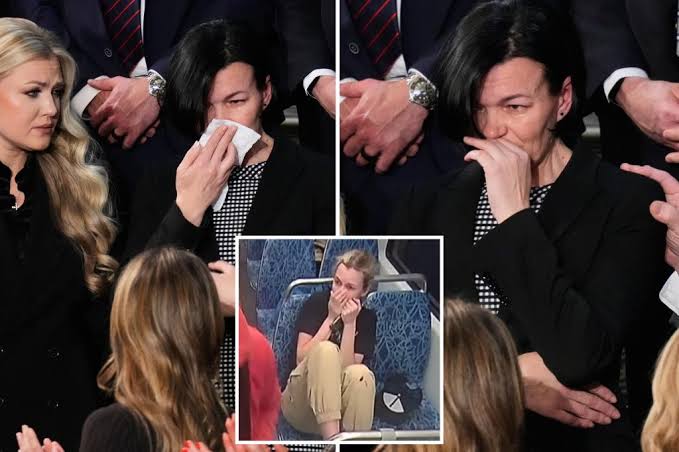
The family of Iryna Zarutska, the 23-year-old Ukrainian refugee whose death aboard a Charlotte light-rail train shocked the country, has filed a wrongful-death lawsuit accusing the city and its private transit security contractor of failing to provide adequate protection for passengers.

The lawsuit was filed nearly one year after Zarutska was attacked aboard the LYNX Blue Line in Charlotte, North Carolina.
Her family is seeking financial damages from the City of Charlotte and Professional Security Services Inc. (PSS), the private company responsible for providing security for the Charlotte Area Transit System, commonly known as CATS.
At the heart of the complaint is a question the family says must be answered:
Could stronger security measures on Charlotte’s transit system have prevented what happened to Iryna?
The lawsuit argues that the city and security contractor had information about previous incidents of violence around the transit system but failed to take sufficient steps to protect passengers.
Those claims have not been adjudicated in court.

THE ATTACK THAT BROUGHT NATIONAL ATTENTION
Zarutska was riding the Charlotte light rail on August 22, 2025, after finishing a shift at a local pizzeria.
She had recently arrived in the United States from Ukraine and was building a new life in Charlotte.
According to authorities, Zarutska boarded a Blue Line train and took a seat.
Decarlos Brown Jr. was already aboard the train.
Investigators say Brown attacked Zarutska from behind during the ride.
The attack was captured by surveillance cameras inside the train, and the footage later became widely circulated online.
The incident shocked Charlotte and quickly became a national story, with attention focusing not only on the attack itself but also on the safety of the city’s public transportation system.
Brown was subsequently arrested and charged in connection with Zarutska’s death.
A federal case was also brought against him.
However, in June 2026, a judge ruled that Brown was incompetent to stand trial because of mental illness, meaning the criminal proceedings against him could not immediately move forward.
The family has now turned to civil court.

THE FAMILY SAYS THE TRAGEDY WAS PREVENTABLE
The 33-page lawsuit argues that Zarutska’s death resulted from failures within Charlotte’s transit system.
Her family’s attorney, Lauren Newton, has described the lawsuit as an attempt to address what she calls systemic problems rather than simply seek compensation.
The complaint alleges that CATS lacked adequate security personnel, meaningful fare enforcement and physical barriers that could have prevented people from entering the system without paying.
The lawsuit specifically alleges that Brown was able to enter the transit system without paying a fare and travel through Charlotte without being stopped or questioned by transit personnel.
The family argues that these conditions created an environment in which passengers could be exposed to foreseeable risks.
The city and PSS have not accepted those allegations as established facts.
Charlotte officials have said they do not comment on active litigation. PSS did not immediately provide a response when contacted by news organizations.

THE LAWSUIT’S CENTRAL CLAIM: NO SECURITY GUARD WAS ON THE TRAIN
One of the most significant allegations concerns the lack of a security officer aboard the train when Zarutska was attacked.
The lawsuit says no security guard was present on the Blue Line train at the time.
It also alleges that PSS was not fully staffed despite its contract with the city providing funding for a larger security operation.
According to the complaint, the contract provided funding for 219 security positions during fiscal years 2025 and 2026.
The lawsuit alleges that PSS had hired only 183 security personnel when Zarutska was attacked.
The complaint further alleges that the contract allowed for as many as 39 armed security personnel, while PSS had only 11 armed guards at the time.
The family’s attorney argues that the staffing shortage was significant.
She told WBTV that if a security officer had been aboard the train, Zarutska might still be alive.
That statement is an allegation and has not been established by a court.
The lawsuit must still prove that the defendants had a legal duty, breached that duty and that the alleged failures caused or contributed to Zarutska’s death.
FARE ENFORCEMENT IS ANOTHER MAJOR ISSUE
The family is also challenging how passengers were allowed to access the Charlotte transit system.
The complaint alleges that there were no physical barriers, such as gates or turnstiles, preventing people from entering without paying.
The lawsuit argues that this made it possible for riders to move through the transit system without meaningful screening or fare enforcement.
The complaint specifically claims that Brown entered CATS transportation without paying before the attack.
This allegation has become part of a much broader debate about transit safety in Charlotte.
A recent report from the North Carolina State Auditor’s Office also examined CATS’ approach to fare enforcement and security.
According to reporting on the audit, fare-evasion citations fell substantially between 2023 and 2025.
The number reportedly dropped from 4,763 citations in 2023 to 2,018 in 2025.
The lawsuit argues that these conditions should have been addressed before Zarutska’s death.
THE FAMILY POINTS TO PREVIOUS VIOLENCE
The complaint also alleges that city officials and transit authorities had reason to know that violent incidents had occurred around the Blue Line before Zarutska was attacked.
The lawsuit references four homicides at or near transit stops in the period leading up to Zarutska’s death.
It argues that those incidents should have alerted officials to the need for stronger security measures.
The family’s attorney has described violent crime on the transit system as foreseeable.
Again, this is the family’s legal argument, not a court finding.
The defendants will have an opportunity to contest those allegations as the lawsuit proceeds.
WHAT THE STATE AUDIT FOUND
The lawsuit comes after a state audit that examined the Charlotte Area Transit System.
The audit raised concerns about multiple aspects of the system, including security, fare enforcement and the way the transit agency manages its operations.
One issue highlighted in reporting surrounding the audit was the lack of gates or turnstiles at CATS stations.
Unlike many major transit systems, Charlotte’s light rail generally allows passengers to access platforms without passing through a controlled entry point.
That system is based partly on proof-of-payment enforcement rather than physical barriers.
The Zarutska family’s lawsuit argues that the system left too much responsibility on transit workers and passengers without providing sufficient security resources.
A SECURITY CONTRACT UNDER SCRUTINY
PSS has become a central defendant because it was responsible for providing security services under a contract with the city.
The lawsuit alleges that the company did not meet the staffing levels contemplated by its contract.
The complaint says that the city’s agreement provided funding for hundreds of security personnel, including dozens of armed officers.
But the family alleges that the actual staffing level was considerably lower.
The complaint also raises questions about how security resources were deployed.
Having security personnel somewhere within the transit system, the family argues, is different from having personnel positioned on trains where attacks can occur.
That distinction is likely to become an important issue if the lawsuit proceeds toward discovery and trial.
THE CASE IS ABOUT MORE THAN MONEY
Although the lawsuit seeks financial damages, Zarutska’s family says compensation is not the only objective.
Her attorney has said the family wants changes to Charlotte’s public transportation system so another passenger does not experience a similar tragedy.
The lawsuit seeks to hold the defendants accountable for what the family describes as systemic failures.
The family argues that Iryna should not be remembered only as the victim of a highly publicized attack.
They want the case to result in changes that improve safety for other riders.
WHO WAS IRYNA ZARUTSKA?
Zarutska was 23 years old when she died.
She had come to the United States from Ukraine and was living in Charlotte.
Her family has described her as a young woman who was building a new life after leaving Ukraine.
She worked at a pizzeria and used public transportation as part of her daily routine.
On the evening of August 22, 2025, she boarded the Blue Line while traveling home.
What should have been an ordinary trip became a tragedy that would draw international attention.
Her family has repeatedly emphasized that she was simply going about her everyday life when the attack occurred.
THE VIDEO BECAME CENTRAL TO THE CASE
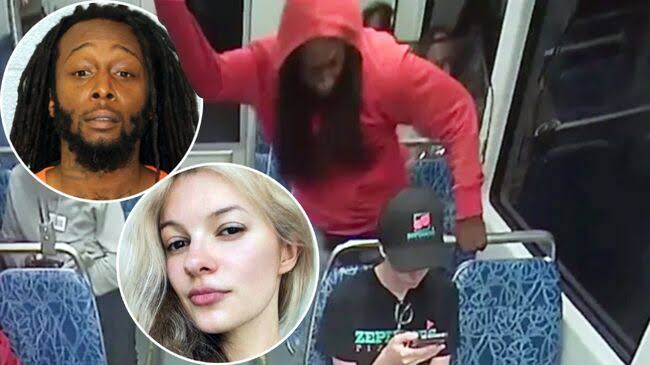
Security footage from inside the train captured the attack.
The video showed Zarutska sitting near Brown shortly before the incident.
The footage later spread widely online.
Because the attack happened inside a public transit vehicle and was captured by cameras, the case received immediate attention.
The video also raised questions about whether anyone on the train could have intervened.
The family’s lawsuit now places those questions within a civil negligence claim.
However, determining whether a security officer could actually have prevented the attack would require evidence concerning timing, staffing, response procedures and the circumstances inside the train.
That issue has not been resolved by a court.
BROWN’S CRIMINAL CASE IS SEPARATE
The wrongful-death lawsuit is separate from the criminal prosecution against Brown.
Brown was charged in connection with Zarutska’s death.
He also faces a federal charge connected to the case.
But his criminal proceedings were complicated by the court’s finding that he was not competent to stand trial.
That means the civil lawsuit may proceed independently of the criminal case.
The family’s attorneys can pursue their claims against the city and PSS regardless of whether Brown’s criminal case reaches trial in the immediate future.
THE FAMILY IS SEEKING DAMAGES
The estate is seeking compensatory damages from the defendants.
The lawsuit also seeks punitive damages against PSS.
Punitive damages are different from ordinary compensation because they are generally intended to punish particularly serious misconduct and deter similar conduct in the future.
The complaint alleges negligence, inadequate security and gross negligence.
The exact amount of damages that could ultimately be awarded, if the family prevails, would depend on the court proceedings.
At this stage, no damages have been awarded.
THE CITY HAS DECLINED TO COMMENT
Because the lawsuit is active, the City of Charlotte has declined to discuss the allegations in detail.
PSS also had not provided an immediate response when the initial reports about the lawsuit were published.
That means many of the allegations in the complaint have yet to be tested through the discovery process.
Civil lawsuits often contain competing versions of events, and the filing itself does not establish liability.
The defendants will have the opportunity to challenge the family’s claims and present their own evidence.
THE FAMILY WANTS CHANGES TO CHARLOTTE TRANSIT
Beyond the legal case, the lawsuit has reopened a broader discussion about how Charlotte should protect people who depend on public transportation.
Questions include:
Should more security officers be assigned directly to trains?
Should CATS increase fare enforcement?
Should physical barriers be installed at stations?
How many armed and unarmed officers are actually needed?
How should security personnel be distributed across the system?
What response should occur when someone is behaving unpredictably?
How should previous violent incidents influence future security planning?
The Zarutska case has become a focal point for those discussions.
A YEAR LATER, THE QUESTIONS HAVE NOT GONE AWAY
One year after Zarutska’s death, her family is seeking answers through a different part of the legal system.
The criminal case focuses on the person accused of carrying out the attack.
The civil lawsuit focuses on the institutions responsible for operating and securing the transit system.
Those are two separate questions.
The family is now asking whether the city and its security contractor did enough to protect passengers given the conditions that existed before August 22, 2025.
The defendants will have the opportunity to dispute those claims.
WHAT HAPPENS NEXT?
The lawsuit will now move through the civil court process.
The city and PSS are expected to respond to the complaint.
The parties could eventually enter discovery, during which documents, staffing records, security policies, communications and other evidence may be examined.
The case could ultimately go to trial, although a settlement is also possible.
One issue likely to receive particular attention is the security contractor’s staffing levels on the night Zarutska was attacked.
Another will be whether the city had sufficient notice of potential risks and whether the alleged security shortcomings legally contributed to the tragedy.
Those questions will ultimately be decided through the court process rather than by the allegations alone.
IRYNA’S FAMILY SAYS THEY WANT SOMETHING TO CHANGE
For Zarutska’s relatives, the lawsuit represents another attempt to address what happened after she boarded the train that night.
They cannot bring her back.
But they say they hope the case will lead to greater security and accountability within Charlotte’s transit system.
The family’s attorney has emphasized that they do not want another family to experience a similar loss.
The lawsuit therefore places Iryna’s death within a larger debate about public transportation, security staffing, fare enforcement and institutional responsibility.
The allegations have not yet been proven in court. But as the wrongful-death case moves forward, the evidence surrounding Charlotte’s transit security policies and staffing on the night of August 22, 2025, is likely to come under much closer examination.
Sources
Fox News — Iryna Zarutska family wrongful-death lawsuit