THE DAUGHTER THEY CALLED A FAILURE – PART 2 — THE SECRET BEHIND HER NAME
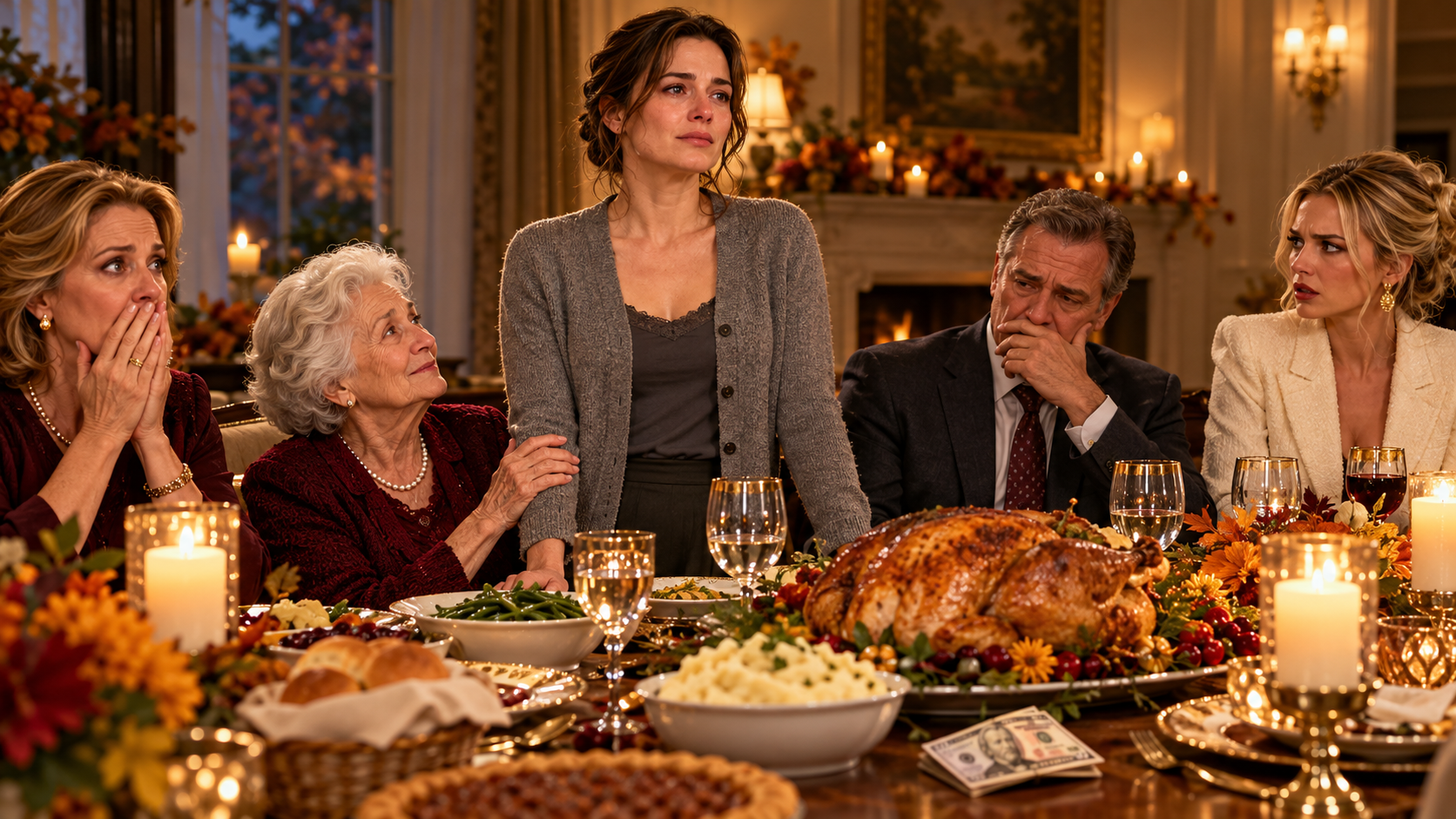
“Go ahead, Diane,” Grandma Rose repeated.
“Tell them where Ellen actually works.”
My mother stared at her as if she had suddenly started speaking another language.
The Thanksgiving table had gone completely silent.
Seventeen relatives.
One untouched fifty-dollar bill.
And my eighty-one-year-old grandmother standing in the middle of the dining room, waiting for an answer my mother should have known years ago.
“Well,” Mom began, forcing a little laugh, “Ellen works in a hospital. We’ve always known that.”
Grandma tilted her head.
“Doing what?”
Mom’s smile faltered.
“Something with cleaning, I believe.”
I lowered my eyes.
There it was again.
The same answer she’d been giving people for more than a decade.
Only this time, nobody laughed.
Grandma slowly turned toward me.
“Ellen, sweetheart. Would you like to tell them?”
I looked around the table.
Aunt Ruth was gripping her water glass.
My father still had his hand resting beside the fifty-dollar bill.
Naomi sat perfectly still.
And for the first time all evening, every person in that room was actually waiting for me to speak.
“I work for Ashcom Regional Health Network,” I said.
Mom waved one hand.
“Yes, dear. We know. You’ve mentioned that before.”
“I’m the chief operating officer.”
Silence.
Not the uncomfortable silence that follows a bad joke.
Something heavier.
The kind of silence that happens when everyone realizes the story they’ve believed for years may have been completely wrong.
Uncle Ford frowned.
“Chief operating officer?”
“Yes.”
“Of what, exactly?”
“Ashcom Regional Health Network. We operate four hospitals across the state, along with several outpatient facilities.”
Aunt Ruth blinked.
“Four hospitals?”
I nodded.
My father finally pulled his hand away from the money.
Mom gave a short, nervous laugh.
“Well, Ellen, titles can mean different things at different companies.”
I had expected that.
I had spent most of my life expecting it.
“That’s true,” I said. “In my case, it means I oversee hospital operations, strategic planning, system performance, and several thousand employees across our network.”
Nobody touched their food.
Then Uncle Ford leaned forward.
“Wait a minute. Ashcom owns St. Matthew’s Medical Center, doesn’t it?”
“Yes.”
He glanced toward Naomi.
“Isn’t that where Naomi works?”
I looked at my sister.
“It is.”
For a moment, the entire room seemed to freeze around her.
Naomi’s smile had disappeared.
Mom looked from me to Naomi.
“That’s impossible.”
I didn’t answer.
She leaned forward.
“Naomi just became head of cardiothoracic surgery at St. Matthew’s.”
“I know.”
“How would you know?”
“Because I attended the executive meeting where the department’s leadership transition was discussed.”
My mother’s face changed.
Only slightly.
But I noticed.
She had spent years introducing Naomi as the daughter who mattered.
Now she was beginning to understand that the daughter she mocked had been working within the same institution she used to celebrate her favorite child.
Dad cleared his throat.
“So you’re saying you’re Naomi’s boss?”
“No,” I replied. “Naomi reports through the medical leadership structure. My role is on the operational side. We work in the same hospital system, but we have different responsibilities.”
I watched Mom absorb that distinction.
She seemed almost relieved.
“So you aren’t actually a doctor.”
“No, Mom. I’m not.”
“Then why are you making this sound—”
“Diane.”
Grandma’s voice cut through the room.
Mom stopped.
Grandma looked at her daughter with an expression I had rarely seen.
Not anger.
Disappointment.
“Your child just told you she’s an executive responsible for four hospitals, and the first thing you want to establish is what she isn’t?”
Mom’s cheeks flushed.
“I didn’t mean it like that.”
“You never do.”
Nobody moved.
Grandma slowly sat down.
But she wasn’t finished.
“Ellen,” she said gently, “tell them about Willowbrook.”
I felt something tighten in my chest.
“Grandma.”
“Tell them.”
My father looked confused.
“Willowbrook Medical?”
“Yes,” Grandma replied. “The hospital where you receive your cardiac care.”
Dad turned toward me.
“What about it?”
I took a sip of water.
“Willowbrook is one of Ashcom’s hospitals.”
My mother frowned.
“So?”
“I helped lead the operational redesign that improved referral processing, appointment coordination, and patient access there.”
Dad stared.
“That’s the new system Dr. Morrison was talking about?”
“Yes.”
He had been praising it for months.
His appointments had become easier to schedule.
His referrals were processed more efficiently.
He had told everyone at Easter that Willowbrook was finally being managed by people who understood what patients needed.
He hadn’t known he was talking about my work.
Mom shifted uncomfortably.
“Well, that’s nice, Ellen, but lots of people contribute to those things.”
“They do,” I said.
I meant it.
Thousands of people worked hard across Ashcom.
Doctors.
Nurses.
Technicians.
Maintenance staff.
Environmental services workers.
Administrative teams.
I had never considered myself better than the people cleaning hospital rooms.
In fact, I’d spent enough years working beside them to know how much hospitals depended on their labor.
That was why my mother’s insult had always bothered me for reasons she never understood.
There was nothing shameful about cleaning toilets.
The shame was in using someone’s honest work as a weapon to humiliate them.
“I started in environmental services when I was nineteen,” I continued.
Mom immediately seized on that.
“See? I wasn’t making it up!”
“No,” I said quietly. “You weren’t.”
Her smile returned.
For approximately three seconds.
“Then what’s everyone so upset about?”
“Because I haven’t had that job in sixteen years.”
The smile vanished.
I set down my water glass.
“I worked nights cleaning hospital rooms while attending community college. Then I became a scheduling coordinator. After that, a department supervisor. I finished my bachelor’s degree, earned my master’s in healthcare administration, and moved into hospital operations.”
Aunt Ruth whispered, “You have a master’s degree?”
“Two, actually. I completed an MBA later.”
I had never seen Aunt Ruth look so uncomfortable.
“You never told us.”
I met her eyes.
“I did.”
She opened her mouth.
Then closed it.
“I told you at Christmas seven years ago,” I continued. “You asked whether I was still cleaning floors. I told you I’d just completed my MBA.”
Aunt Ruth looked down.
“You said, ‘That’s lovely, dear,’ and asked Naomi about her residency.”
Nobody spoke.
I hadn’t intended to embarrass her.
But I was tired of pretending these conversations hadn’t happened.
I looked toward Uncle Ford.
“When I became hospital vice president, I mentioned it at Dad’s birthday dinner.”
He rubbed his forehead.
“I don’t remember that.”
“I know.”
My mother sat back.
“This is ridiculous. You’re acting as though we’ve deliberately ignored your entire life.”
I looked at her.
For the first time that evening, I felt something close to anger.
Not because she didn’t know my title.
Not because she’d failed to memorize my accomplishments.
But because she still couldn’t hear what I was saying.
“Mom,” I asked, “when was the last time you asked me how work was going?”
She looked offended.
“I ask you about work all the time.”
“When?”
“Well, certainly—”
“Last Thanksgiving, you asked whether I got a Christmas bonus for cleaning during the holidays.”
A cousin near the end of the table lowered his head.
“At Easter, you asked if I still had to wear rubber gloves.”
My mother’s mouth tightened.
“And on my birthday, you sent me a card with a cartoon mop on it.”
Naomi closed her eyes.
I turned toward her.
“Do you remember that?”
She didn’t answer immediately.
Then she nodded.
“Yes.”
Something about the way she said it caught my attention.
It wasn’t surprise.
It wasn’t embarrassment over learning something new.
It sounded like recognition.
As if Naomi had been waiting for this conversation.
My father picked up the fifty-dollar bill.
For a second, I thought he was going to put it back into his wallet.
Instead, he folded it carefully.
“Ellen,” he began, “I didn’t realize—”
“I know, Dad.”
He stopped.
That was the problem.
None of them had realized.
Because none of them had looked.
Grandma reached across the table and squeezed my hand.
“I’m proud of you, sweetheart.”
Five words.
That was all.
And somehow, after everything I’d just said, those five words nearly broke me.
I swallowed hard.
“Thank you, Grandma.”
Mom watched us.
Then, almost desperately, she looked toward Naomi.
“Sweetheart, surely you knew something about this. You work at the same hospital.”
Naomi’s face went pale.
I noticed immediately.
So did Grandma.
Naomi slowly put down her fork.
“Mom,” she said, “can we not do this tonight?”
My mother frowned.
“Do what?”
“This.”
“But Ellen is making everyone think we’ve been neglecting her!”
Naomi looked at me.
There was something in her expression I couldn’t identify.
Guilt, perhaps.
Or fear.
And suddenly, I remembered something from three months earlier.
A leadership reception at St. Matthew’s.
Naomi had arrived with several senior physicians.
I had been standing beside the network CEO when she entered.
Our eyes had met.
She had seen me.
She knew exactly who I was.
And when her colleagues approached, she had turned away without introducing us.
At the time, I told myself she simply wanted to keep our professional and family lives separate.
Now I wasn’t so sure.
“Naomi,” I said quietly.
She looked at me.
“Did you know?”
The question seemed harmless.
But her face told me it wasn’t.
“Know what?”
“That Mom still tells everyone I clean toilets.”
Naomi stared at her plate.
My mother immediately interrupted.
“Oh, for heaven’s sake, it’s just an old family joke!”
“Naomi,” I repeated.
My sister finally looked up.
“Yes.”
One word.
And suddenly the air felt different.
“Yes, what?” Dad asked.
Naomi swallowed.
“Yes, I knew.”
Mom blinked.
“You knew Ellen had some kind of management job?”
Naomi let out a shaky breath.
“Mom, Ellen isn’t just some manager.”
She turned toward me.
“She’s one of the most respected operations executives in our hospital network.”
My father stared at her.
Aunt Ruth’s mouth fell open.
Naomi continued.
“Her work has been discussed at national healthcare conferences. The patient-access initiative she helped develop became a model for other hospitals.”
I couldn’t move.
Not because of the praise.
Because my sister knew.
She knew the details.
She knew far more than I had ever suspected.
Mom looked bewildered.
“Then why didn’t you tell us?”
Naomi’s expression changed.
And in that moment, I saw something I had never seen in my older sister.
She looked frightened.
“Because,” she whispered, “it wasn’t that simple.”
I felt my stomach tighten.
“What wasn’t?”
Naomi looked around the table.
Then she looked directly at me.
“Ellen, there’s something about my promotion you don’t know.”
The room fell silent again.
Grandma slowly withdrew her hand from mine.
“What are you talking about, Naomi?” I asked.
My sister’s eyes filled with tears.
She shook her head.
“I never wanted you to find out this way.”
My mother reached for her.
“Sweetheart, what’s wrong?”
Naomi pulled her hand away.
Then she said seven words that changed everything.
“Ellen, they told me to keep quiet.”
I stared at her.
“Who told you?”
She looked toward the window.
Then back at me.
And when she finally answered, I understood that Thanksgiving wasn’t going to end with a simple family apology.
“Someone at Ashcom.”
TO BE CONTINUED…
PART 3 — THE SISTER WHO KNEW