Part 5: The Widow’s Greatest Miracle — Full Ending
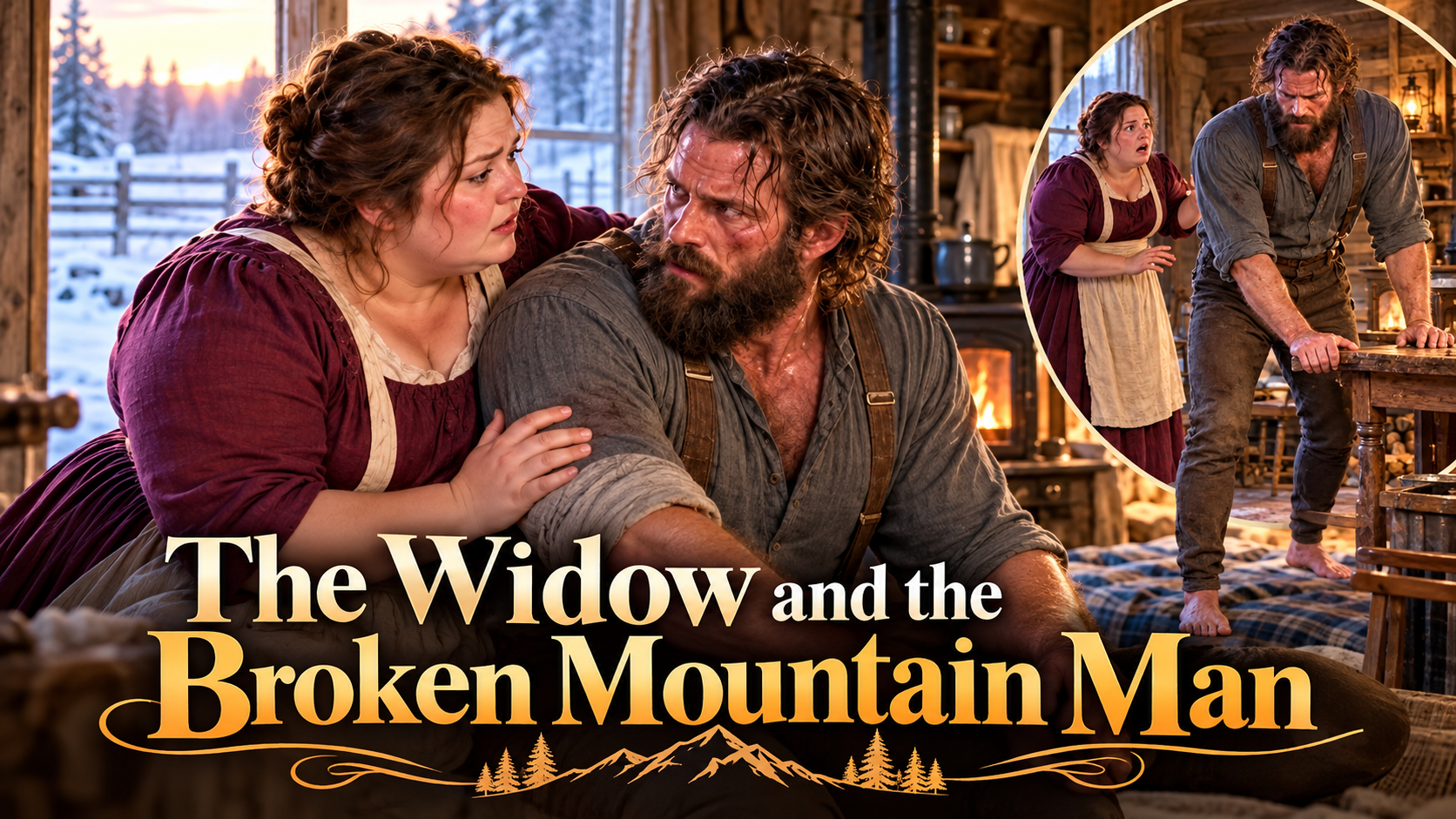
For four years, Martha Bell had prayed to see her husband one more time.
When that prayer was finally answered, she discovered she no longer wanted the life she had lost.
Thomas Bell stood beneath the old church oak, thin and gray, looking like a ghost that had forgotten how to haunt.
“Martha.”
His voice broke.
She stared at him.
Four years.
Four winters.
Four birthdays spent alone.
Four years of scraping together enough money to keep their farm.
Four years of wondering whether she could have saved him.
And there he stood.
Alive.
“Don’t,” she whispered.
Thomas stopped.
“Please let me explain.”
Martha shook her head.
“You let me bury you.”
Tears rolled down his cheeks.
“I had no choice.”
“You always had a choice.”
Colum sat against the church wall, breathing heavily.
His legs were trembling from the escape.
But his eyes remained fixed on Thomas.
“Tell her,” Colum said.
Thomas lowered his head.
Then the truth finally emerged.
Four years earlier, Thomas had uncovered evidence that the Blackthorn Mining Company was defrauding investors and stealing land from local families.
He had planned to expose the scheme.
But Amos Higgins discovered his intentions.
Thomas was captured.
The company staged his death.
A stranger’s body was buried beneath Thomas’s name.
Martha had mourned the wrong man.
For two years, Thomas was held in an isolated mining camp.
He eventually escaped.
But instead of returning home, he began gathering additional evidence against the company.
He feared that approaching Martha would expose her to danger.
So he stayed away.
He changed his appearance.
He traveled under false names.
And he watched from a distance as Martha struggled to survive.
Martha listened without moving.
Finally, she asked one question.
“Did you ever come to the farm?”
Thomas hesitated.
“Yes.”
“How many times?”
“Several.”
She closed her eyes.
“You saw me?”
“Yes.”
“Working alone?”
He nodded.
“Hauling water? Repairing fences? Selling my mother’s wedding ring to buy seed?”
Thomas began crying.
“I wanted to help.”
“But you didn’t.”
“I was trying to protect you.”
Martha looked at him with a sadness deeper than anger.
“You protected your secret, Thomas. You didn’t protect me.”
The words left him speechless.
Then Martha turned toward Colum.
“And you?”
The mountain man looked away.
“That note said you weren’t who you claimed.”
Colum nodded slowly.
“My name is Colum Cain.”
“Then what did Thomas mean?”
Thomas answered.
“Colum wasn’t simply my friend.”
He took a breath.
“He’s my older brother.”
Martha stared.
“Your brother?”
Colum looked at her.
“Half-brother. Same father. Different mothers.”
Thomas explained that their father had abandoned Colum’s mother before marrying into another family.
Colum grew up in the mountains.
Thomas grew up in town.
They met as adults and eventually worked together.
But Thomas had been ashamed of the family secret.
He never told Martha.
When Thomas disappeared, Colum searched for him for years.
Then he learned that the company planned to seize the Bell farm.
He returned to protect Martha.
But Amos’s men attacked him on the ridge.
His injuries were real.
His pain was real.
And when the town abandoned him at Martha’s door, he believed his life was over.
“I didn’t come to deceive you,” Colum said quietly.
“I came because Thomas asked me to protect the farm. Then I got hurt. And you took me in when nobody else would.”
Martha studied him.
“Why didn’t you tell me you were his brother?”
“Because I was ashamed.”
“Of what?”
“Of being the brother nobody wanted to acknowledge.”
Martha’s expression softened.
Colum continued.
“Then you fed me. You washed my blankets. You argued with me when I wanted to die. You made me feel like a man again.”
His voice broke.
“And I was afraid that if you knew why I’d come, you’d think everything between us was a lie.”
Martha knelt beside him.
“Was it?”
He looked directly into her eyes.
“No.”
For a long moment, neither spoke.
Then Martha placed her hand over his.
“Good.”
But the morning was not finished.
Amos Higgins, who had been sitting silently near the church steps, suddenly reached into his coat.
Colum saw the movement.
“Martha!”
Amos pulled a small pistol.
Before he could raise it, Elsie Ward stepped from behind the church gate.
“Stop!”
Behind her came Sheriff Daniel Mercer and six armed deputies.
Ruth Ellison had brought them after Elsie revealed the plan.
And the sheriff was not alone.
A federal investigator from Denver accompanied him.
His name was Henry Whitcomb.
He had spent nearly a year investigating the Blackthorn Mining Company.
Thomas had secretly contacted him weeks earlier.
The investigator already possessed copies of the missing financial records.
Martha’s locket contained the final piece of evidence: a handwritten key identifying the hidden accounts and the men who controlled them.
The company could no longer deny its crimes.
Amos dropped the pistol.
Within hours, he and the surviving conspirators were arrested.
The mine entrances were sealed.
The fraudulent deeds were seized.
And the investigation spread across three states.
But the greatest surprise was still waiting.
Three weeks later, Martha received a letter from the district land office.
She opened it at the kitchen table.
Colum sat nearby, carefully exercising his recovering legs.
Elsie, now living temporarily with Ruth Ellison, was visiting and helping Martha bake bread.
Martha read the letter once.
Then again.
Then she sat down.
Colum frowned.
“What’s wrong?”
She began laughing.
He stared.
“Martha?”
She laughed harder.
Then tears filled her eyes.
“The farm.”
“What about it?”
She held out the letter.
“The bank doesn’t own the debt.”
Colum took the document.
The fraudulent mortgage had been invalidated.
But that was only the beginning.
The original land surveys proved that the Bell property extended far beyond its recorded boundaries.
A clerical alteration made decades earlier had concealed nearly two hundred additional acres.
Those acres included a freshwater spring, fertile pasture, and a stretch of timberland.
The land was legally Martha’s.
Not Thomas’s.
Not the mining company’s.
Hers.
Colum stared at the document.
“You’re rich.”
Martha shook her head.
“No.”
She looked through the window at the fields.
“I’m free.”
By Christmas, the Bell farm was transformed.
The farmhouse roof was repaired.
New fencing surrounded the pasture.
The barn stood stronger than before.
And Martha had done something nobody expected.
She purchased the neighboring abandoned property and converted it into a home for families displaced by the mining company’s fraud.
Ruth Ellison helped manage it.
Elsie became a permanent member of Martha’s household after a court-approved guardianship arrangement.
And Colum?
Colum learned to walk again.
Not perfectly.
His right leg remained stiff.
Some mornings the pain was terrible.
He used a cane when the weather turned cold.
But he walked.
And every step felt like a victory.
One afternoon, Martha found him standing beside the fence, watching the winter sun settle over the valley.
“You shouldn’t be out here without your cane,” she scolded.
Colum smiled.
“You shouldn’t be hauling feed sacks twice your size.”
“I’m stronger than I look.”
“I know.”
She joined him.
For a while, they watched Elsie chasing chickens near the barn.
Then Colum reached into his coat.
“I’ve been meaning to ask you something.”
Martha raised an eyebrow.
“If you’ve broken another chair, I’m making you build the replacement.”
He laughed.
“No.”
He withdrew a small wooden box.
Inside lay a simple silver ring.
Martha stopped breathing.
Colum’s hands trembled.
“I haven’t got much to offer you.”
“Colum—”
“My legs don’t work like they used to. My hands ache. I wake up some nights thinking I’m back beneath that rockslide.”
He swallowed.
“But I can work. I can make you laugh. I can keep the stove burning. And I can spend whatever years I have left making certain nobody ever convinces you that you’re worth less than anyone else.”
Martha’s eyes filled.
“Are you proposing?”
He nodded.
“Poorly.”
She laughed through her tears.
“Terribly.”
Colum lowered his head.
“I understand if—”
“Yes.”
He looked up.
“What?”
“Yes, you enormous fool.”
He stared at her.
Then he laughed.
A great, booming laugh that rolled across the snowy pasture.
Martha threw her arms around him.
And for the first time in years, she did not feel like a woman waiting for something terrible to happen.
She felt like a woman whose life was beginning.
But there remained one final piece of unfinished business.
Thomas Bell.
After cooperating with the investigators, Thomas returned to the farm one last time.
He stood outside the gate carrying a small suitcase.
Martha met him beneath the oak tree.
“I came to apologize,” he said.
“You already have.”
“I know.”
He looked toward the house.
“Are you happy?”
Martha followed his gaze.
Colum stood on the porch, helping Elsie hang a wreath.
The little girl was laughing.
Smoke curled from the chimney.
The farmhouse glowed in the winter afternoon.
“Yes,” Martha said.
Thomas nodded.
“I suppose I deserve to lose you.”
Martha considered his words.
“This isn’t about what you deserve.”
“Then what is it about?”
She smiled sadly.
“What I deserve.”
Thomas lowered his eyes.
For a moment, Martha thought he might argue.
Instead, he held out a folded document.
It was a formal statement relinquishing any claim he might have asserted to the farmhouse or its proceeds.
Martha accepted it.
“Thank you.”
Thomas nodded.
Then he walked away.
She watched until he disappeared beyond the trees.
There was grief in the goodbye.
But there was no regret.
The following spring, Martha and Colum married beneath the apple blossoms.
The ceremony was small.
Ruth Ellison stood beside Martha.
Elsie carried the rings.
Sheriff Mercer attended with his wife.
And half the town, once so eager to mock the widow and the broken mountain man, arrived carrying flowers, pies, and awkward apologies.
Martha accepted the flowers.
She accepted the pies.
But she did not pretend to forget.
When Amos Higgins had abandoned Colum at her farm, he believed he was delivering a burden.
Instead, he had delivered the man who would change her life.
And when the townspeople called Martha too heavy to be loved, they never imagined that the very strength they mocked would save a man, uncover a conspiracy, and rebuild an entire community.
A year later, Colum built a wooden sign for the entrance to their farm.
He worked on it for three days.
When he finally unveiled it, Martha laughed until she cried.
The sign read:
BELL-CAIN HAVEN
A HOME FOR SECOND CHANCES.
Beneath the words, Colum had carved two figures.
A broad woman standing proudly.
And a large man leaning on a cane.
Their hands were joined.
Martha studied the carving.
“You made me too pretty.”
Colum shook his head.
“Couldn’t carve you pretty enough.”
She kissed him.
Behind them, Elsie shouted from the porch.
“Ma! Pa! Supper’s ready!”
Colum looked at Martha.
“Did she just call me Pa?”
Martha smiled.
“Seems you heard right.”
He stood perfectly still.
Then tears slipped into his beard.
Martha took his hand.
“Come on, mountain man. Our daughter’s waiting.”
Together they walked toward the house.
Slowly.
Unevenly.
But together.
And the final twist was one nobody in Briar Hollow could have predicted.
The town had sent a broken man to a woman they believed nobody could love.
But neither had needed someone to rescue them.
They had needed someone willing to stay.
The woman they mocked became the valley’s greatest landowner and benefactor.
The man they called half a man became a husband and father.
And the little girl who had arrived with nothing became the heart of their home.
As the sun settled over the mountains, Martha paused at the doorway and looked back across the land she had nearly lost.
She remembered the wagon.
The cruel laughter.
The stranger lying helpless among her radishes.
And the terrible morning when she had first heard him stand.
She smiled.
Because the greatest miracle had never been Colum learning to walk.
It was that two people the world had thrown away had discovered they were never broken beyond love.
And from that day forward, no one in Briar Hollow ever called Martha Bell an unwanted widow again.
They called her Mrs. Cain.
And she had never been prouder of a name.
The End.