PART 3: THE WOMAN BEHIND THE TRUST

By noon, Grant Halstead had received three phone calls that made him furious.
The first came from the hotel’s chief financial officer.
The second came from a lawyer in Delaware.
The third came from a woman he had hoped never to hear from again.
Margaret Vale.
“Mr. Halstead,” she said, “you are not authorized to sell the Asterly Hotel.”
Grant stood beside the windows of his executive office.
Below him, Philadelphia moved through the gray afternoon.
“I don’t remember asking your permission.”
“You should have.”
Grant laughed.
“Margaret, I’ve managed this property for fourteen years. I know exactly what authority I have.”
“Then you should also know what happens when a management partner attempts to dispose of trust-controlled assets without beneficiary approval.”
Grant’s smile disappeared.
“What beneficiary?”
There was a pause.
“Your former wife.”
The silence that followed was extraordinary.
Then Grant said, very softly, “Excuse me?”
“Evelyn Marlowe.”
Grant gripped the telephone.
“That’s impossible.”
“Apparently not.”
He ended the call.
For nearly a minute, he stood motionless.
Then he swept a crystal paperweight from his desk.
It shattered against the wall.
Lacey Drummond appeared in the doorway.
“Grant?”
“Get me everything you can find about Beatrice Asterly’s estate.”
Lacey frowned.
“Why?”
“Because somebody is trying to steal my hotel.”
She stepped closer.
“Who?”
Grant turned.
See more Stories :
“My ex-wife.”
Lacey stared at him.
Then she laughed.
“That woman couldn’t afford a taxi last night.”
Grant didn’t laugh.
And that frightened her more than anything.
Across the city, Evelyn sat in a conference room overlooking Rittenhouse Square.
Margaret had brought her to a small law firm whose senior partner, Daniel Mercer, specialized in complex trust disputes.
Daniel was fifty-three, quiet, and precise.
He had already read the divorce agreement.
Now he was reading Beatrice’s trust amendment.
Evelyn watched his expression.
Finally, he looked up.
“Mrs. Marlowe, I need to ask you something.”
“Evelyn, please.”
“Did your husband know about your relationship with Beatrice Asterly?”
“He knew I visited her.”
“Did he know she wrote to you?”
“No.”
“Did she ever discuss leaving you anything?”
Evelyn shook her head.
“Never.”
Daniel folded his hands.
“That may be the most important fact in this entire case.”
He turned the document toward her.
Beatrice had not simply left Evelyn money.
She had established a conditional controlling interest in the trust’s voting structure.
The arrangement was unusual, carefully drafted, and deliberately concealed from Grant.
The trustees retained administrative control until a specific event occurred.
Evelyn’s divorce from Grant.
Once the divorce became final, Evelyn would acquire the right to appoint a majority of the trust’s property oversight committee.
She would not personally own the entire hotel.
But she would control the trust’s position in major property decisions.
Including the authority to terminate Grant’s management agreement for cause.
Evelyn stared at the document.
“Why would she do this?”
Margaret answered.
“Because Beatrice believed your husband was using the hotel to enrich himself.”
“Then why didn’t she remove him?”
“She tried.”
Daniel opened another folder.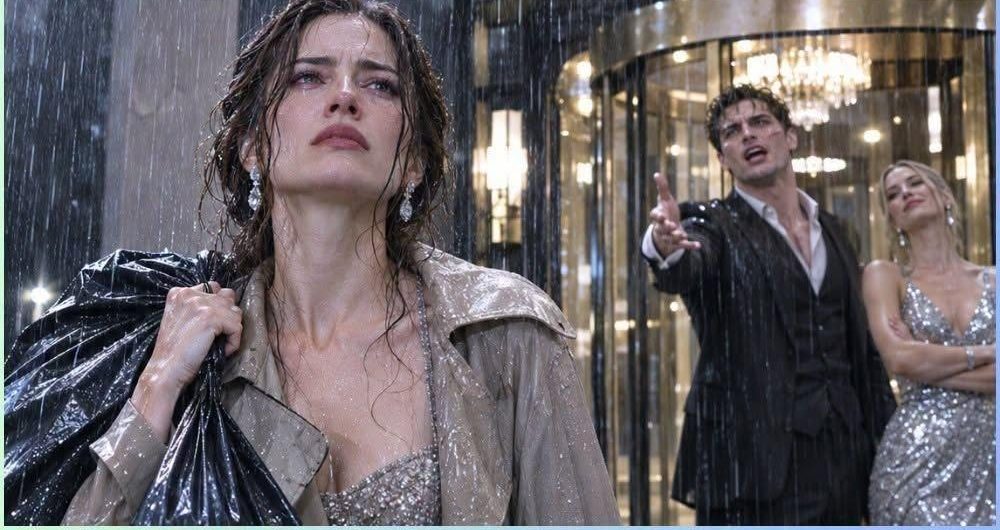
“Three years ago, Beatrice requested an independent audit. Grant’s management partnership delayed it repeatedly. She died before the dispute was resolved.”
Evelyn looked down.
“And she left this to me?”
“She left you a responsibility,” Margaret said. “Not a prize.”
Evelyn was quiet for a long time.
Then she asked the question that mattered most.
“Why make it conditional on my divorce?”
Margaret’s expression softened.
“Because Beatrice knew Grant would try to use you to influence the trust while you remained married. She wanted your authority to exist independently of him.”
Evelyn felt tears rise unexpectedly.
For eleven years, Grant had told her that she was too emotional, too ordinary, too dependent to make important decisions.
A woman she had known for six weeks had apparently seen something entirely different.
But Daniel wasn’t finished.
“There’s another complication.”
He placed a bank document in front of her.
“Grant’s management partnership has borrowed heavily against its equity interest. The loans appear connected to Bellwether Strategic Holdings.”
Evelyn leaned forward.
“I found Bellwether this morning.”
Daniel looked surprised.
“You did?”
“Forty-seven invoices. Eighteen point four million dollars.”
Margaret exchanged a glance with him.
Evelyn noticed.
“What aren’t you telling me?”
Daniel hesitated.
“We believe Bellwether may be connected to the company trying to purchase the hotel.”
“Why would a consulting company buy a hotel?”
“It wouldn’t. But a company receiving millions in questionable payments could be used to move money before an acquisition.”
Evelyn thought about the invoices.
Then she remembered something.
“Grant never approved large renovation payments himself.”
Daniel frowned.
“The records show his signature.”
“Yes. But his assistant prepared the payment packages. Grant signed whatever was put in front of him.”
“Who was his assistant?”
Evelyn looked at Margaret.
“Lacey Drummond.”
The room went quiet.
“Lacey was his assistant before she became brand strategist,” Evelyn continued. “She handled vendor onboarding during the renovation.”
See more Stories :
Daniel opened his laptop.
“Do you know her full legal name?”
“Lacey Anne Drummond.”
He typed.
Then stopped.
“What?” Evelyn asked.
Daniel turned the screen.
A Delaware corporate filing appeared.
Bellwether Strategic Holdings had been organized through a registered agent.
Its original managing member was listed as L. A. Drummond.
Evelyn stared.
“Lacey?”
“Possibly.”
Margaret’s phone buzzed.
She read a message.
Then looked up sharply.
“Grant has scheduled a press conference for tomorrow evening.”
“About the sale?” Daniel asked.
“No.”
Margaret turned the phone toward them.
The announcement was already circulating among Philadelphia’s business reporters.
ASTERLY HOTEL ANNOUNCES NEW LEADERSHIP VISION.
The photograph showed Grant and Lacey smiling beneath the hotel’s chandeliers.
The press release described Lacey as the future face of the Asterly.
And at the bottom was a sentence that made Evelyn’s stomach tighten.
The management partnership intends to unveil a transformative ownership restructuring.
“He’s going public,” Daniel said.
“He’s trying to create momentum before the trustees intervene,” Margaret replied.
Evelyn looked at the photograph.
Grant’s arm was around Lacey.
The same woman who had laughed when Evelyn’s belongings were thrown into the rain.
The same woman whose name appeared on the suspicious corporate filing.
Suddenly, Evelyn understood why Grant had insisted on a quick divorce.
“Wait.”
Both lawyers looked at her.
“Grant knew the trust amendment existed.”
Margaret frowned.
“How?”
“Maybe not the details. But he knew Beatrice had changed something. He spent months pushing me to sign the settlement.”
Daniel leaned forward.
“Do you have proof?”
Evelyn thought about the divorce negotiations.
Grant had offered her almost nothing.
Yet he had been strangely insistent that the divorce become final before the foundation dinner.
He had even paid extra legal fees to accelerate the filing.
“He wanted me out before tomorrow,” Evelyn whispered.
Margaret’s face went pale.
“Then he may have been told that your divorce would trigger the trust provision.”
Daniel looked at the documents.
“But if he knew, why humiliate her publicly?”
Evelyn stared at Grant’s photograph.
“Because he thought I’d disappear.”
She stood.
“I want to attend his press conference.”
Daniel immediately shook his head.
“That would be unwise.”
“No. What’s unwise is letting Grant announce a sale that could put hundreds of employees at risk.”
Margaret studied her.
“What do you intend to do?”
Evelyn closed the folder.
“Ask him a question he can’t answer.”
That evening, she received another anonymous message.
This time it contained a photograph.
Grant stood inside a private dining room with three men in expensive suits.
Beside him was Lacey.
The timestamp was from two nights earlier.
Below the photograph was a sentence.
“Don’t let him sign anything. The buyer isn’t buying the hotel. They’re buying what’s underneath it.”
Evelyn stared at the screen.
Underneath the hotel?
She enlarged the photograph.
On the table between the men lay a set of architectural drawings.
The Asterly Hotel’s original blueprints.
But one page was marked in red.
BASEMENT LEVEL B3.
Evelyn frowned.
The hotel had only two publicly documented basement levels.
She had worked there for eleven years.
She had walked nearly every corridor.
And she had never heard of a third basement.
At 11:46 p.m., she called Margaret.
“I need the original building plans.”
“Why?”
“Because I think Grant is selling something nobody knows exists.”
Margaret was silent.
Then she said five words Evelyn would never forget.
“Beatrice warned me about this.”
Evelyn gripped the phone.
“About what?”
See more Stories :
Margaret’s voice dropped.
“The room beneath the hotel.”
And suddenly, the Asterly’s greatest secret was no longer about money.
It was about something that had been hidden for almost eighty years.