Relief of Ramesses II Smiting his Enemies
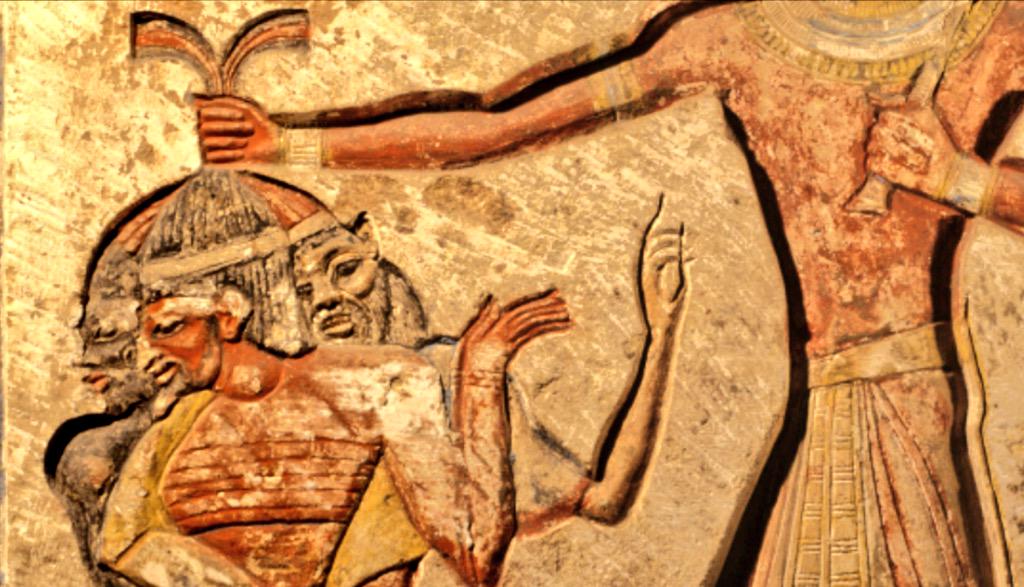
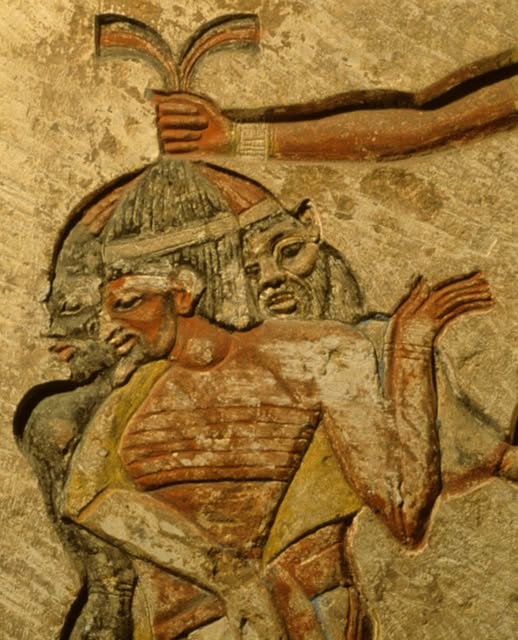
This limestone block features a traditional scene of King Ramesses II striking down his enemies. He is shown in full ceremonial attire, wearing the Blue Khepresh Crown adorned with the uraeus, the broad Usekh collar, an ornate garment, two armlets, two bracelets, and sandals. In his left hand, the king grasps three prisoners by their hair, while in his right he raises an axe, poised to deliver the fatal blow. The distinct facial features, hairstyles, and beards of the captives identify them as members of three different groups: Nubians, Libyans, and Syrians.
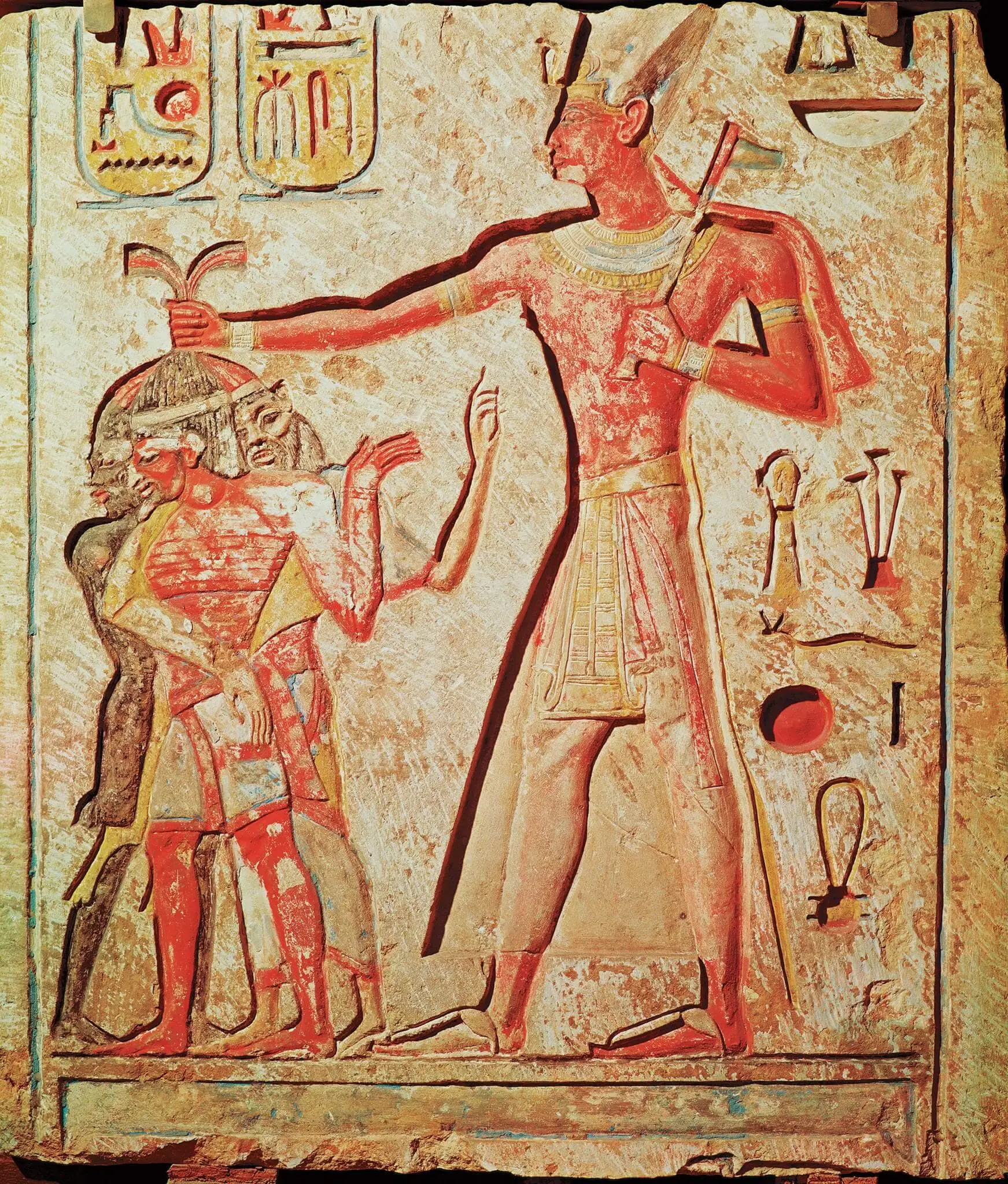
The motif of the Egyptian king smiting his foes is an ancient one, known since the 1st Dynasty and famously represented on the Narmer Palette. Ramesses II, one of Egypt’s greatest and longest-reigning pharaohs, ruled for 67 years.
He continued the conflict with the Hittites begun by his father, a struggle that reached its peak at the Battle of Kadesh, where Ramesses narrowly avoided defeat through his own courage. Although the Egyptians ultimately withdrew from the battlefield, Ramesses later succeeded in reclaiming part of the lost territory and eventually concluded a peace treaty with the Hittites.
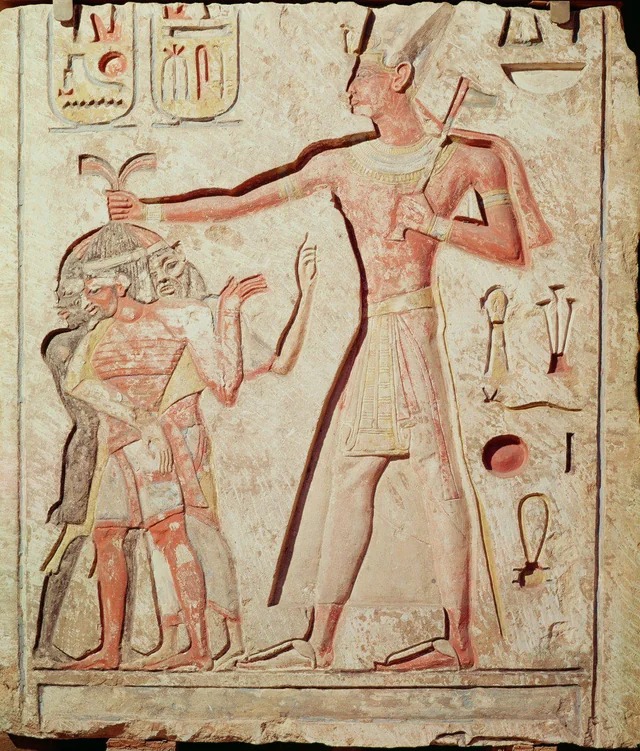
New Kingdom, 19th Dynasty, reign of Ramesses II (ca. 1279–1213 BC). Painted limestone. From Memphis. Now in the Egyptian Museum, Cairo.