Estate Figure
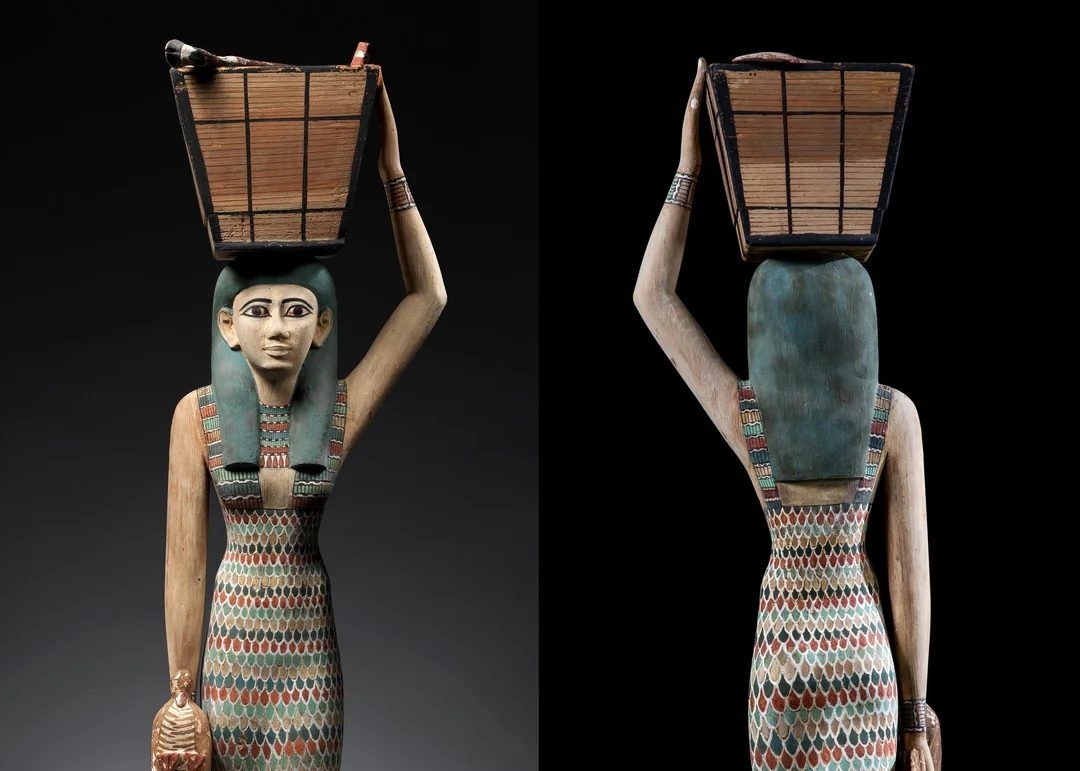
Statue of a woman carrying a basket of meat on her head. Originating from Egypt’s Middle Kingdom (1981–1975 BC), this sculpture reflects daily life and the artistry of ancient Egyptian society.
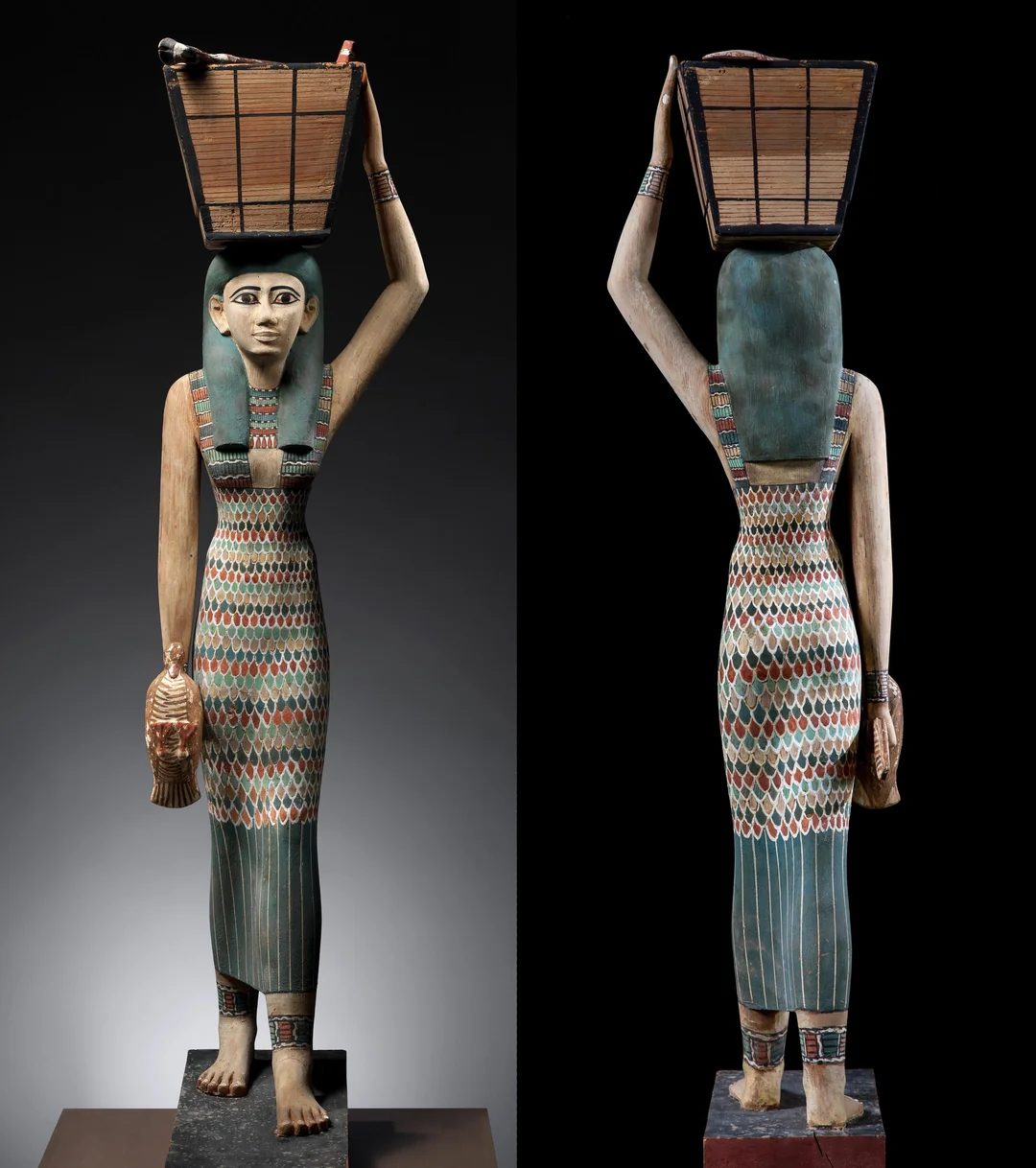
This exquisite example of Egyptian wood carving was uncovered in a concealed chamber beside the passage leading into the rock-cut tomb of the royal chief steward Meketre. Meketre began his career under King Nebhepetre Mentuhotep II of the 11th Dynasty and continued to serve a succession of rulers into the early 12th Dynasty.
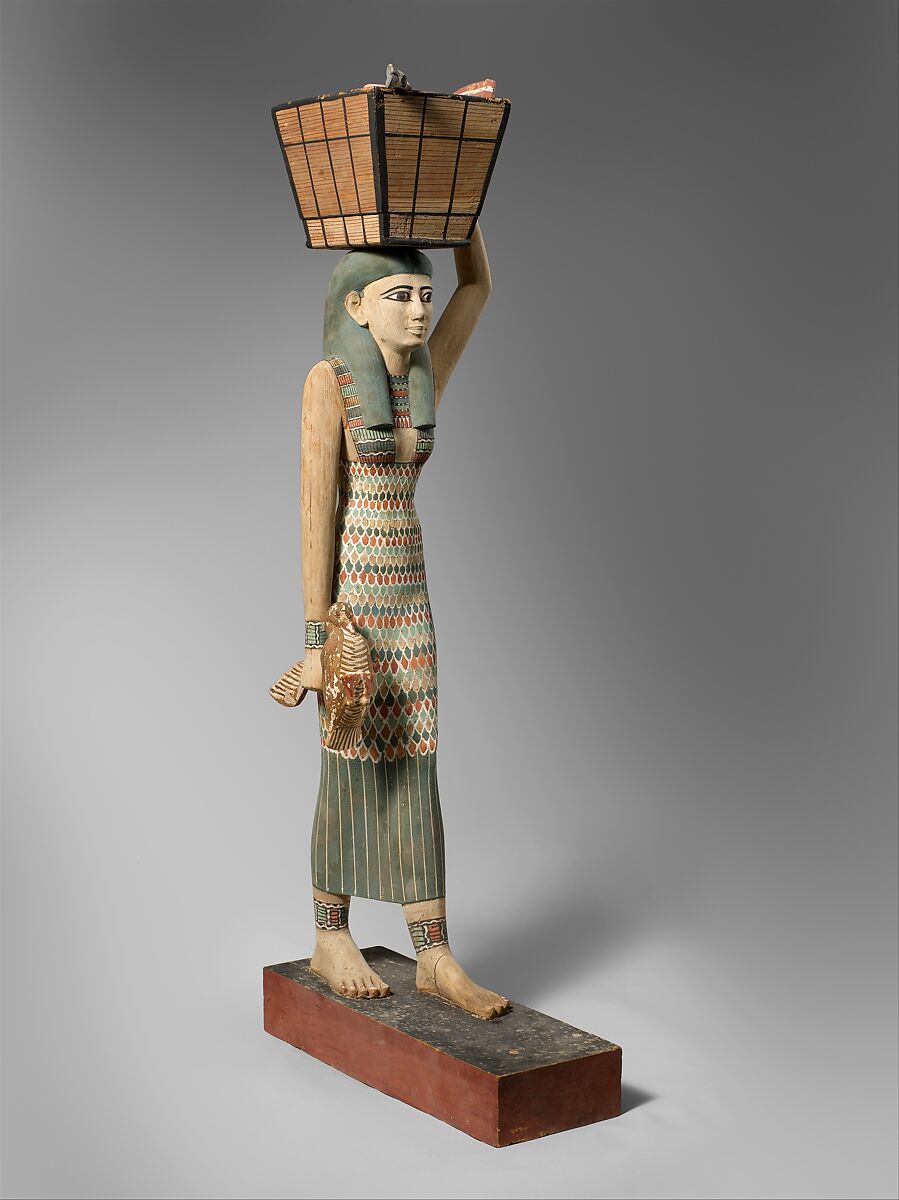
Along with a second, nearly identical female figure (now housed in the Egyptian Museum in Cairo), this statue originally stood beside a group of twenty-two miniature models—gardens, workshops, boats, and a full funerary procession—tightly packed into the narrow chamber.

The woman strides forward on her left leg, balancing a basket filled with cuts of meat atop her head. In her right hand she holds a live duck by its wings. This iconography is well attested in Old Kingdom reliefs, where rows of offering bearers are shown approaching with provisions.
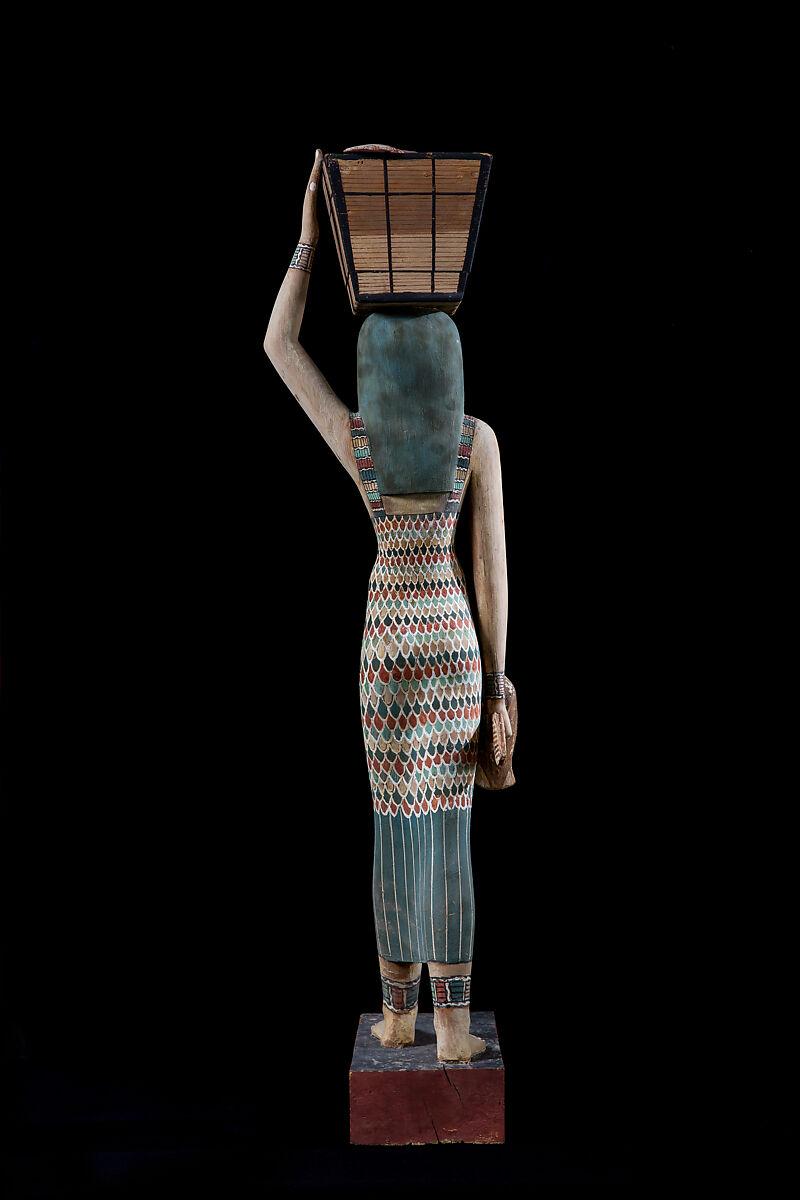
Often, place names accompany such figures, identifying them as personifications of estates responsible for providing perpetual sustenance to the tomb owner’s spirit. The woman is lavishly adorned with jewelry and wears a feather-patterned dress, a type of garment frequently associated with goddesses. For this reason, she and her companion in Cairo may also be connected to the funerary goddesses Isis and Nephthys, who commonly appear at the head and foot of coffins to safeguard the deceased.

Egyptian, Middle Kingdom
Wood, gesso, paint; H. 112 cm (44 1/8 in.); W. 17 cm (6 11/16 in.); D. 46.7 cm (18 3/8 in.)
The Metropolitan Museum of Art, New York, Rogers Fund and Edward S. Harkness Gift, 1920 (20.3.7)
http://www.metmuseum.org/Collections/search-the-collections/544210
Although all accessible rooms in Meketre’s tomb had been looted in antiquity, early in 1920 the Museum’s excavator, Herbert Winlock, instructed his team to clear the accumulated debris in order to establish an accurate floor plan. During this process, the small hidden chamber was revealed—still filled with its remarkably well-preserved models and the two statues. In the subsequent division of finds between the Egyptian Government and the Metropolitan Museum, half the contents were sent to the Egyptian Museum in Cairo, while the other half came to New York.