The Scan That Saved Him: How Baby Jaxon Survived a Hidden Heart Defect That Could Have Stolen His Future
Summer walked into her routine 20-week anatomy scan with the lighthearted excitement most expectant parents feel. Her pregnancy had been smooth. The baby kicked often. Her biggest worry that morning was whether she and her partner should learn the gender.
But in a matter of minutes, the room’s atmosphere changed.
The sonographer’s voice softened. Her cheerful commentary faded. Her brows knit together in quiet concentration. She scanned once. Then again. Then again.
Finally, she spoke the words that drained every bit of warmth from the air:
“I’m seeing something unusual in the baby’s heart.”
Within minutes, Summer and her partner were escorted to the Fetal Medicine Consultant. More scans followed — silent, tense, heavy. The consultant eventually turned to them with a list of diagnoses no parent ever imagines hearing:
-
Right aortic arch
-
A vascular ring
-
A perimembranous VSD (hole in the heart)
-
And a cerebellum measuring behind the expected range
The combination raised immediate concern for chromosomal disorders. They were offered an amniocentesis, a decision that terrifies many parents. But Summer needed answers. She needed to know what her baby was facing. So they said yes.
Days later, the call came: no genetic abnormalities.
For the first time in what felt like forever, Summer exhaled.
The Day Jaxon Arrived
The rest of the pregnancy became a blur of specialist appointments, additional scans, and late-night fears she tried to hide beneath determination. But when February 2022 finally arrived, her baby boy entered the world on his due date — a perfect 6-pound miracle named Jaxon.
He was beautiful. Pink. Alert. Seemingly healthy.
Yet hidden inside that tiny chest was a heart and airway more complex than most adults will ever experience.
Hours after his birth, Summer took her first slow walk down the hospital corridor toward the echocardiogram room. The cardiologist was reassuring: surgery wasn’t needed immediately. They could monitor him closely and give him time to grow.
For a while, that was enough.
A Baby Full of Light — And a Condition Full of Shadows
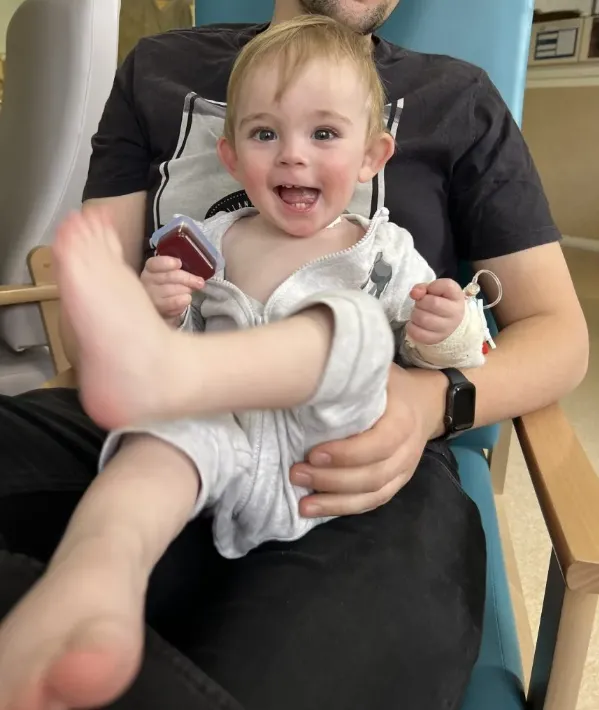
Jaxon fooled everyone.
He smiled constantly.
He babbled early.
He was expressive, energetic, full of spark.
If you didn’t know his medical history, you would never guess anything was wrong.
He took medication for his VSD but otherwise seemed like any other baby — except that he was small. Tiny, in fact. But happy.
Summer often found herself wrestling with the contradiction: how could a child so joyful be fighting something so serious?
The First Signs Something Was Wrong
When Jaxon began weaning, subtle issues emerged.
He struggled with thicker textures.
He choked more easily.
His breathing grew noisier, accompanied by a visible tracheal tug.
They had been warned these signs might appear — hints that the vascular ring was pressing on his trachea and oesophagus.
The moment they feared was here.
Jaxon needed surgery.
But to undergo it safely, he needed to grow. Every ounce he gained required enormous effort. His active little body burned through calories faster than most children. His medical needs demanded even more.
Still, he fought. Slowly, steadily — he gained.
The Scan That Confirmed Their Fears
In December 2022, a bronchoscopy revealed the truth they had been bracing for: the vascular ring was creating a deep indentation on his airway and oesophagus. Without surgery, it would eventually restrict his breathing completely.
By March 2023 — one month after turning one — Jaxon was finally strong enough for surgery.
One blessing came just in time: his VSD had begun to close on its own. What was once a moderate hole was now considered small.
That meant he did not need open-heart surgery.
Instead, the surgeons could correct the vascular ring through a thoracotomy — still major, still terrifying, but far less invasive than what they once feared.
The Longest Hours of Their Lives
On the morning of the operation, Summer felt every emotion a parent can feel — hope, terror, gratitude, exhaustion. She had watched him go under anesthesia once before, but nothing prepares you for the moment you place your child into the hands of a surgical team and watch the theatre doors close behind them.
The hours that followed stretched endlessly.
They walked around London, pretending to distract themselves, but every step was heavy with fear. Every vibration of a phone felt like a life-changing moment.
And then — the call.
Jaxon was out of surgery.
It went well.
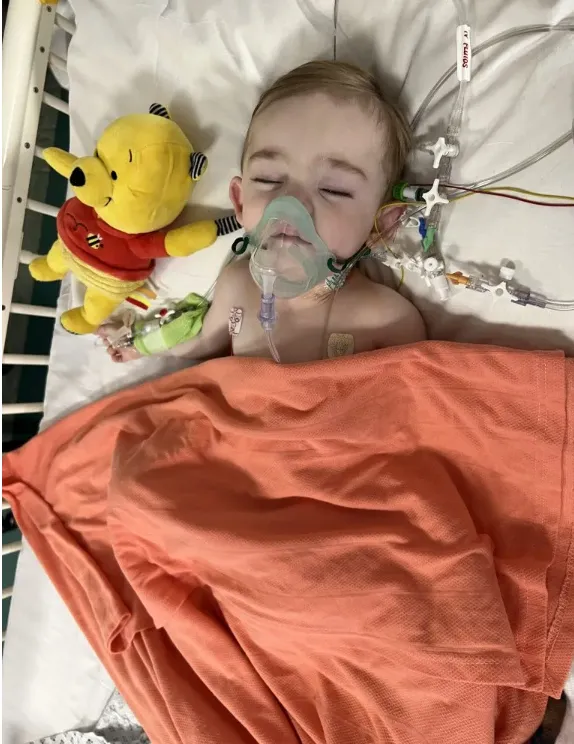
He was stable in PICU.
Relief came like a tidal wave.
Seeing him afterward was overwhelming. The monitors. The wires. The beeping. His tiny chest rising and falling with mechanical precision. It’s an image that stays with a parent forever.
But he was here.
He was safe.
The thing that once threatened his future was gone.
Leaving him overnight was agony. The nurse saw the fear in Summer’s eyes, placed a gentle hand on her arm, and said the words Summer clung to:
“I’ll watch him like he’s my own.”
Kindness can be life-changing.
A Recovery Full of Miracles
The next morning, Jaxon proved that heart warriors are made of something extraordinary.
He was sitting up.
Smiling.
Blowing kisses at the nurses.
Three days later — yes, only three — he went home.
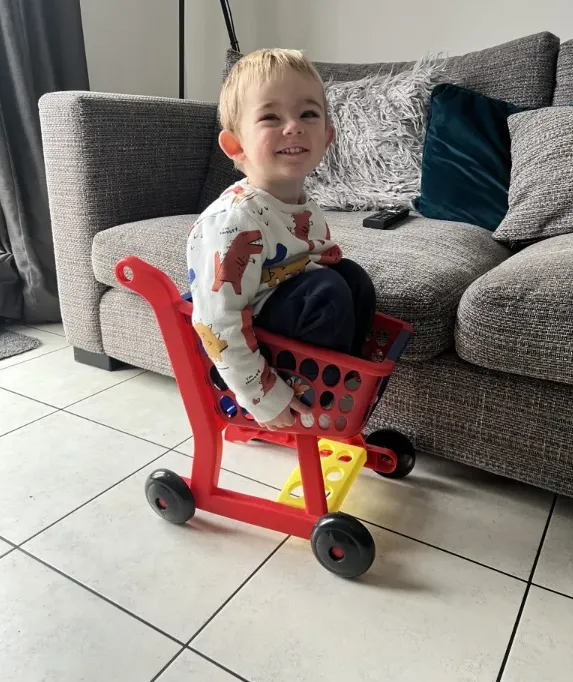
Within a month, he was walking. Soon after, running. Exploring. Laughing. Becoming the adventurous little boy he was always meant to be.
A Future They Once Feared Losing
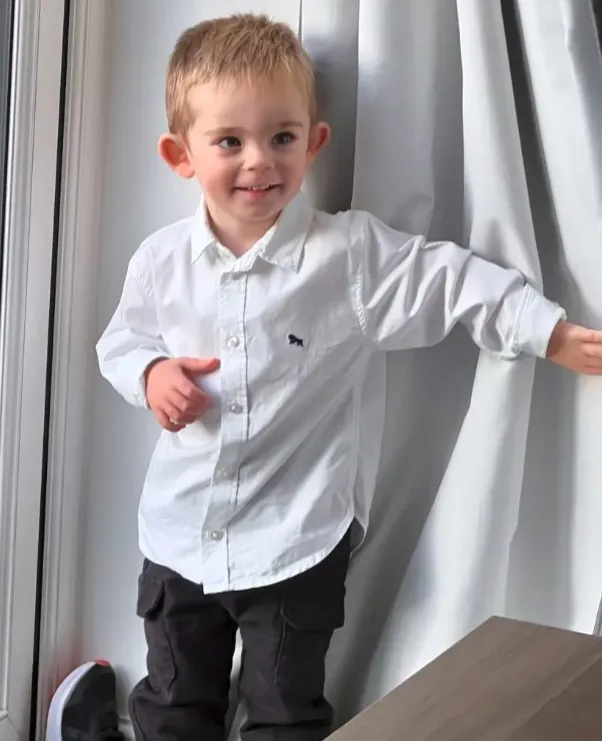
Today, Jaxon is three years old — fearless, funny, loving, bursting with personality.
His latest heart check-up brought words Summer once didn’t dare dream:
“His heart is happy.”
No murmur.
No worrying signs.
His VSD is nearly closed.
His weight has climbed to the 9th percentile.
And he doesn’t need another check-up for three years.
Three years.
A lifetime compared to the days they once survived one hour at a time.
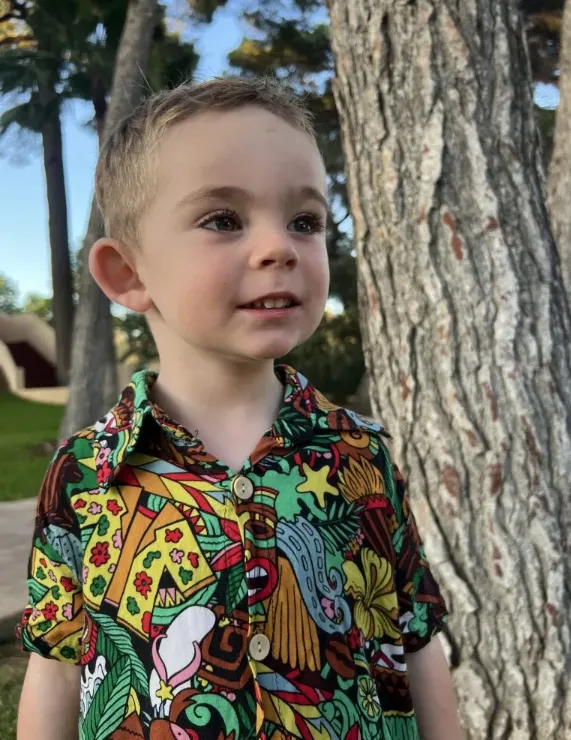
The Scan That Saved a Life
For families just beginning a heart journey, Summer carries a message she learned the hardest way:
Things can get better.
Fear can fade.
Hope can return.
And tiny warriors can overcome enormous battles.
She will never forget the sonographer who noticed the initial abnormalities — the scan that changed everything. Had that detail been missed, they may never have known what signs to watch for. They may not have caught the danger in time.
That scan didn’t just identify a defect.
It saved a boy.
It saved a childhood.
It saved a future.
It saved Jaxon.
And today, he has no idea he’s a superhero — one whose greatest power is simply that he’s still here.