A Tiny Life Hangs in the Balance: How Ronald McDonald House Saved Our Family
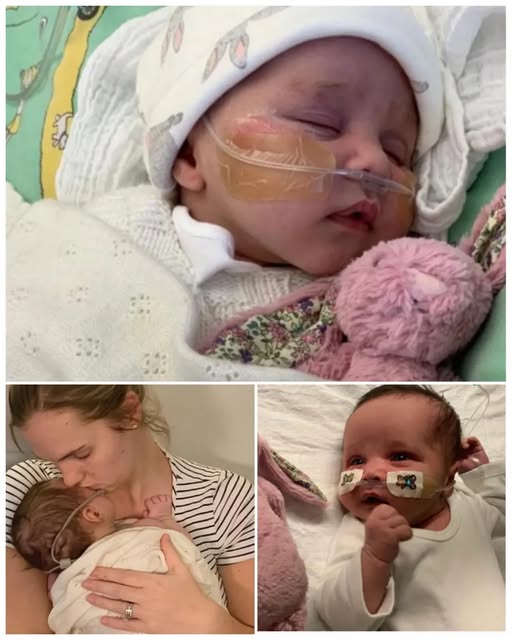
Everything felt perfect when Elsie was born.
Her arrival at the Wallingford Birthing Centre was calm and uncomplicated. Labor was quick, and she entered the world peacefully, wrapped in warmth and promise. Just two hours later, we were home — floating in that quiet, overwhelming happiness that only a newborn can bring.
In those first moments, we believed the hardest part was behind us.
We couldn’t have been more wrong.
When Something Feels “Off”
Once we were home, a subtle unease crept in. Nothing obvious. Nothing alarming — just a feeling that something wasn’t quite right.
When we introduced Elsie to our family, my cousin Sam, a midwife, noticed something most people would never have seen. She looked closely at Elsie’s nostrils, her breathing, her tiny chest. Then she gently pulled me aside.
“I think you should get her checked,” she said. “Just to be safe.”
Those words changed everything.
From Reassurance to Terror
At first, doctors told us it was likely bronchiolitis — serious, but manageable. We tried to breathe again. We clung to those reassurances.
But within an hour, Elsie began to deteriorate rapidly.
Her breathing slowed.
Her color faded.
Her tiny body weakened before our eyes.
Panic erased all sense of time. One terrifying thought echoed in my mind:
We could lose her.
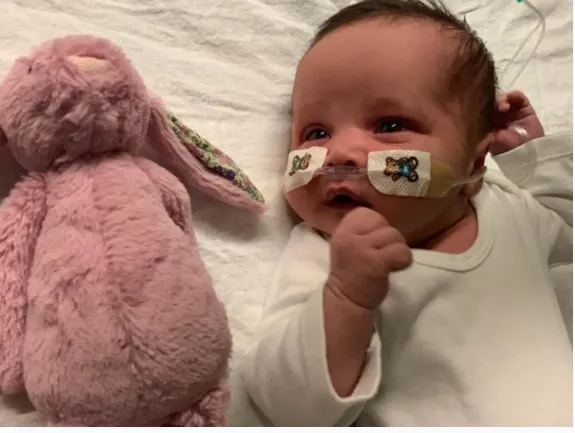
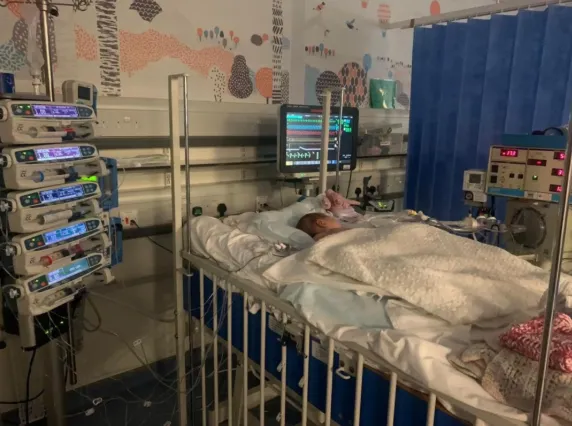
We rushed her into intensive care.
Watching Your Child Slip Away
Doctors placed Elsie on a ventilator, telling us it was precautionary. But minute by minute, her condition worsened. The machines grew louder. The staff grew quieter.
Eventually, we were taken into a small, private room — the kind every parent fears.
“Elsie took a turn for the worse last night.”
She wasn’t coping on the ventilator.
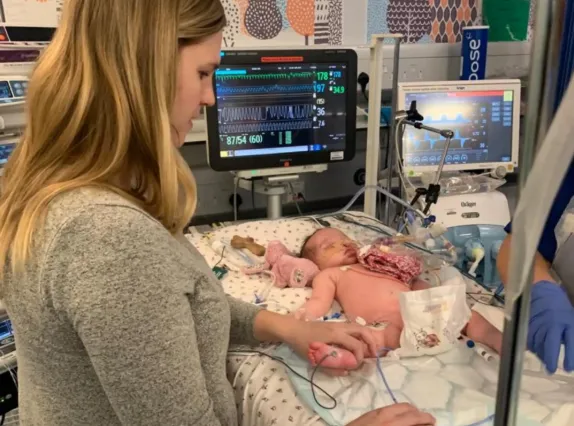
Instead, they moved her to an oscillator — a powerful machine that delivers deep breaths while vibrating the body to force oxygen into the lungs. It was aggressive. Loud. Frightening.
Walking into the ICU and seeing your baby connected to that machine is a moment that never leaves you.
Invisible Parents in Intensive Care
In intensive care, parents exist on the margins.
You can’t touch your baby.
You can’t hold them.
You can’t comfort them.
You can only watch — powerless.
Joe and I slept in broken fragments, in a storage room beside the ward. It was the only space available to us while our world hung in the balance.
We were exhausted beyond words.
The Moment Everything Shifted
One moment will stay with me forever.
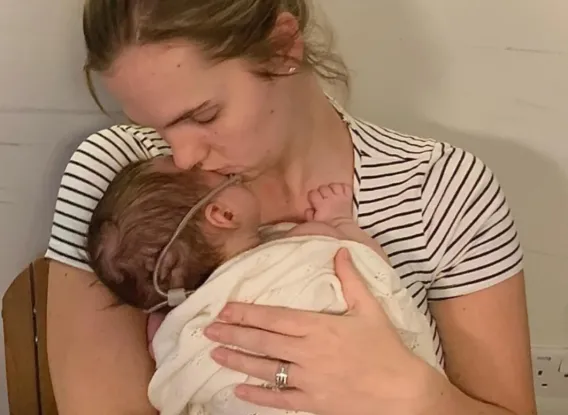
I was sitting alone when my mum knocked on the door. When I opened it, she was sobbing. My heart dropped. I was certain this was the end.
When she finally spoke, she told me something unexpected.
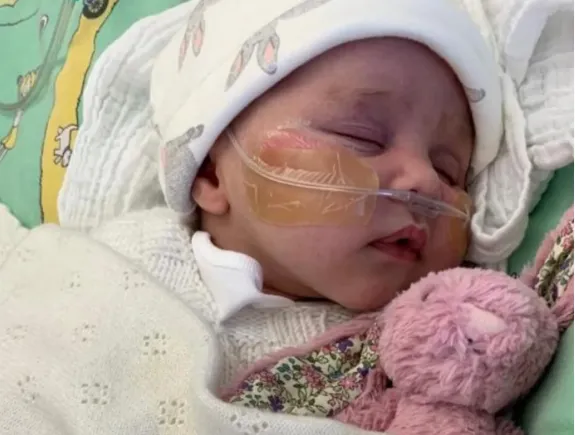
Elsie had been moved onto another ventilator — and she had responded remarkably well.
Her vital signs improved.
Her oxygen levels stabilized.
Doctors went from saying, “There’s nothing more we can do,” to, “Actually… we think we can manage this.”
Hope came rushing back, sudden and overwhelming.
Finding Refuge at Ronald McDonald House
Not long after, we received a call.
A room had become available at Ronald McDonald House Oxford.
Walking through those doors felt like taking my first full breath in days.
On the bed were two bags — one for me, one for Joe — filled with toiletries we hadn’t even thought about. We hadn’t showered in days. We were emotionally raw, physically drained, and barely functioning.
But there, for the first time, we felt seen.
A Place to Be Human Again
For me, the most important thing was having a safe place to pump breast milk.
A doctor had told me it was the one thing my body could still do for Elsie — provide antibodies, provide strength. But fear and stress had shut everything down.
At Ronald McDonald House, I could shower. Sit down. Breathe.
And slowly, my body responded.
My milk returned.
It felt like a lifeline — something tangible I could give my baby when everything else felt out of my control.
Support in the Smallest Details
Elsie was across the hospital, and checking on her meant long, exhausting walks at all hours of the night.
The House gave us a phone and said,
“We’ll call you. You call us.”
That simple reassurance was priceless.
We hadn’t eaten a proper meal in nearly a week. Vending machine chocolate had been keeping us going. At Ronald McDonald House, we found a kitchen. A table. A place to sit together and feel human again.
In the middle of the worst experience of our lives, it gave us something essential: space to breathe.
More Than a Bed
Those days were unimaginably hard. Every moment was a battle — not just for Elsie’s survival, but for our own emotional endurance.
Ronald McDonald House Charities UK didn’t just provide a bed.
They gave us:
-
Dignity
-
Comfort
-
Stability
-
Strength
When everything else felt chaotic and uncontrollable, they gave us one thing we desperately needed — a place to hold on.
Hope in the Quiet Corners
That safe space helped us find hope again.
Because sometimes, saving a tiny life doesn’t only happen through machines, medications, or hospital beds.
Sometimes, it happens in:
-
Quiet kitchens
-
Clean showers
-
Warm rooms
-
And kind words whispered at the right moment
It happens when families are reminded they are not alone.
A Life Saved — Together
Elsie survived.
And we survived with her.
We will never forget the fear, the uncertainty, or the moments that nearly broke us. But we will also never forget the people who stood beside us — who gave us shelter, care, and the strength to keep going when we had none left.
Ronald McDonald House gave us more than a room.
They gave us hope — when our tiny life hung in the balance.