8-Year-Old with Untreatable Disease Becomes First in the World to Receive Life-Changing Gene Therapy
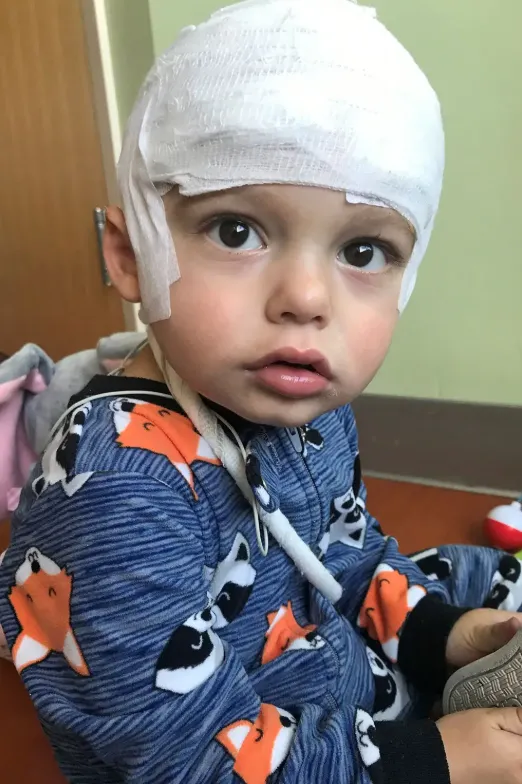
For eight years, Maxwell Freed’s life was shaped by uncertainty.
From the moment he was born, his mother, Amber, sensed that something was different. As the months passed, those instincts turned into concern, then fear, and eventually a diagnosis that changed everything.
Maxwell was diagnosed with SLC6A1, a rare and devastating neurodevelopmental disorder. Doctors explained there was no cure. No established treatment. No roadmap for what his future would look like.
Seizures became part of daily life.
Speech came slowly, if at all.
Movement was a constant struggle.
Developmental delays shadowed every milestone.
For many families, that would have been the end of the story.
For Amber Freed, it was the beginning of a mission.
A Mother Who Refused to Accept “No Cure”
Amber remembers the day clearly—the weight of the diagnosis pressing down on her chest as doctors explained what little they knew.
SLC6A1 was so rare it barely had a name. Research was limited. Treatment options were nonexistent. Prognoses were uncertain at best.
“They told me there was no hope,” Amber recalls. “But I couldn’t accept that for my child.”
Maxwell and his twin sister, Riley, had come into the world after years of IVF treatments. The road to becoming a mother had already been long and difficult. Amber was not prepared to give up now.
Instead, she did something extraordinary.
She became a researcher, an advocate, and a fundraiser—almost overnight.
Turning Desperation Into Action
Amber immersed herself in medical journals and scientific studies, teaching herself the language of genetics and neurology. She reached out to scientists across the world, asking one question over and over:
What if there is a way?
Slowly, connections formed. Researchers began listening. A small group of scientists saw potential in a bold idea: gene therapy.
But progress was slow.
Years of testing were required—first in genetically engineered mice, then in pigs—to ensure safety and effectiveness. Each step forward took time Maxwell did not have.
The COVID-19 pandemic nearly brought everything to a halt. Labs closed. Funding froze. Trials were delayed.
Amber remembers the anxiety vividly.
“Every time I tried to sleep, I heard a clock ticking,” she says. “Maxwell’s life was moving forward with or without us.”
To buy time, the team repurposed an FDA-approved drug to help manage Maxwell’s symptoms while the gene therapy continued development. It wasn’t a cure—but it kept hope alive.
Fighting for FDA Approval
As data began to show promise, Amber took on another role: negotiator.
She presented results directly to the FDA, advocating not just for her son, but for every child living with SLC6A1.
“This treatment works,” she told them. “And these children have no other choice.”
Her persistence paid off.
In a historic decision, the FDA approved the therapy for clinical use.
Maxwell would become the first person in the world to receive this groundbreaking gene therapy for SLC6A1.
A Historic Day in September 2025
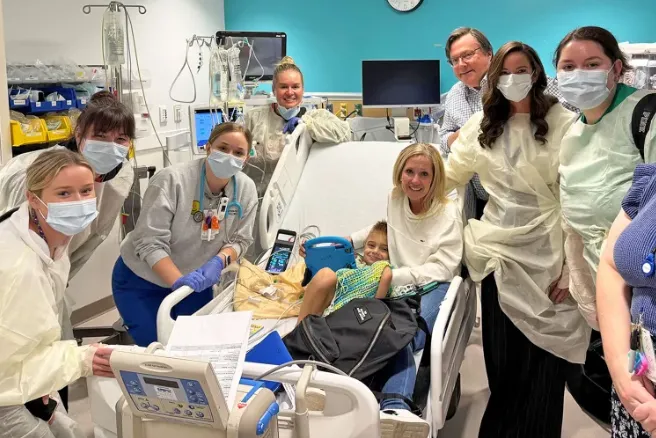
On September 10, 2025, Amber walked into a hospital room carrying the weight of eight years of hope, fear, and relentless effort.
The treatment itself was surprisingly brief—administered once, lasting just two hours.
But its significance was monumental.
Doctors, scientists, and family members gathered, aware they were witnessing medical history. To lighten the mood, Justin Timberlake’s “Can’t Stop the Feeling” played softly in the background. Some danced. Some cried.
Amber felt everything at once.
Fear that it might not work.
Relief that they had finally reached this moment.
Hope that this could change Maxwell’s life.
“I had fought so long for him,” she says. “Sometimes at the cost of just being with him. I kept thinking—what if this fails too?”
But she knew this was Maxwell’s one chance.
Courage in the ICU
After the procedure, Maxwell was monitored closely in the ICU.
And then—something remarkable.
He smiled.
He ate Subway sandwiches.
He listened to music.
He laughed with his family.
Small moments, perhaps. But to Amber, they felt monumental.
Dr. Kathrin Meyer, who helped develop the therapy at Nationwide Children’s Hospital, calls Maxwell a hero.
“The first patient is always the highest risk,” she explains. “There are things animal studies can’t predict. Maxwell’s bravery made this possible for every child who will follow.”
Dr. Allison Bradbury, principal investigator at the Abigail Wexner Research Institute, shares cautious optimism.
“It’s too early to call it a cure,” she says. “But Maxwell is already showing encouraging signs that could lead to lasting improvements.”
A Journey That Continues
The work didn’t stop after the infusion.
Rehabilitation is ongoing. Doctors are closely monitoring Maxwell’s brain activity, motor function, and development.
“His brain is eight years old,” Amber explains. “We’re learning how much function can be regained after years of delays.”
Even now, she continues to fundraise—working to raise $5 million so other children with SLC6A1 can access the therapy.
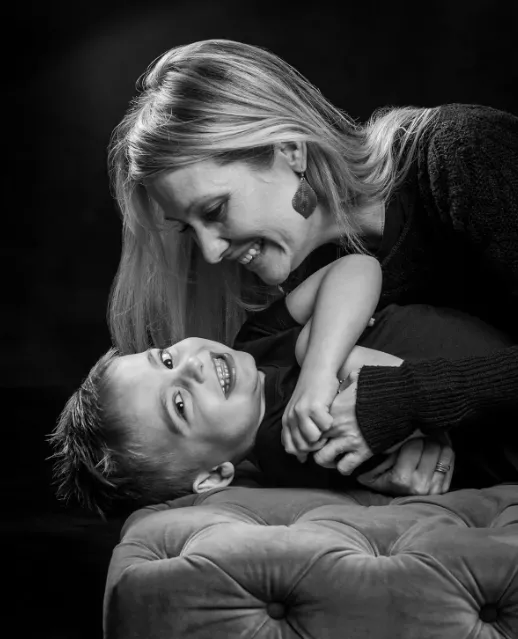
Maxwell, meanwhile, remains unmistakably himself.
He loves to dance and sing with his twin sister Riley.
He’s obsessed with K-Pop Demon Hunters.
He brings joy into every room he enters.
Dr. Meyer smiles when describing him.
“He has a huge heart. He’s incredibly smart and strong. And yes—he’s stubborn, just like his mom.”
A Breakthrough That Changed Everything
Maxwell’s journey has inspired families, clinicians, and researchers around the world.
For parents of children with rare disorders, his story offers something that once felt impossible: a roadmap.
It proves that families can drive innovation.
That advocacy can change science.
That listening—to parents, to patients—can save lives.
Years of experiments, fundraising, regulatory hurdles, and emotional exhaustion led to this moment.
Amber ensured her son was not just a patient—but a pioneer.

A Legacy Already Written
Today, Maxwell continues to progress.
His story has brought global attention to SLC6A1 and the promise of gene therapy for rare neurodevelopmental disorders.
Hundreds of families now have hope where there was once none.
Every step Maxwell takes, every note he sings, is a testament—to resilience, to science, and to a mother who refused to accept “no cure” as the final answer.
His legacy is already shaping the future of medicine.
Because courage isn’t measured by age or size.
It’s measured by impact.
And at just eight years old, Maxwell Freed has changed the world.