Nearly Destroyed on the Battlefield, Rebuilt Through Will and Resolve: How Ukrainian Soldier Zakhar Biryukov Lost His Body in War but Refused to Lose His Purpose
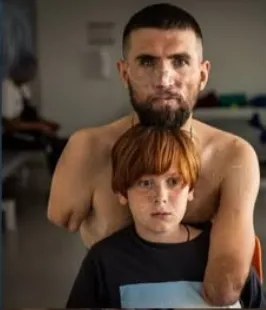
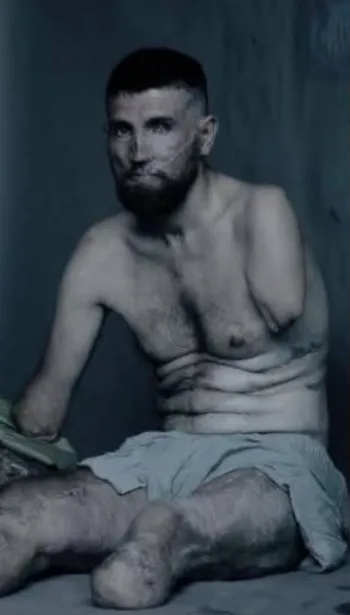
Zakhar Biryukov’s life changed in a single moment in July 2022, on a battlefield where survival was never guaranteed and seconds determined everything. While serving during the war in Ukraine, a powerful explosion tore through his position, leaving his body almost unrecognizable and his future uncertain.
The injuries were catastrophic—of the kind that rarely leave room for hope. Zakhar survived only because of rapid evacuation under fire and the relentless work of medical teams who fought first to keep him alive, then to keep him here. Survival came at a cost few can imagine, and recovery, as most people understand it, was never going to be simple.
A Soldier Who Chose Service Before the War Demanded It
Zakhar was not new to service when the war escalated. Years earlier, he had volunteered to serve his country, guided by a sense of responsibility that extended beyond obligation. When Ukraine needed him again, he did not hesitate.
He was not watching history unfold from a distance. He was inside it—carrying responsibility with every movement and risk with every step. That decision placed him directly in harm’s way, where his life would be permanently altered.
The battlefield does not offer warnings or gradual transitions. It delivers change instantly, and in Zakhar’s case, that change dismantled the physical structure he had always known as his body.
Survival Came Before Hope
After the explosion, survival was far from guaranteed. Doctors focused on stabilizing him—stopping bleeding, preventing infection, and keeping vital organs functioning. In those early days, the goal was simple and overwhelming at the same time: keep him alive long enough to see another morning.
Recovery was not discussed in terms of regaining what was lost. It was framed around endurance. Around staying. Around getting through the next hour, then the next day. War injuries do not allow for optimism without realism, and Zakhar’s condition required both medical precision and emotional resilience.
Waking Into a New Body
When Zakhar regained consciousness, he woke into a reality that no one prepares for. Limbs were gone. Familiar movements were impossible. Independence vanished overnight.
Simple actions—sitting up, transferring from bed to chair, maintaining balance—became daily challenges. Every movement demanded patience, strength, and the willingness to fail repeatedly. What most people perform without thought had to be relearned from the beginning.
This was not a temporary adjustment. It was a complete restart.
Learning to Move Forward With Prosthetics
Training with prosthetics became part of Zakhar’s daily life, not as a symbol of inspiration, but as a tool he had to master to move forward. Prosthetics are not instant solutions. They demand endurance, repeated adjustments, and mental discipline.
There were days of progress and days of setbacks. Advancement came quietly, earned through consistency rather than dramatic breakthroughs. Each small improvement carried the weight of countless hours of effort.
Zakhar returned to the work every time—because stopping was never an option he accepted.
Rebuilding Identity After War Trauma
Rehabilitation was not limited to physical recovery. Zakhar also faced the challenge of rebuilding his sense of self in a body that no longer matched his memories. Identity shifts when the mirror reflects something unfamiliar, and grief becomes part of the process.
He confronted the loss of what once was while deciding who he would become next. That decision did not come from denial, but from acceptance paired with resolve. His body had been broken by war, but he refused to let that be the conclusion of his story.
Purpose, for Zakhar, was something that had to be rebuilt intentionally.
Education as a Path Forward
Today, Zakhar continues rehabilitation with determination that has become his signature. He studies, choosing to invest in his future rather than remain anchored to what was taken. Learning became a way to reclaim control—proof that growth does not stop when circumstances change.
His commitment to education reflects a deeper belief: that purpose is not erased by trauma, even when life demands a complete redesign. Knowledge, discipline, and focus became tools just as important as prosthetics in shaping his future.
Healing Through Art and Expression
Zakhar also found healing through art. Creativity became a space where pain, memory, and hope could coexist without explanation. Art allowed him to process experience without needing words, offering a form of movement not limited by physical boundaries.
Through creativity, he discovered that healing is not only mechanical. It is emotional, psychological, and deeply human. Expression gave shape to what could not always be spoken, reminding him that his inner life remained intact.
Climbing Mount Hoverla: Reclaiming Agency
One of the most powerful symbols of Zakhar’s journey came when he climbed Mount Hoverla, the highest peak in Ukraine. For many, the climb represents endurance and pride. For Zakhar, it represented something far deeper.
Each step upward reflected countless hours of rehabilitation, setbacks, and persistence. Reaching the summit was not about conquering nature. It was about reclaiming agency over his own life.
The mountain did not erase his trauma. It confirmed his capability.
More Than Survival
Zakhar’s story carries a difficult and inspiring truth. A body can be almost completely broken, yet the human spirit can still rise. War took his limbs, but it did not take his ability to choose purpose. It did not take his capacity to adapt, learn, create, and move forward.
Survival, in his case, was only the beginning of a much harder chapter.
His journey also highlights the importance of coordinated care—from battlefield evacuation to long-term rehabilitation. Medical teams, therapists, and support systems played critical roles, but none of it would have mattered without Zakhar’s willingness to engage fully in the process. Recovery is never passive.
Choosing Purpose After Everything Is Taken
Zakhar Biryukov’s life will never return to what it was before July 2022. That truth does not need to be softened. Yet his life continues with meaning, direction, and contribution.
He is not defined by what he lost, but by how he responded.
His story is not only about war or injury. It is about the human capacity to adapt when everything familiar is stripped away. It reminds us that purpose is not granted by circumstances—it is chosen, repeatedly, even when the cost is high.
Zakhar continues forward, step by step. Not because the path is easy, but because stopping was never the ending he accepted.