Your Mexico Spring Break Just Got More Dangerous — And Even the World Cup Could Be at Risk
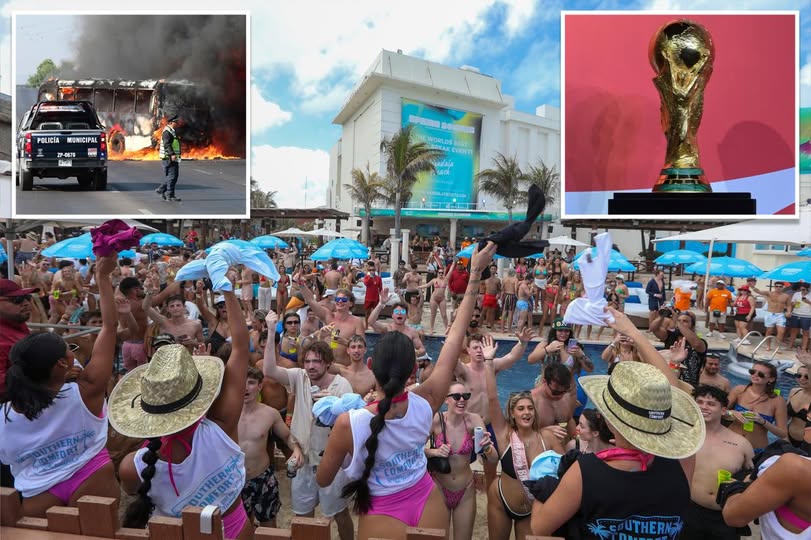
Your Mexico Spring Break Just Got More Dangerous — And Even the World Cup Could Be at Risk
For decades, Mexico has been synonymous with sun-soaked beaches, cheap margaritas, and the ultimate spring break escape. But this year, a darker headline is creeping into travel plans: cartel violence is intensifying in key tourist corridors — and the ripple effects may stretch far beyond college party hotspots.
With the 2026 FIFA World Cup set to bring millions of visitors to North America, including matches hosted in Mexico, security concerns are no longer a distant policy debate. They’re a global spotlight issue.
Spring Break Meets Security Warnings
Popular destinations like Cancun, Playa del Carmen, and Cabo San Lucas have long marketed themselves as insulated from the country’s broader security struggles. But recent spikes in cartel-related clashes, kidnappings, and turf wars in surrounding states are challenging that perception.
While major resort zones remain heavily guarded, violence in nearby areas raises a chilling question: How close is too close?
Governments, including the United States, regularly update travel advisories for parts of Mexico, citing organized crime, armed confrontations, and unpredictable outbreaks of violence. For tourists, the risk may statistically remain low — but perception can change travel behavior overnight.
And perception, in tourism, is everything.

Cartels and the Global Stage
The stakes grow exponentially when you factor in the World Cup.
Mexico is scheduled to host multiple matches alongside the U.S. and Canada in 2026. Stadiums in Mexico City, Guadalajara, and Monterrey are expected to draw tens of thousands of fans per game — not to mention global media, sponsors, and high-profile dignitaries.
An event of that magnitude demands airtight security.
Cartel violence is not typically directed at tourists or international sporting events. These organizations are profit-driven and often avoid actions that would provoke overwhelming state retaliation. However, escalating internal battles between rival factions increase unpredictability — and unpredictability is the enemy of mega-events.
Even isolated incidents could trigger:
-
Insurance complications
-
Increased military presence
-
Sponsor anxiety
-
Travel hesitancy among fans
The mere suggestion of instability can disrupt logistics years in the making.
Can Mexico Secure the Spotlight?
Mexican authorities have extensive experience handling high-profile international events. From past World Cups to global summits, the country has demonstrated the ability to deploy massive security operations when necessary.
Expect:
-
Expanded National Guard presence
-
Intelligence coordination with U.S. and Canadian agencies
-
Reinforced perimeters around stadiums and transport hubs
-
Aggressive messaging campaigns to reassure tourists
The government understands what’s at stake — not just economically, but reputationally.

The Economic Balancing Act
Tourism accounts for a significant portion of Mexico’s GDP. Spring break alone injects hundreds of millions of dollars into coastal economies. The World Cup? That’s a multibillion-dollar opportunity.
Cartel violence threatens more than safety — it threatens revenue.
But here’s the nuance often lost in dramatic headlines: violence in Mexico is highly regionalized. Resort zones are strategically protected. Major cities hosting World Cup matches are expected to receive extraordinary security measures.
The narrative of “Mexico is too dangerous” oversimplifies a complex reality.
Fear vs. Reality
Is Mexico becoming more dangerous for spring breakers? In some regions, yes — particularly where cartel power struggles intensify.
Is the World Cup likely to be derailed? That’s far less certain.
Mega-events often bring unprecedented security resources. In fact, the World Cup could temporarily suppress visible cartel activity in host cities due to overwhelming law enforcement deployment.
The bigger question is not whether violence exists — it does — but whether it reaches a threshold that alters global participation.

The Bottom Line
For college students planning beach parties, the risks remain statistically low but no longer ignorable.
For FIFA organizers, the calculus is far more complex: geopolitical optics, global security coordination, and contingency planning now sit alongside ticket sales and stadium renovations.
Mexico has hosted the world before — and successfully. But as cartel dynamics evolve, the margin for error shrinks.
And in an era where one viral incident can shift international perception overnight, the real battle may be as much about image as it is about security.