Baby Monkey Punch: A Story of Resilience Inside a Japanese Zoo
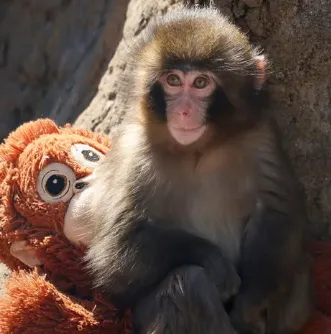
Last July, during an intense summer heatwave in Japan, a tiny monkey named Punch was born inside a zoo enclosure — and from his very first days, survival was not simple.
His mother, a first-time parent under environmental and social stress, rejected him. In primate societies, maternal guidance is critical. Without it, young monkeys must navigate complex hierarchies alone — learning dominance, submission, and social cues through painful trial and error.
Punch’s earliest comfort did not come from his troop.
It came from a stuffed toy.
Clinging to Comfort
Zookeepers, recognizing the danger of isolation, first tried rolled towels to provide warmth and softness. Eventually, they introduced a small stuffed orangutan into the enclosure — hoping the familiar primate shape might offer psychological reassurance.
It could not groom him.
It could not defend him.
But it became something steady.
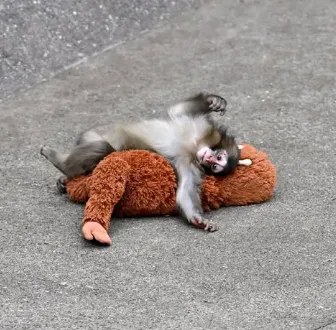
Videos now seen by millions show Punch wandering alone, clutching the toy tightly against his body. In some clips, he is chased. In others, briefly groomed. Sometimes dragged. Sometimes ignored.
Each time, he retreats — toy in hand — then cautiously returns.
That pattern of retreat and return has become the emotional heartbeat of his story.
The Reality of Primate Hierarchy
To human eyes, the footage can feel like bullying. But primatologists emphasize that primate troops operate under strict social systems. Without maternal protection, a young monkey must earn and negotiate position independently.
Born during extreme heat, Punch entered a period when environmental stress can sharpen survival instincts and strain social bonds. In primate groups, first-time mothers sometimes struggle — especially under pressure.
For Punch, that meant learning without a translator.
Every interaction becomes a lesson:
- When to submit
- When to approach
- When to retreat
And without consistent reassurance, the learning curve is steep.
When Compassion Needs Boundaries
As Punch’s story spread online, zoo attendance increased. Visitors arrived hoping to see the tiny monkey clutching his stuffed companion. But even well-meaning attention can add stress.
The zoo installed stricter viewing barriers and encouraged quiet observation. Protecting Punch now requires balancing empathy with restraint.
Love, when too loud, can overwhelm.
Why the World Is Watching
Conservation psychologists note that Punch’s story resonates because it reflects something deeply universal: vulnerability paired with persistence.
A small animal, visibly struggling, yet refusing to disappear.
Each time he is chased, he eventually re-emerges.
Each time he is dragged, he does not isolate permanently.
He returns.
That quiet resilience transcends species.
Viewers are not just responding to a monkey and a toy — they are responding to:
- The fragility of social systems
- The impact of environmental stress
- The role of climate extremes on wildlife behavior
- The broader issues of animal welfare and habitat pressures
Punch has unintentionally become a symbol — not only of endurance, but of how delicate support systems can be.
The Future Ahead
Punch will not remain small forever. In roughly four years, he will mature into adulthood. He may fully integrate into the troop. The viral clips will fade.
But right now, in these formative months, his story carries weight.
He is demonstrating something simple yet profound:
Courage is not always loud.
It is not always triumphant.
Sometimes it is simply returning — again and again — despite uncertainty.
A Lesson in Holding On
Punch’s stuffed orangutan is not just an object. It represents stability in instability. A tangible anchor when social footing slips away.
His story reminds us:
- Support, even small, can matter immensely.
- Resilience is built in repetition.
- Endurance can be as powerful as victory.
In a world that initially turned away from him, Punch continues to hold on.
And in watching him, millions are reminded that sometimes survival is not about conquering the world — it is about finding one small thing to cling to and choosing, each day, to try again.