This Greenland Discovery Is Gonna Shock the World — Here’s What Scientists Actually Found
- ThanhThuong
- February 26, 2026
This Greenland Discovery Is Gonna Shock the World — Here’s What Scientists Actually Found
NUUK — Beneath miles of ice covering Greenland lies a landscape that is reshaping how scientists understand Earth’s geological and climate history. But despite viral headlines suggesting a world-altering revelation, researchers say the reality is both extraordinary — and grounded firmly in science.
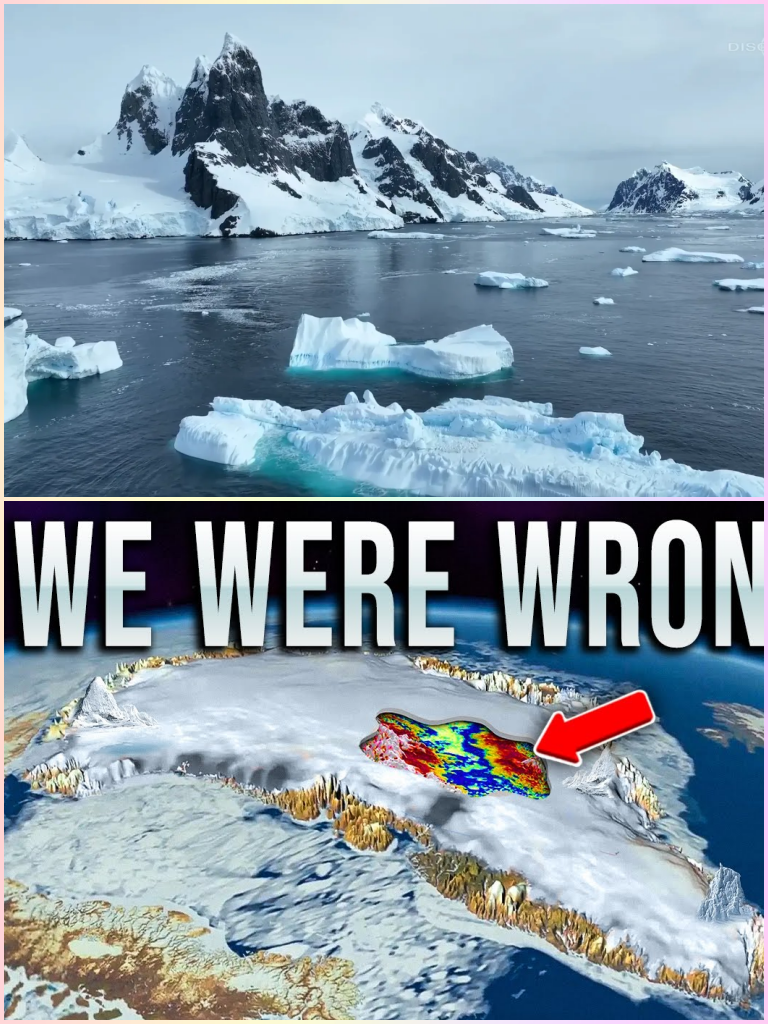
Over the past decade, teams using ice-penetrating radar and satellite mapping have identified vast subglacial features beneath the Greenland Ice Sheet, including ancient river valleys, deep canyons stretching hundreds of miles, and a massive impact crater likely formed by a meteorite thousands of years ago.

What’s Really Beneath the Ice?
Scientists have confirmed:
-
A giant subglacial canyon system comparable in scale to major surface river valleys.
-
The Hiawatha impact crater, buried under ice in northwest Greenland, believed to have formed during the last Ice Age.
-
Sediment layers preserving climate records dating back millions of years.
These discoveries are helping researchers reconstruct Greenland’s pre-ice landscape and better understand how ice sheets respond to warming temperatures.
Why It Matters
Greenland’s ice sheet holds enough frozen water to raise global sea levels by more than 20 feet if it were to melt completely. Understanding the terrain beneath the ice is crucial because subglacial valleys and basins influence how quickly glaciers move and how meltwater flows into the ocean.
“Mapping what’s underneath gives us a clearer picture of how the ice sheet may behave in a warming world,” one polar geologist explained. “It’s not rewriting physics — but it is refining our forecasts.”
Not a Sudden Apocalypse
While dramatic online posts frame the discovery as an immediate global shock, experts emphasize that these findings are part of ongoing scientific research rather than evidence of sudden catastrophe.
What is transformative is the technology: modern radar, satellite altimetry, and deep ice-core drilling are allowing scientists to read Earth’s climate history with unprecedented precision. Greenland, once largely inaccessible beneath its frozen cap, is becoming one of the planet’s most important natural archives.
A Scientific Awakening?
In a sense, yes — but not because of a hidden doomsday trigger. Instead, Greenland is helping researchers refine climate models, understand ancient ecosystems, and anticipate future sea-level changes.
The frozen frontier isn’t revealing a secret that will overturn everything we know — but it is sharpening our understanding of Earth’s past and future in ways that are profoundly important.
And that, scientists say, is extraordinary enough.