“Don’t Destroy a Life. Destroy the Weapon.” — The Tragedy That Forced Luton to Confront Youth Violence
On the evening of September 29, what should have been an ordinary end to a school day in Luton turned into a tragedy that would permanently alter multiple families and ignite urgent conversations about youth violence across the community.
At around 7 p.m., in a car park where teenagers often gathered after school, two groups of young people came face to face. Earlier that afternoon, a disagreement between students had begun to simmer. Fueled by whispers, text messages, and the rapid amplification of social media, tensions intensified rather than faded.
By evening, more teenagers had been drawn to the location. What might once have ended with a few angry words dissolved under adult supervision instead escalated unchecked. Voices rose. Tempers flared. And within minutes, the confrontation spiraled beyond control.
A Teenager Caught in the Middle
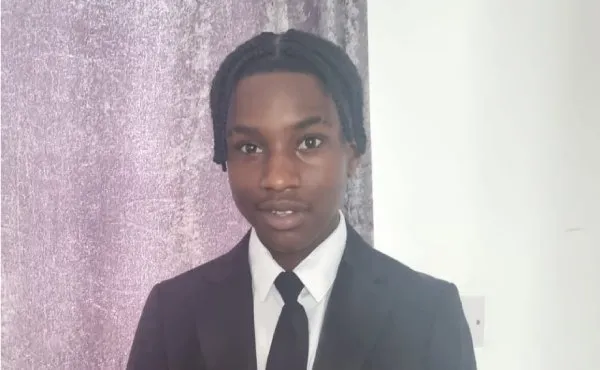
Sixteen-year-old Ashraf Habimana was present that evening with friends. Evidence later presented in court indicated that he had not been involved in the earlier dispute that triggered the confrontation. He was there — but not as a central participant in the conflict that would ultimately claim his life.
CCTV footage reviewed by investigators showed two groups converging in the car park. Among those involved were twin brothers Athif Hussaindeen and Althaf Hussaindeen, who were 17 at the time and later turned 18 during the legal proceedings.
What followed was described in court as a serious and sustained altercation.
The footage captured chaotic scenes — young people moving rapidly, shouting, pushing, and scattering. In the midst of that turmoil, Ashraf was physically attacked. Jurors later viewed video evidence described as deeply distressing, showing how quickly aggression can erupt when peer pressure and heightened emotions collide.
Another 16-year-old boy was also seriously injured that night. He survived, but the physical and psychological scars remain. The stark contrast between survival and loss underscored how thin the line can be between life and death in moments of uncontrolled violence.

A Community in Shock
Emergency services were called, and Ashraf was rushed to hospital. Despite the efforts of medical professionals, he later died from his injuries.
For his family, the news marked the beginning of a grief that words struggle to contain.
Bedfordshire Police launched an immediate investigation. Detectives examined CCTV footage, interviewed witnesses, and analyzed digital communications to reconstruct how an earlier school disagreement escalated into a fatal confrontation.
The twin brothers left the area following the altercation but were later located and arrested. Charges were filed, and the case moved steadily through the criminal justice system, drawing attention across Luton and beyond.
Inside the Courtroom
In court, prosecutors outlined how tensions that began earlier in the day were intensified by social media exchanges and the arrival of additional teenagers at the car park. What might have been a brief altercation escalated into violence with irreversible consequences.
Athif Hussaindeen faced the most serious charge. The prosecution argued that his actions went beyond mere presence in a disorderly crowd, presenting evidence that they said directly linked him to the fatal outcome. Additional public order and weapons-related charges were also considered.
After deliberation, the jury found Athif guilty of the most serious offence along with related charges. The court imposed a life sentence, ordering that he serve a minimum of 24 years before being eligible for parole consideration.
Althaf Hussaindeen was convicted of a lesser offence and public disorder. While the court recognized differences in his level of involvement, it concluded that his actions contributed to the chain of events. He was sentenced to seven years in prison.
During sentencing, the judge stated that Ashraf had been unarmed and had attempted to leave the area. He was not actively engaging in the confrontation when he was attacked. The violence inflicted upon him, the court noted, was unjustified and devastating in its consequences.
A Family’s Grief, A Community’s Call
For Ashraf’s parents, no sentence could restore what had been taken.
In a statement read publicly in court, they described their son as loving, calm, and full of promise. He had dreams, friendships, and a future that stretched far beyond that September evening. They spoke of the silence that now fills their home — an empty chair at the dinner table, a bedroom that will never again echo with laughter or music.
Grief, they said, is not limited to court dates or anniversaries. It lives in the ordinary moments that once held shared joy.
In the midst of their heartbreak, they announced the creation of the Ashraf Habimana Foundation, aimed at raising awareness about youth violence and encouraging young people to choose dialogue over aggression.
Their message is simple yet urgent: “Don’t destroy a life. Destroy the weapon.”
The Role of Social Media and Peer Pressure
Detective Inspector Graham Newton described the case as a tragic example of how rapidly situations can escalate, particularly when influenced by social media. Online exchanges can intensify conflict, drawing more individuals into disputes and creating an atmosphere where confrontation feels unavoidable.
The investigation also resulted in additional individuals being sentenced for public disorder and weapons-related offences. While their roles varied, the collective dynamic of the group contributed to the night’s outcome.
The case highlights a difficult truth: when violence becomes normalized within a crowd, responsibility often spreads beyond a single individual.
Beyond the Headlines
Ashraf Habimana was not armed. He was not leading a fight. He was a 16-year-old who found himself present at a moment when tension overtook reason. His death stands as a stark reminder that violence rarely unfolds in isolation. It can engulf bystanders as quickly as it does participants.
For the twin brothers now facing years in prison, their sentences mark the beginning of a different reckoning — one defined by confinement and reflection.
For Ashraf’s family, however, there is no equivalent measure of time that can balance the loss of a son.
A Call to Intervene Before It’s Too Late
The tragedy in that Luton car park is more than a record of criminal proceedings. It is a case study in escalation, peer influence, and the devastating cost of a single violent moment.
It also serves as a call — from grieving parents, from law enforcement, and from a shaken community — to intervene earlier. To challenge the normalization of weapons. To interrupt conflict before it becomes irreversible.
Because once violence crosses a certain line, there is no rewind button. Only consequences.