Iran launches retaliatory strikes, Gulf region shaken
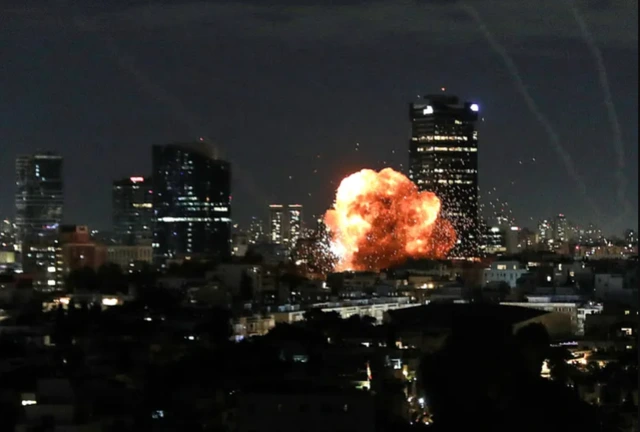
By the morning of March 1, Iran had launched retaliatory attacks on U.S. and Israeli military bases and other targets across the Middle East, shaking densely populated areas and disrupting aviation and oil transport.
Throughout the evening of February 28, Agence France-Presse (AFP) reported multiple loud explosions in the areas of Tel Aviv, Jerusalem, and the West Bank, as Israel’s air-defense systems intercepted barrages of missiles fired from Iran. The Israel Defense Forces said several explosions were recorded across Israeli territory.
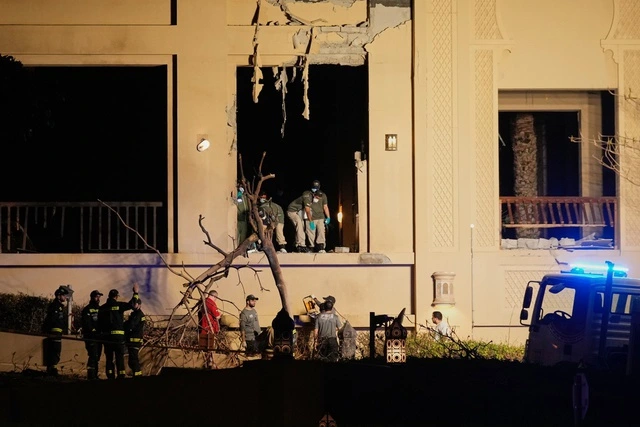
At the same time, explosions rocked multiple cities across the Gulf. Two people were killed in Abu Dhabi, while smoke and flames rose from the artificial island of Palm Jumeirah in Dubai as Iran launched retaliatory strikes against the United States and Israel.
Iran struck airports in Abu Dhabi, Dubai, and Kuwait, as well as military bases and residential areas across the Gulf, raising fears of a wider regional conflict. Across the United Arab Emirates, the Defense Ministry said Iran had launched a total of 137 missiles and 209 unmanned aerial vehicles (UAVs). Projectiles were observed over the skies of most Gulf countries, except Oman, which has played a mediating role in recent U.S.–Iran talks.
The UAE said it successfully intercepted most of the missiles and UAVs, but confirmed at least one fatality and seven injuries at Zayed International Airport. Earlier, a Pakistani national was reported killed in Abu Dhabi. At Dubai International Airport, authorities said four people were injured, while four others were hurt at a luxury complex on Palm Jumeirah.
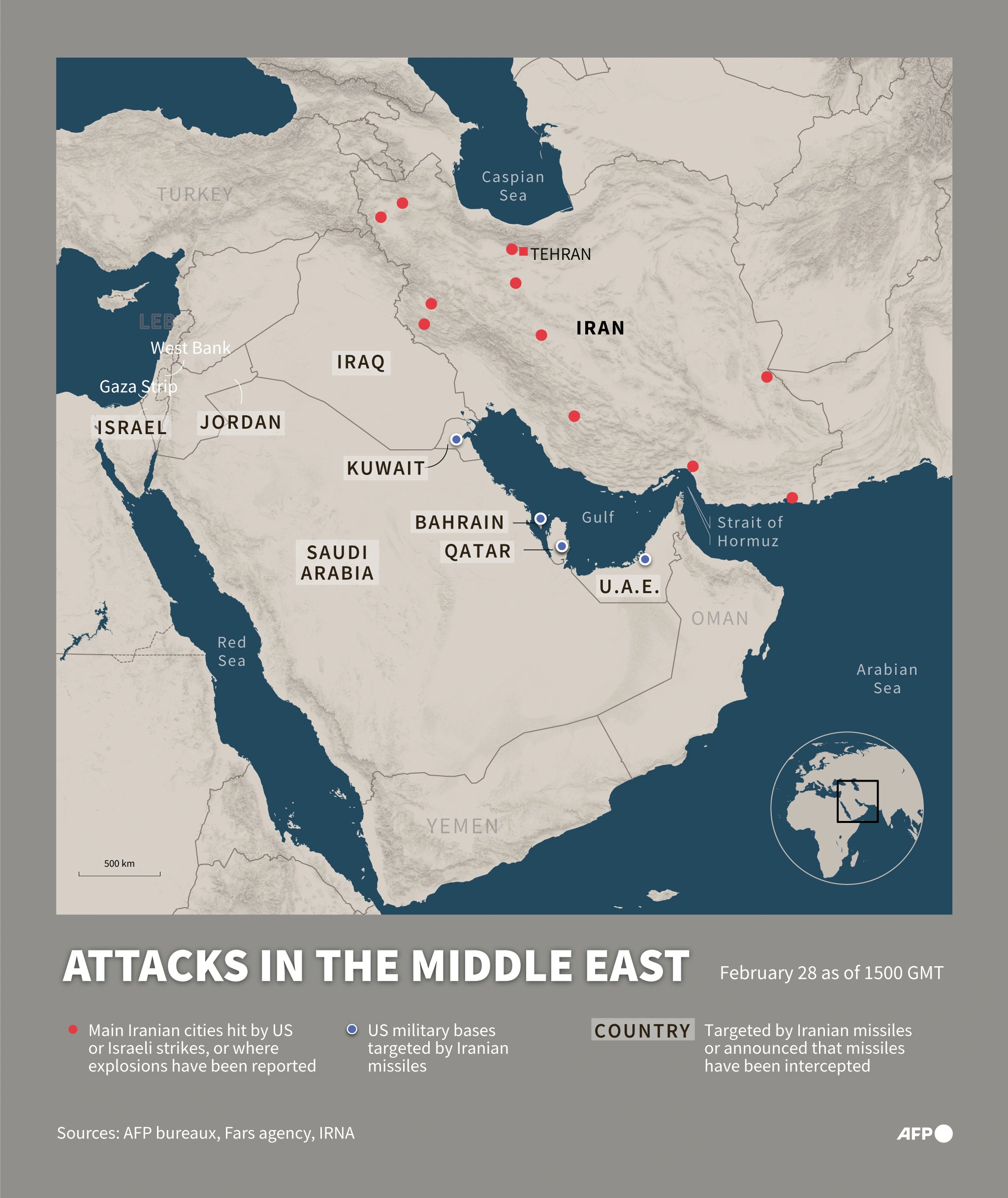
In Qatar, officials said Iran fired 65 missiles and 12 UAVs toward the country. Most were intercepted, but eight people were injured.
AFP cited witnesses as saying smoke was seen rising from U.S. bases in Abu Dhabi and Manama, home to the U.S. Navy’s Fifth Fleet. An Iranian UAV struck Kuwait International Airport, and a base hosting U.S. troops in Kuwait was also targeted, leaving three Kuwaiti soldiers and 12 others injured.
Also in Kuwait, an Iranian missile caused “significant damage” to the runway of an air base hosting Italian Air Force personnel, Italy’s Foreign Minister Antonio Tajani said, according to ANSA.
Explosions were also reported near the U.S. consulate in Erbil, AFP said.
After Iran’s Islamic Revolutionary Guard Corps announced the missile launches, the U.S. United States Central Command (CENTCOM) said on X that no U.S. naval vessels had been hit, damage to U.S. facilities remained minimal, and no U.S. casualties had been reported so far.