Shockwaves Across the Middle East: Ayatollah Ali Khamenei Reported Dead After Coordinated U.S.–Israeli Strike
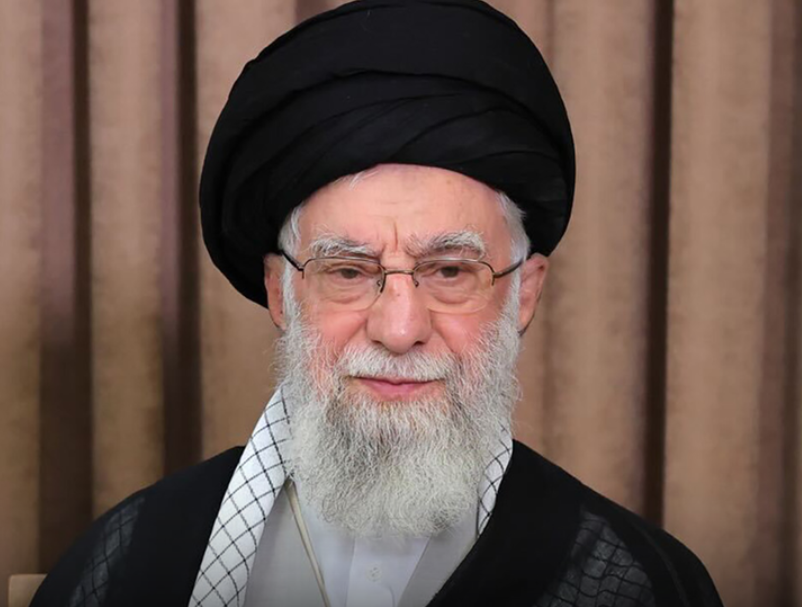
In a development that has sent seismic shockwaves across global politics, Iran’s Supreme Leader, Ali Khamenei, has been reported dead following a coordinated military strike carried out by the United States and the Israel Defense Forces. The operation, which allegedly targeted high-level command infrastructure in and around Tehran, marks one of the most dramatic escalations in Middle Eastern tensions in decades.
According to multiple international reports, the strike occurred late Saturday night, hitting what officials described as fortified leadership compounds and strategic military sites. Explosions were heard across parts of the capital, with air defense systems reportedly activated as plumes of smoke rose over key districts. 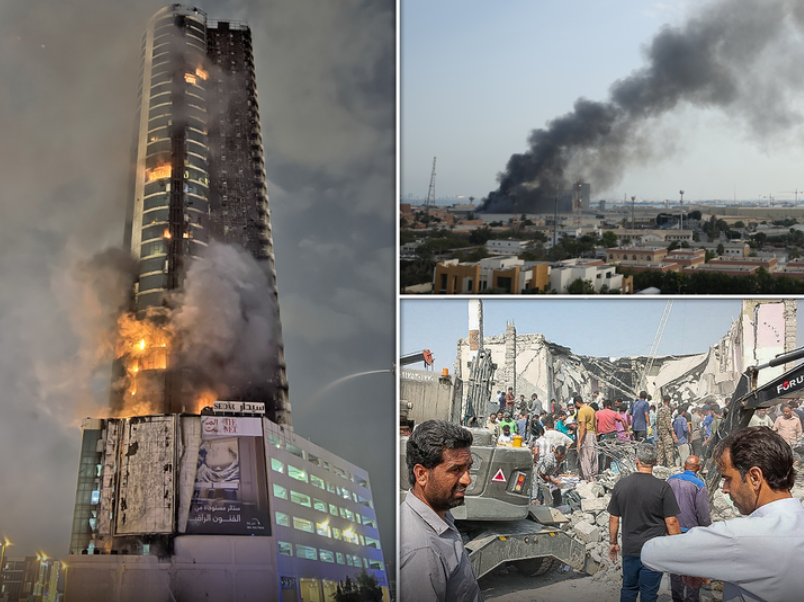 Within hours, global intelligence sources began signaling that senior Iranian figures may have been among the casualties. By early Sunday, widespread claims emerged that Khamenei himself had been killed in the operation — a moment that, if fully confirmed, would close a chapter spanning more than three decades of Iranian political dominance under his leadership.
Khamenei, who had ruled Iran since 1989, was one of the most powerful and controversial figures in modern geopolitics. As Supreme Leader, he held ultimate authority over Iran’s military, judiciary, media, and foreign policy direction. His tenure shaped Iran’s confrontational posture toward Western powers, its strategic alliances across the region, and its internal political structure. News of his reported death triggered immediate reactions both inside Iran and internationally, with analysts warning of unpredictable consequences.
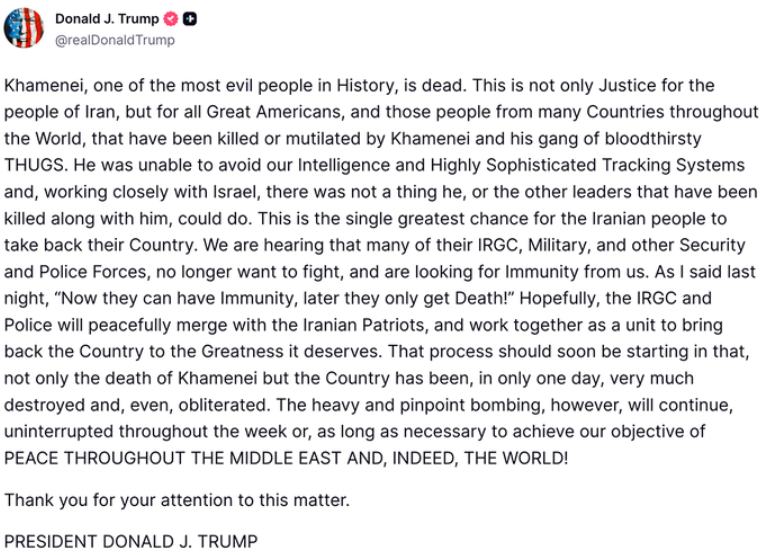 Inside Tehran, reports describe scenes of confusion and heightened security presence. State media initially issued cautious statements before shifting tone as international outlets amplified the claim. Regional observers say Iran’s leadership structure now faces its most significant uncertainty since the 1979 Islamic Revolution. Questions swirl over succession, internal power struggles, and how Iran’s military and political institutions will respond.
Globally, governments are closely monitoring developments, aware that the death of a sitting Supreme Leader in a foreign strike represents an extraordinary and potentially destabilizing precedent. Markets, diplomatic channels, and military alliances are bracing for possible retaliation or further escalation.
As the dust settles and verification continues, one thing is clear: the reported killing of Ali Khamenei could redefine the geopolitical landscape of the Middle East for years to come, ushering in a volatile and deeply consequential new era.