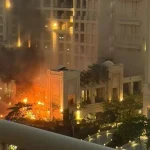
⚡️ Historic Blow to Iran’s Military: Top Commander and Defense Minister Confirmed Killed in U.S.–Israeli Strikes — A Turning Point in Middle East Conflict
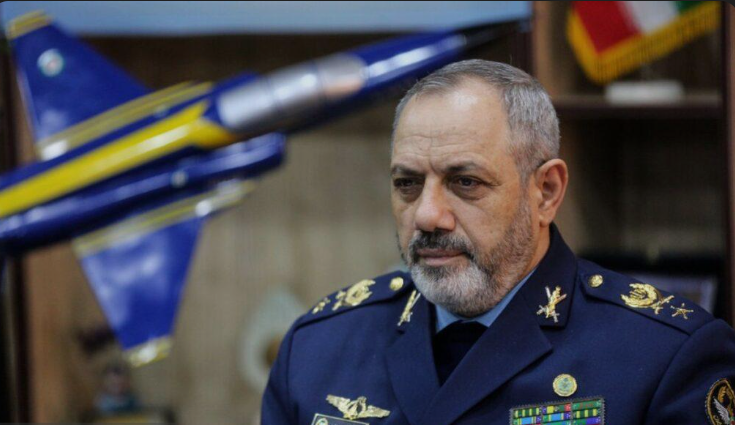
In a dramatic and unprecedented escalation of the long-running tensions between Iran and a U.S.–Israeli military coalition, the Islamic Republic of Iran has officially confirmed that two of its highest-ranking military leaders — Chief of Staff Abdolrahim Mousavi and Defense Minister Aziz Nasirzadeh — were killed in coordinated air strikes on Saturday, February 28, 2026. The confirmation, issued by Iran’s state news agency IRNA and reported by multiple international outlets, marks one of the most significant blows to Tehran’s military and strategic command in decades.
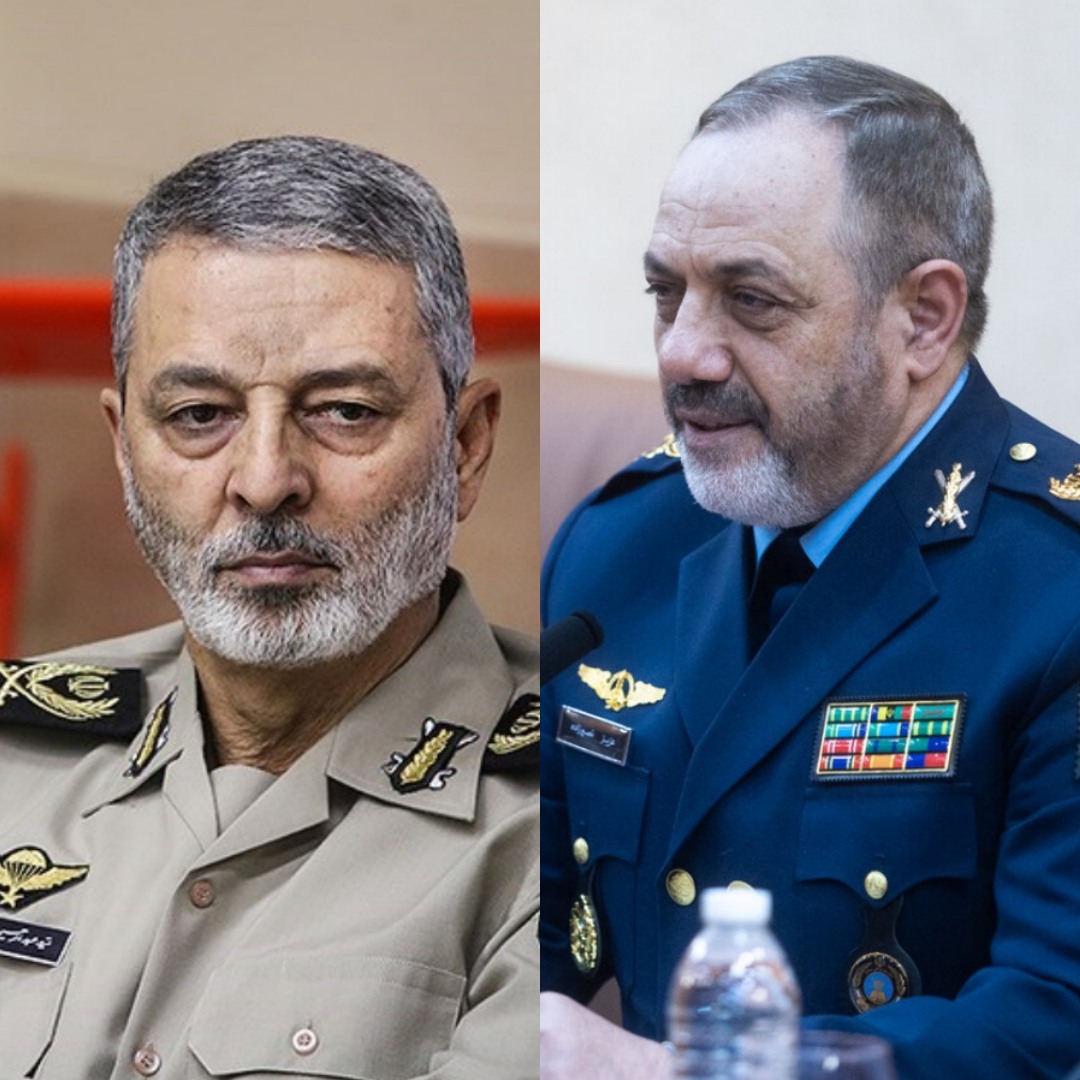 Major General Abdolrahim Mousavi, who had served as Chief of Staff of the Iranian Armed Forces, was among the senior commanders gathered in what Iranian sources described as a Defense Council meeting at the time of the strikes. From June 2025 until his death in February 2026, Mousavi held the highest military coordination role in Iran’s hierarchical command structure, bridging the regular army and the influential Islamic Revolutionary Guard Corps (IRGC). His loss represents a severe disruption to Iran’s ability to marshal and direct its armed forces.
Alongside him, Defense Minister Aziz Nasirzadeh — a seasoned former air force commander and a key architect of Iran’s aerial, drone, and defense modernization programs — was also confirmed dead. Nasirzadeh’s role had placed him at the center of Tehran’s strategic military planning, especially as Iran expanded its regional influence and weapons development efforts in recent years.
 These confirmations follow earlier announcements that other top figures, including IRGC Commander-in-Chief Mohammad Pakpour and Supreme Leader Ayatollah Ali Khamenei’s senior adviser Ali Shamkhani, were also killed during the surprise strikes executed jointly by United States and Israeli forces. The operation — described by some analysts as a “decapitation strike” against Iran’s military elite — reportedly targeted centralized command infrastructure in Tehran and elsewhere, causing the deaths of dozens of senior officers.
The implications are profound: with the deaths of its Chief of Staff and Defense Minister, Iran has suffered a near-complete dismantling of its senior military leadership, leaving a critical power vacuum at a moment of intense regional volatility. The losses have further escalated conflict across the Middle East, provoking Iranian retaliatory strikes on Israeli territory and U.S. military positions, and raising alarms about a wider regional war. Observers warn that Iran’s ability to coordinate defense and strategic operations could be severely hampered in the weeks ahead, even as internal political pressures intensify.