🌍 Middle East Airspace in Chaos: Dubai Airport Shutdown Sparks Global Travel Shockwave
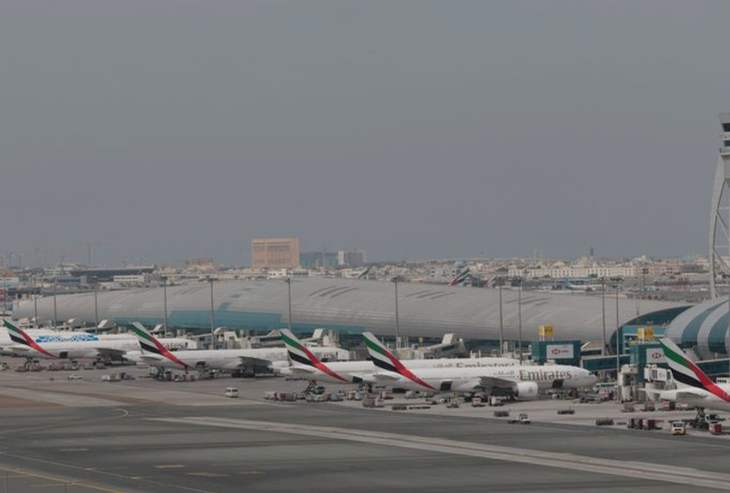
One of the world’s most critical aviation hubs, Dubai International Airport, has reportedly suspended operations amid rapidly escalating regional tensions, triggering massive disruption across global air travel networks. Handling roughly 260,000 passengers daily and serving as the primary base for Emirates, the airport’s closure has sent shockwaves through the aviation industry.
 According to regional reports, flights have been halted and inbound aircraft diverted as Gulf airspace faces unprecedented instability. Authorities have advised travelers not to proceed to the airport and, in some areas, to shelter in place while security responses continue. Tens of thousands of passengers are believed to be affected, with aircraft grounded and terminals facing severe congestion.
The disruption follows coordinated military strikes by the United States and Israel targeting Iranian sites, after which Iran reportedly launched retaliatory missiles and drones toward Gulf nations. In response to the evolving threat environment, neighboring states including Qatar, Bahrain, and Kuwait have also imposed temporary airspace restrictions or airport suspensions.
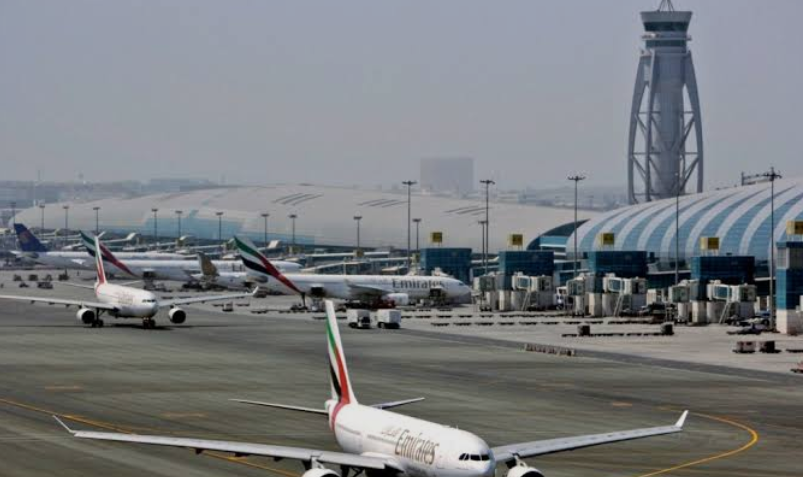 Adding to the tension, local sources reported an explosion and fire near the Fairmont The Palm on Palm Jumeirah, though the extent and cause remain under investigation. Separately, officials in Kuwait confirmed that a drone struck Kuwait International Airport, injuring several individuals and damaging part of the terminal structure.
Aviation analysts describe the situation as one of the most serious regional airspace disruptions in decades. The Gulf corridor is a critical transit bridge between Europe, Asia, and Africa. Any prolonged shutdown could ripple through international supply chains, tourism flows, and global airline schedules for weeks.
While emergency services and air defense systems remain active, authorities across the region continue to monitor incoming threats and assess infrastructure damage. For now, much of the Middle East’s commercial sky remains either restricted or heavily controlled — a stark reminder of how quickly geopolitical conflict can reshape global mobility.