Pompeii’s “Ancient Pizza”: The 2,000-Year-Old Fresco Rewriting Food History
- SaoMai
- March 2, 2026
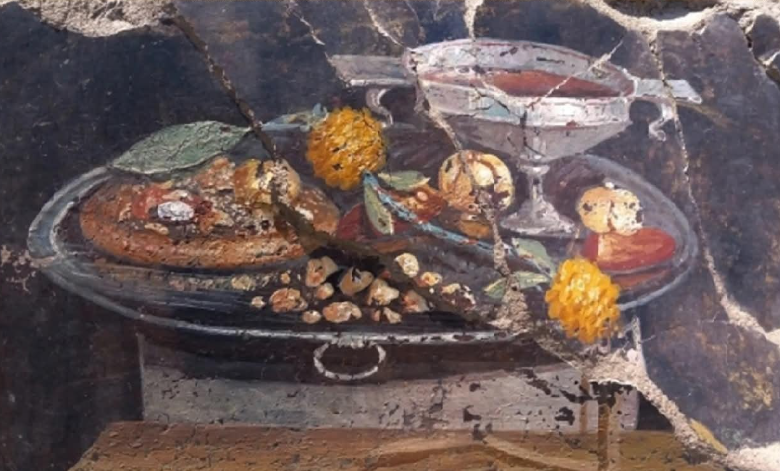
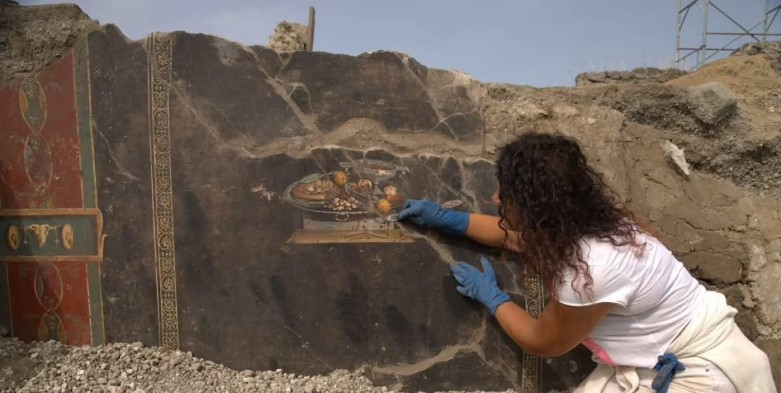
In June 2023, archaeologists working in Pompeii uncovered a fresco that instantly captured global imagination: a vivid still-life scene featuring what many rushed to call an “ancient pizza.” But while the image strongly resembles the beloved modern dish, the truth is far more fascinating — and far older.
The fresco was discovered in Regio IX, insula 10, inside the atrium of a house connected to a bakery — a fitting setting for a culinary depiction. At the center of the artwork lies a round, flat bread placed on a gleaming silver tray. The bread, technically a focaccia-style base, is topped with fruits such as pomegranate and dates, alongside small yellow and ochre dots interpreted as spices or perhaps a cheese-and-herb spread similar in appearance to pesto. Beside it sits a goblet of wine, completing a composition that feels both humble and refined.
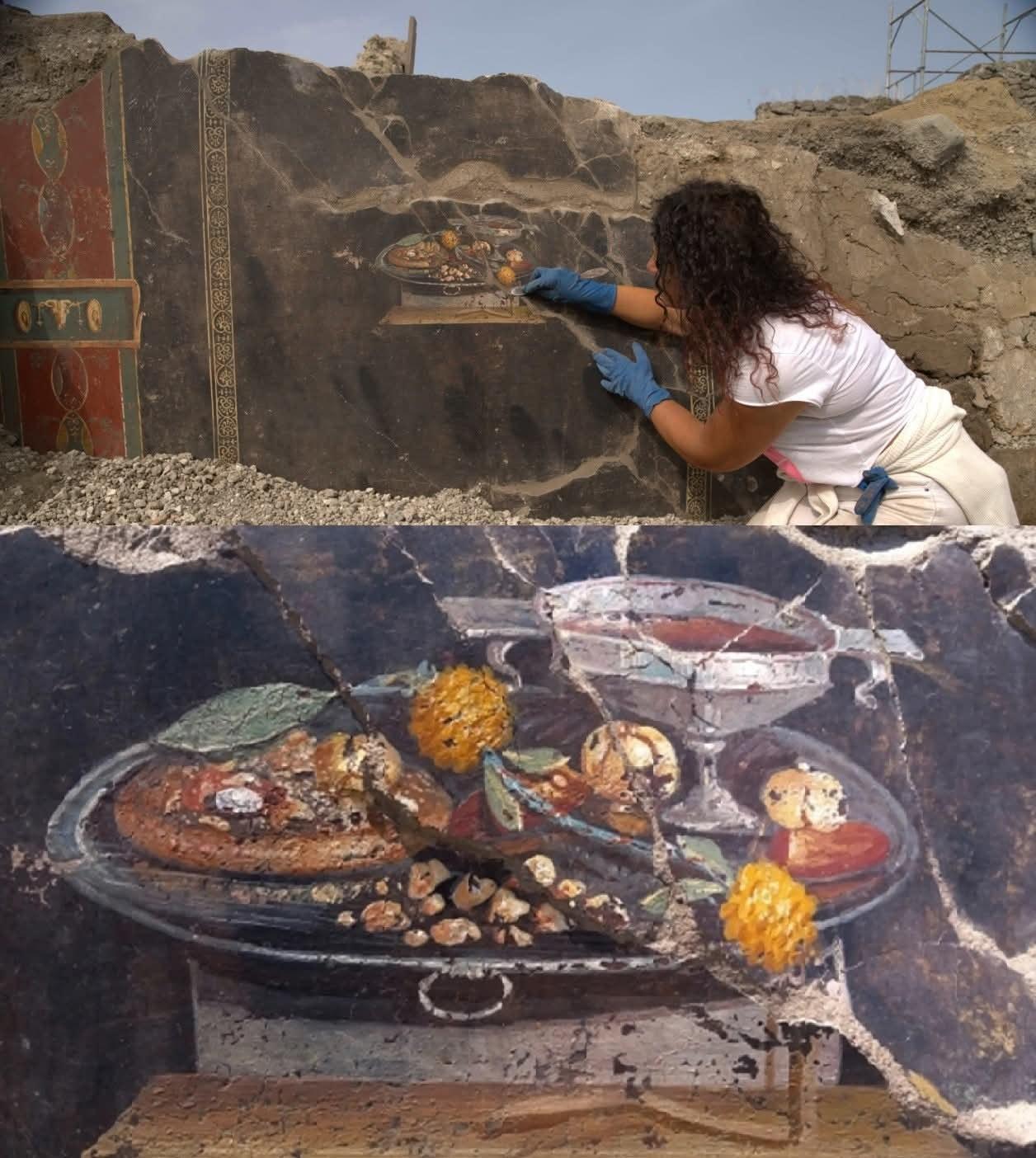 This is not pizza as we know it. Tomatoes — now inseparable from modern pizza — would not arrive in Europe until more than a millennium later, following the Columbian Exchange. Instead, the bread likely functioned as a mensa, an edible base used to hold other foods, a common practice in ancient Roman dining. The toppings depicted reflect Mediterranean flavors of the time: sweet fruits, aromatic spices, and possibly herb-based pastes.
The fresco belongs to a category of Roman art known as xenia — hospitality scenes representing gifts offered to guests. These artworks symbolized generosity and abundance, even when the foods themselves were relatively simple. In this case, the combination of modest ingredients presented on a luxurious silver tray reveals a striking cultural contrast: everyday sustenance elevated through artistic and social ritual.
 What makes this discovery so compelling is not that it proves pizza existed 2,000 years ago — it didn’t, at least not in its modern form. Rather, it offers a vivid snapshot of Roman dietary habits and social customs. It reminds us that flatbreads with toppings have deep roots in Mediterranean history, long before Naples would become the birthplace of the tomato-topped pizza centuries later. Preserved beneath volcanic ash when Mount Vesuvius erupted in 79 CE, Pompeii continues to astonish the modern world. Each new discovery adds texture to our understanding of Roman life — not just politics and architecture, but daily pleasures like food, wine, and hospitality.
This fresco is more than a curiosity. It is a beautifully preserved moment of cultural identity — a reminder that even 2,000 years ago, people gathered around bread, shared flavors, and celebrated the art of presentation.