Where Elegance Met Steam: The Women’s Changing Room of Ancient Herculaneum
- SaoMai
- March 2, 2026
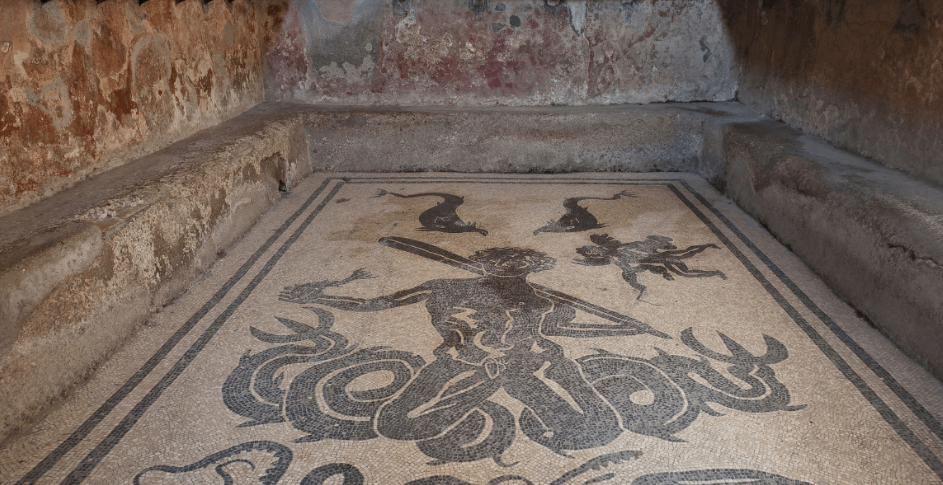
Step inside the women’s baths of Herculaneum, and you enter a world where daily ritual blended seamlessly with beauty, architecture, and social life. Buried under volcanic ash during the catastrophic eruption of Mount Vesuvius in 79 AD, this remarkably preserved Roman town offers one of the most intimate glimpses into ancient bathing culture. The image in focus captures the apodyterium—the women’s changing room—an elegant prelude to the warm embrace of steam and water.
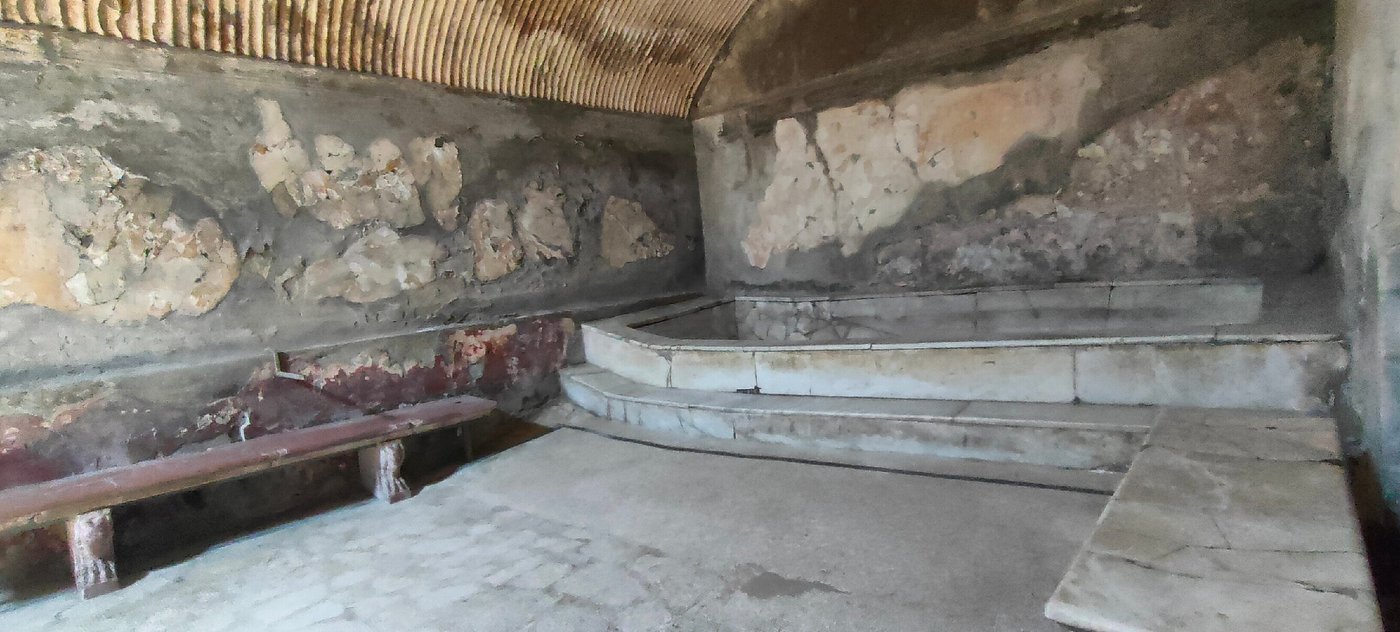
 The Roman bath complex was thoughtfully organized into distinct spaces. After undressing in the apodyterium, bathers would proceed to the tepidarium, a warm room designed to gently prepare the body, and then into the caldarium, the hot room filled with steamy air and heated baths. But it is here, in the apodyterium, that we see the social and artistic heart of the experience.
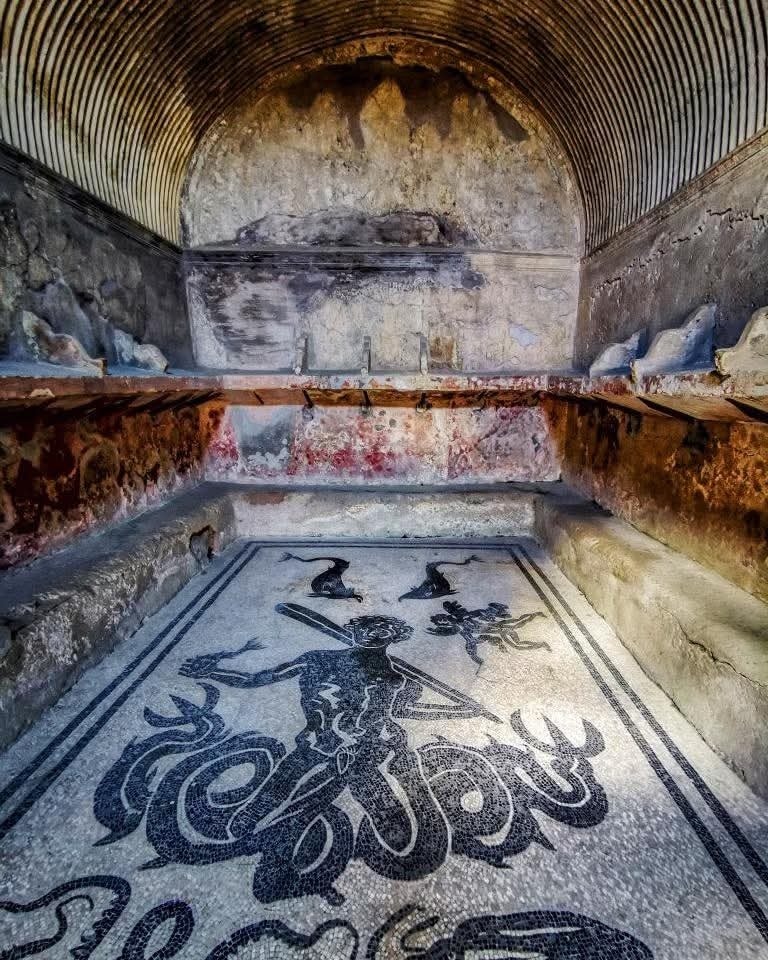
Beneath the feet of ancient visitors stretches a breathtaking mosaic floor alive with marine imagery. The design is piscatorial in theme, celebrating the sea with dynamic depictions of octopus, squid, dolphins, sea serpents, and a variety of fish swirling in intricate patterns. At the center reigns Neptune—known to the Greeks as Poseidon—commanding the aquatic world with divine authority. 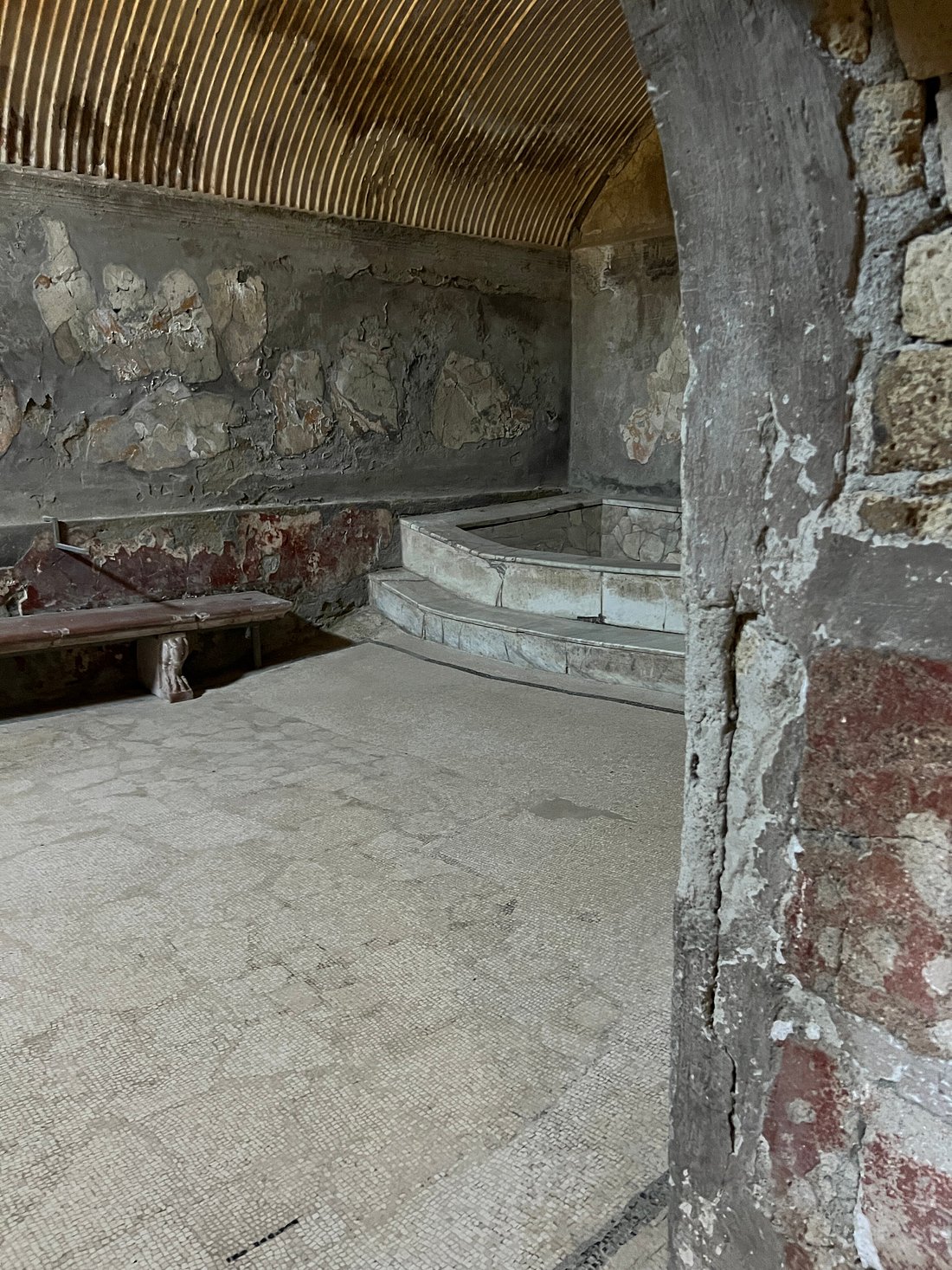 The imagery is more than decorative; it reflects Rome’s deep relationship with the sea, power, and mythology. The craftsmanship is astonishing, each tiny tessera carefully placed to create movement and vitality, as if the floor itself were alive.
Along the walls, neatly arranged niches served as storage shelves for clothing, sandals, and personal belongings. Below them, a continuous bench provided seating. Here, women would sit side by side, fastening their sandals, exchanging news, and applying fragrant oils and ointments to their freshly cleansed skin. Bathing in the Roman world was not merely about hygiene—it was a cherished social ritual, a place for conversation, relaxation, and community bonding.
 The apodyterium of Herculaneum captures this harmony of function and artistry. It reminds us that even the most routine aspects of life in the ancient world were elevated by thoughtful design and aesthetic richness. In this serene chamber of mosaic seas and stone benches, Roman women once prepared themselves not just for the baths—but for connection, renewal, and a shared rhythm of daily life that still feels strikingly familiar today.