Frozen in the Ice: A 20,000-Year-Old Woolly Rhino Emerges from Siberia’s Permafrost
- SaoMai
- March 3, 2026
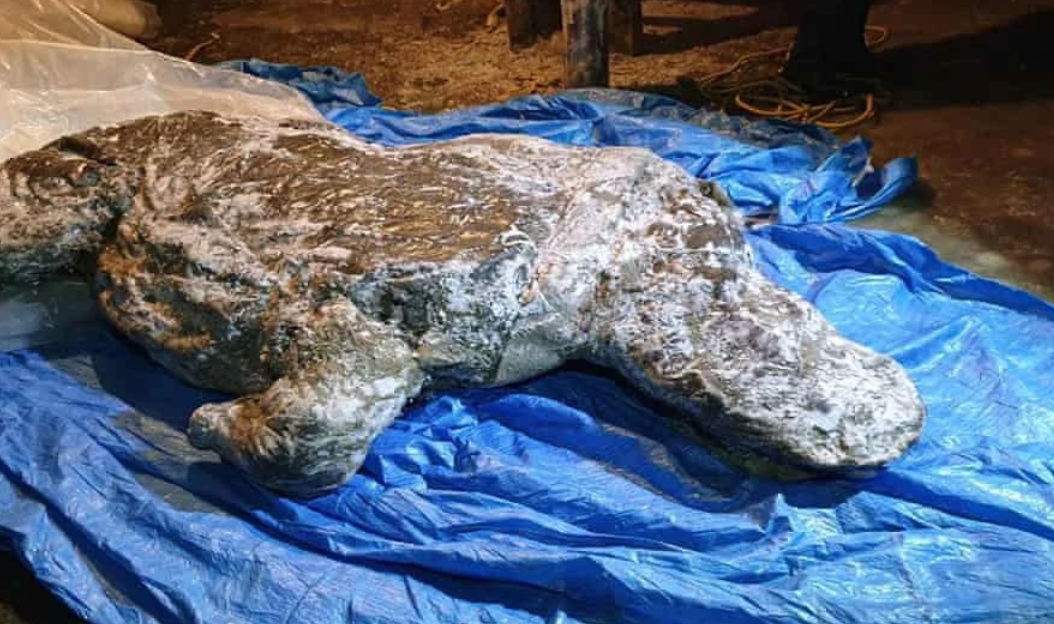
It sounds like a scene from a prehistoric epic — a massive Ice Age creature rising from the frozen earth, its fur still clinging to its body, its horn preserved as if time itself had paused. Yet this breathtaking moment became reality when researchers in Yakutia, Siberia uncovered the astonishingly intact remains of a 20,000-year-old woolly rhinoceros, a discovery that opens an extraordinary window into the last Ice Age.
The carcass was found in the remote region of Yakutia, near the banks of the Tirekhtyakh River. The animal belonged to the species Coelodonta antiquitatis, one of the iconic megafauna that once roamed the vast, frozen steppes of the Pleistocene epoch. 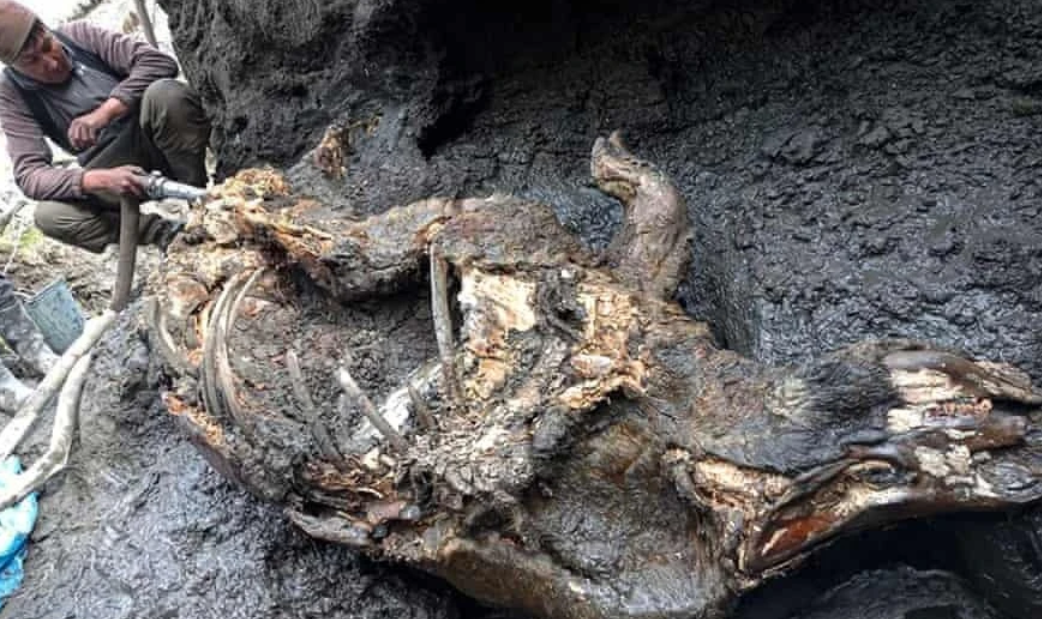 Unlike most fossils, which preserve only hardened bone, this specimen retained astonishing soft-tissue detail — thick reddish-brown fur, internal organs, hooves, skin, and even portions of its intestines. Its horn, detached but lying close to the body, was also remarkably well preserved.
Scientists estimate the rhino was between three and four years old when it died. Evidence suggests it may have drowned, perhaps falling into a river or waterlogged terrain. Rapid burial in sediment, followed by freezing temperatures, sealed its body within permafrost — ground that has remained frozen for tens of thousands of years. Acting as nature’s deep freezer, the permafrost halted decomposition and protected delicate tissues that would normally vanish within days or weeks.
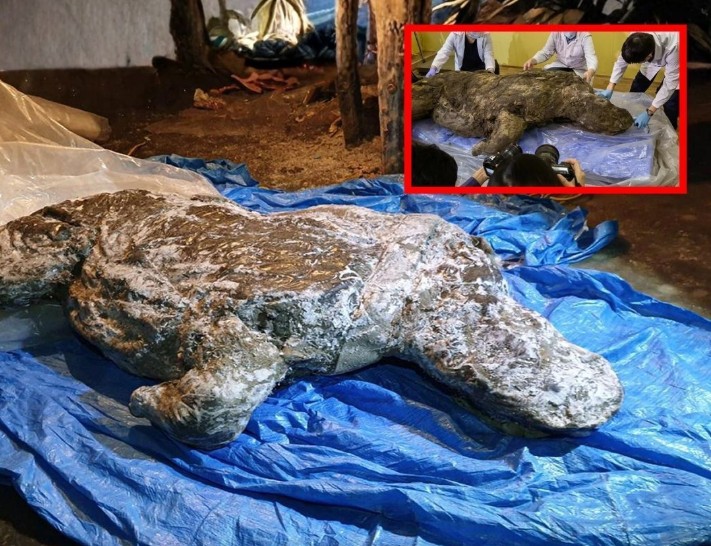 The preservation is so pristine that researchers describe the find as a true “time capsule” from the Pleistocene. Unlike skeletal fossils, which tell us about shape and structure, soft tissues reveal intimate biological details. By analyzing muscle fibers, stomach contents, and intestinal remains, scientists hope to reconstruct the animal’s diet, health, and even aspects of its metabolism. Chemical signatures preserved in tissues may provide clues about the vegetation it consumed and the climate conditions it endured in a harsh, windswept Ice Age landscape.
Discoveries like this are becoming more frequent as rising global temperatures thaw Siberia’s ancient permafrost, exposing long-hidden remains of mammoths, cave lions, and woolly rhinos. Each emergence is scientifically invaluable, but it also serves as a reminder of how dramatically Earth’s climate has shifted over millennia.
Beyond data and measurements, there is something profoundly moving about this frozen giant. This was not merely a fossilized skeleton but a living, breathing animal that once roamed icy plains long before human civilizations took shape.
And here is a fascinating thought: some Ice Age mammals preserved in permafrost have contained ancient parasites within their bodies — microscopic remnants of ecosystems over 20,000 years old, silently preserving predator-prey relationships and ecological networks long lost to time.