16,000 Steps into the Past: Bolivia’s Dinosaur “Highway” Reveals a Lost World
- SaoMai
- March 3, 2026
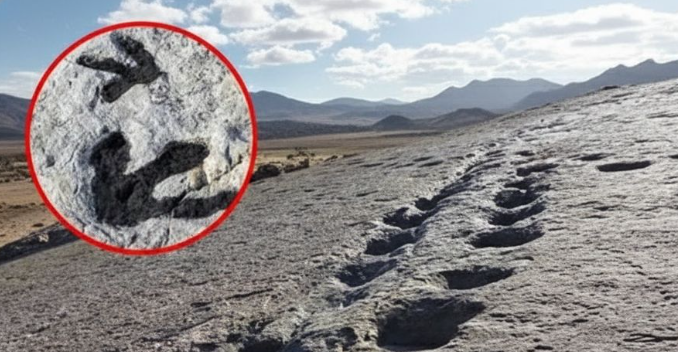
How do you track a dinosaur? You follow its footprints — thousands of them.
In Bolivia, paleontologists uncovered one of the most astonishing fossil track sites ever discovered: a vertical wall of stone preserving more than 16,000 dinosaur footprints. Located near the city of Sucre, at a site known as Cal Orck’o, this immense limestone surface captures a vivid snapshot of life during the Late Cretaceous, roughly 68 million years ago.
What makes this discovery so extraordinary isn’t just the number of tracks — it’s the story they tell. The site preserves the movement of multiple dinosaur species, from towering long-necked sauropods to large carnivorous theropods and smaller, bird-like dinosaurs. Instead of isolated prints, the tracks stretch in long, parallel paths, some running side by side for dozens of meters. 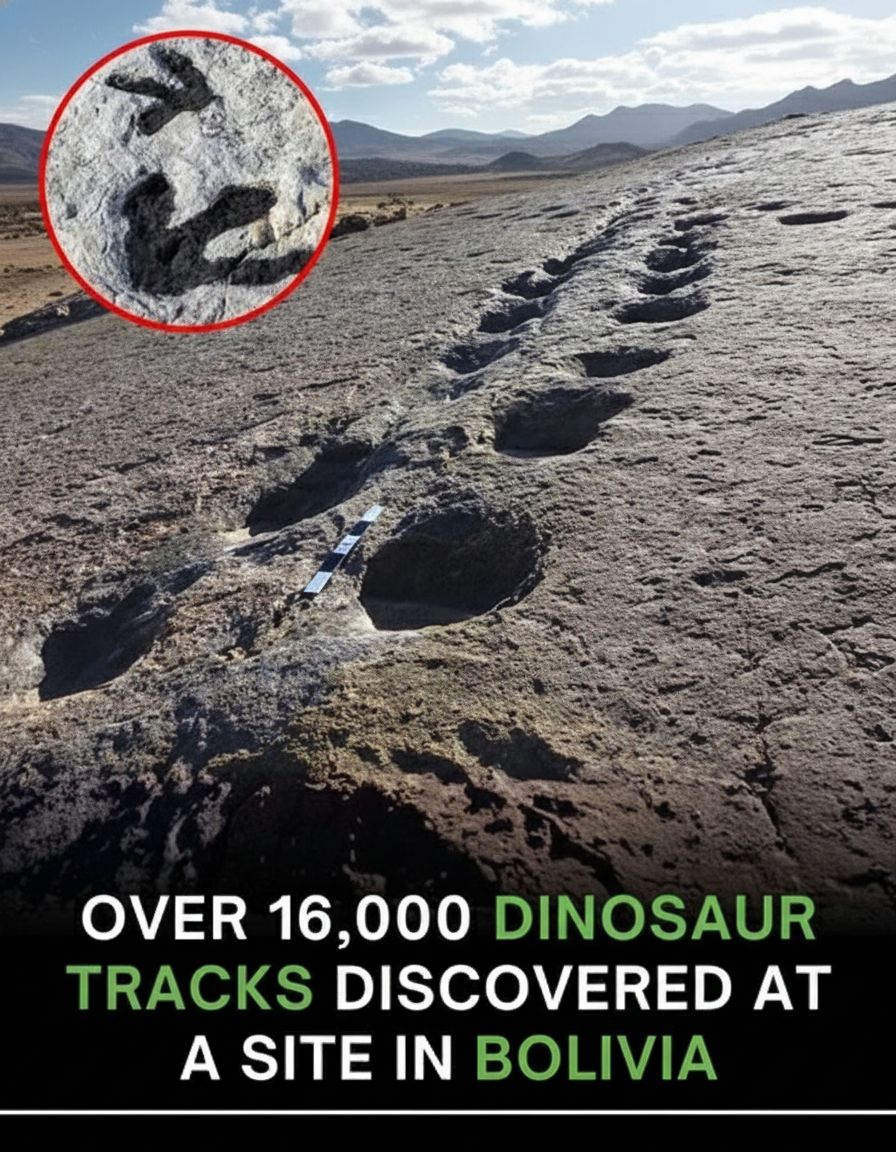 This suggests herd behavior, particularly among plant-eating dinosaurs that likely traveled together for protection. The surface itself was once a flat, muddy lakeshore. As dinosaurs crossed the soft ground, their feet pressed deep impressions into the sediment. Over time, layers of sediment buried those tracks, and geological forces eventually tilted the entire formation upward, leaving what is now an almost vertical “wall” of footprints — like a stone mural of prehistoric movement.
Perhaps most thrilling is how the tracks intersect and overlap. In some places, the three-toed prints of large predators cross directly over the broad, round impressions left by massive sauropods. While we can’t say for certain whether a hunt was underway, these crisscrossing paths provide rare insight into how different species shared the same environment. It is, in many ways, a fossilized traffic map from a vanished ecosystem.
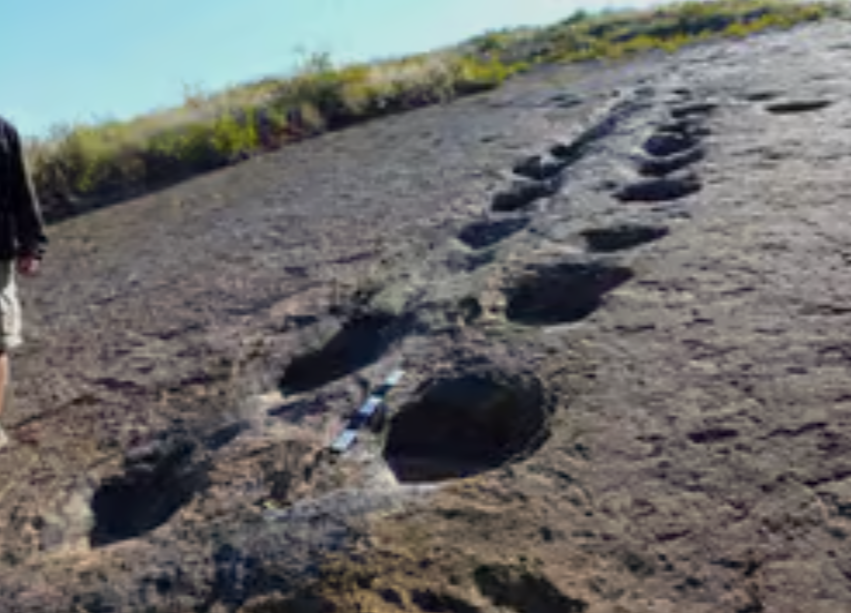 Trackways like those at Cal Orck’o reveal details that skeletons alone cannot. They show speed, direction, stride length, and even behavior. By measuring the distance between steps, scientists can estimate how fast certain dinosaurs were moving. Parallel track sets indicate coordinated group travel. Variations in depth suggest differences in weight and size — from juveniles to fully grown giants.
Standing before this immense wall of footprints, it becomes clear that this is more than a fossil site. It is a frozen moment of activity — a prehistoric crossroads where predators, herds, and solitary wanderers once moved across a muddy shoreline. Sixty-eight million years later, their steps remain, etched into stone, silently telling the story of a world long lost but not forgotten.