2,000-Year-Old Human and Animal Footprints Unearthed at Lunan Bay, Scotland
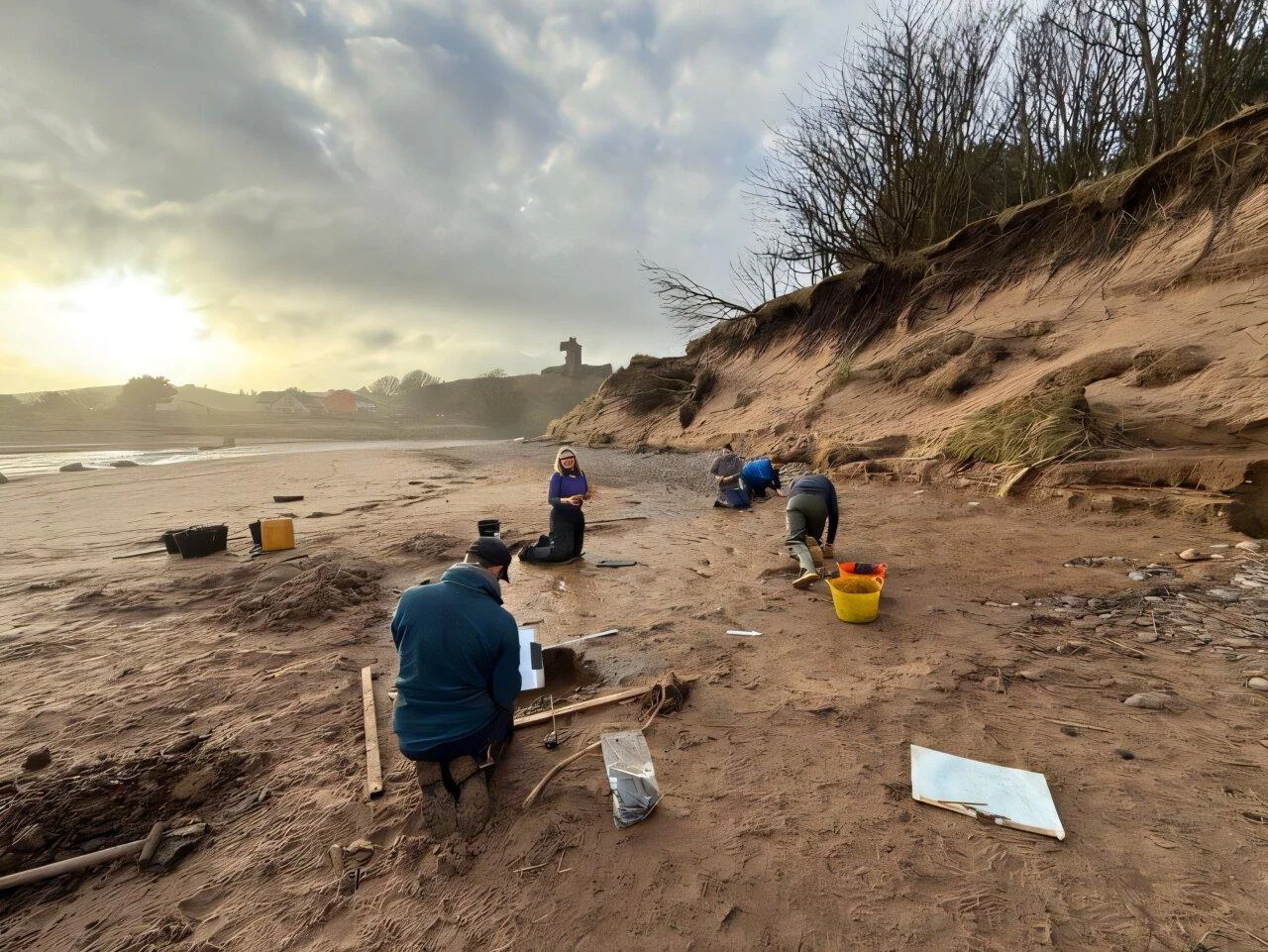
Powerful winter storms along Scotland’s east coast have uncovered a rare archaeological site at Lunan Bay, near Montrose. The storms stripped sand from coastal dunes, revealing a layer of ancient clay marked with remarkably clear footprints left by both humans and animals around 2,000 years ago.
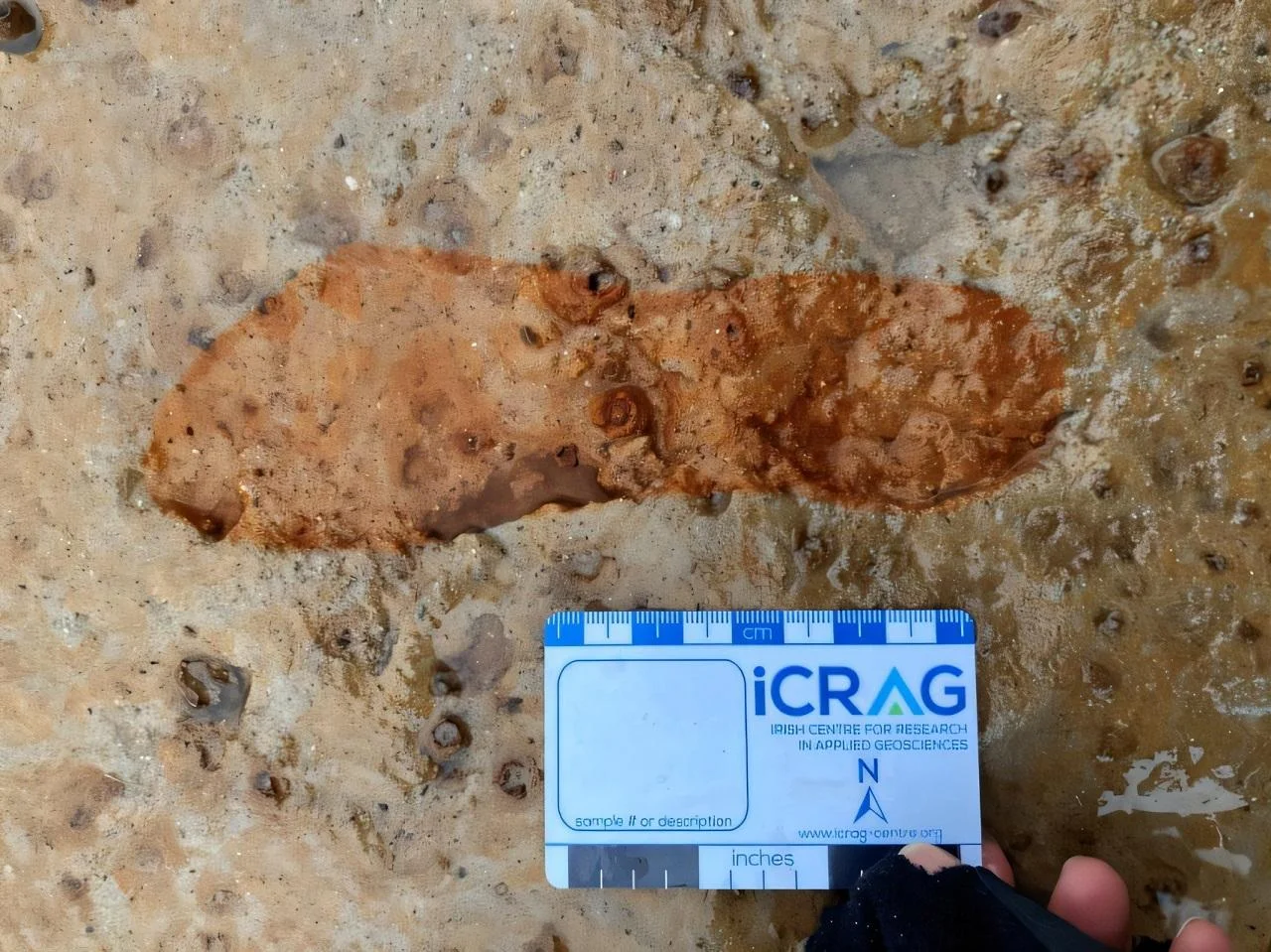
In late January, local residents Jenny Snedden and Ivor Campbell were walking their dogs when they noticed sharply defined impressions pressed into the newly exposed surface. The footprints—human and animal alike—were preserved in mud that had hardened over centuries. Recognizing their significance, Campbell contacted regional archaeologist Bruce Mann on 26 January.
By the following day, a team from the University of Aberdeen had arrived at the beach, bringing plaster to make casts and other recording equipment. Time was critical. Winds exceeded 55 miles per hour, sand scoured the surface, and incoming tides steadily destroyed parts of the site.
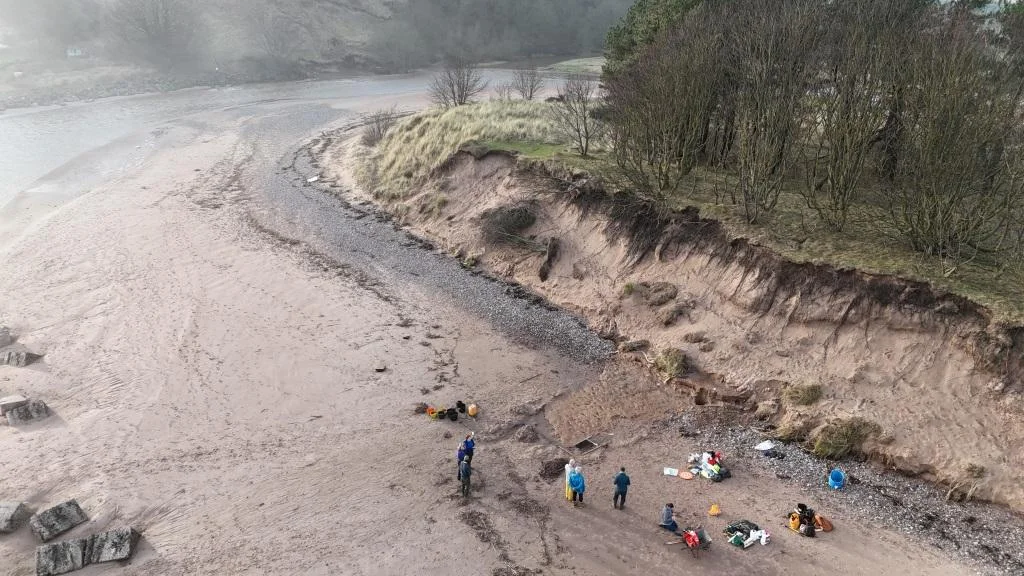
Led by Professor Kate Britton, the researchers worked rapidly to document the discovery. They cleaned sections of the clay, mapped each footprint, and created high-resolution 3D models using photography and drone surveys. During brief lulls in the weather, drone flights captured overhead images with millimeter-level precision. Selected footprints were also preserved as physical casts before the next high tide. Within 48 hours, the exposed clay layer was completely erased by the sea.
Laboratory analysis of plant remains trapped in sediments beneath the footprints allowed researchers to radiocarbon-date the activity to around 2,000 years ago, during the late Iron Age. This period coincided with Roman expansion into Britain and predates the emergence of the Picts in eastern Scotland.
Closer study of the impressions revealed tracks from red deer, roe deer, other animals, and several barefoot humans. The size and spacing of the human prints suggest that adults—and possibly younger individuals—crossed the area together. At the time, the clay surface likely formed part of a muddy estuary or salt marsh. Although Lunan Bay is now a broad sandy beach, two millennia ago it would have supported marsh vegetation and attracted grazing deer. People may have visited the area to hunt, fish, or gather coastal plants such as samphire.
Footprint sites of this kind are extremely rare. Comparable discoveries have been recorded at the Severn Estuary, Formby, and Happisburgh, but none had previously been documented in Scotland. The Lunan Bay find provides direct evidence of human activity along the Angus coastline during the late Iron Age and highlights how dramatically coastal landscapes have changed since then.
Bruce Mann praised the swift action of the two walkers who reported the discovery. Without their timely call, the footprints would have vanished without record. Ironically, the same storm that exposed the ancient clay also destroyed it within days.
The drone imagery now has an additional role. Researchers plan to use it as a baseline for monitoring ongoing coastal erosion in the Montrose basin. As sea levels rise and winter storms intensify, similar clay deposits buried beneath nearby sands may yet be exposed—potentially revealing further traces of people and animals who once crossed this coastline two thousand years ago.