3,400-Year-Old Nördlingen Bronze Sword Reveals Advanced Metalworking Techniques
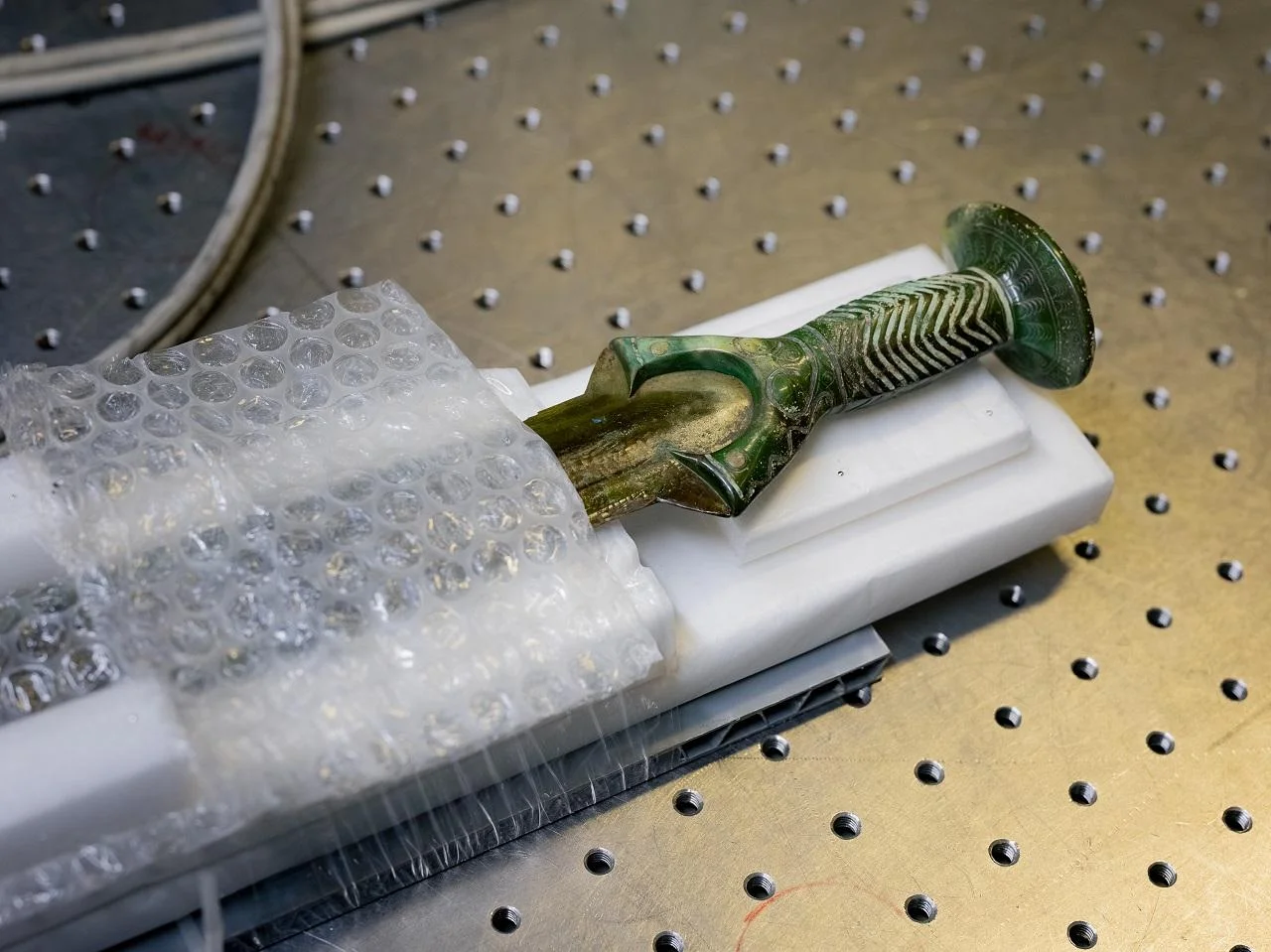
In 2023, archaeologists excavating a grave in Nördlingen, in the region of Swabia, uncovered a remarkably well-preserved bronze sword dating to the Middle Bronze Age, more than 3,400 years ago. The weapon belongs to the rare group of octagonal swords known primarily from southern Germany. Following the discovery, the Bavarian State Office for the Preservation of Monuments commissioned a detailed scientific investigation in Berlin to understand how the sword was manufactured and decorated.
Researchers relied entirely on non-destructive analytical methods. At the Helmholtz Zentrum Berlin, specialists conducted high-resolution computed tomography and X-ray diffraction. Additional analysis took place at BESSY II, where scientists from the Federal Institute for Materials Research and Testing used X-ray fluorescence spectroscopy at a dedicated beamline. Together, these techniques allowed the team to study the sword’s internal structure, chemical composition, and residual stresses without removing any material.
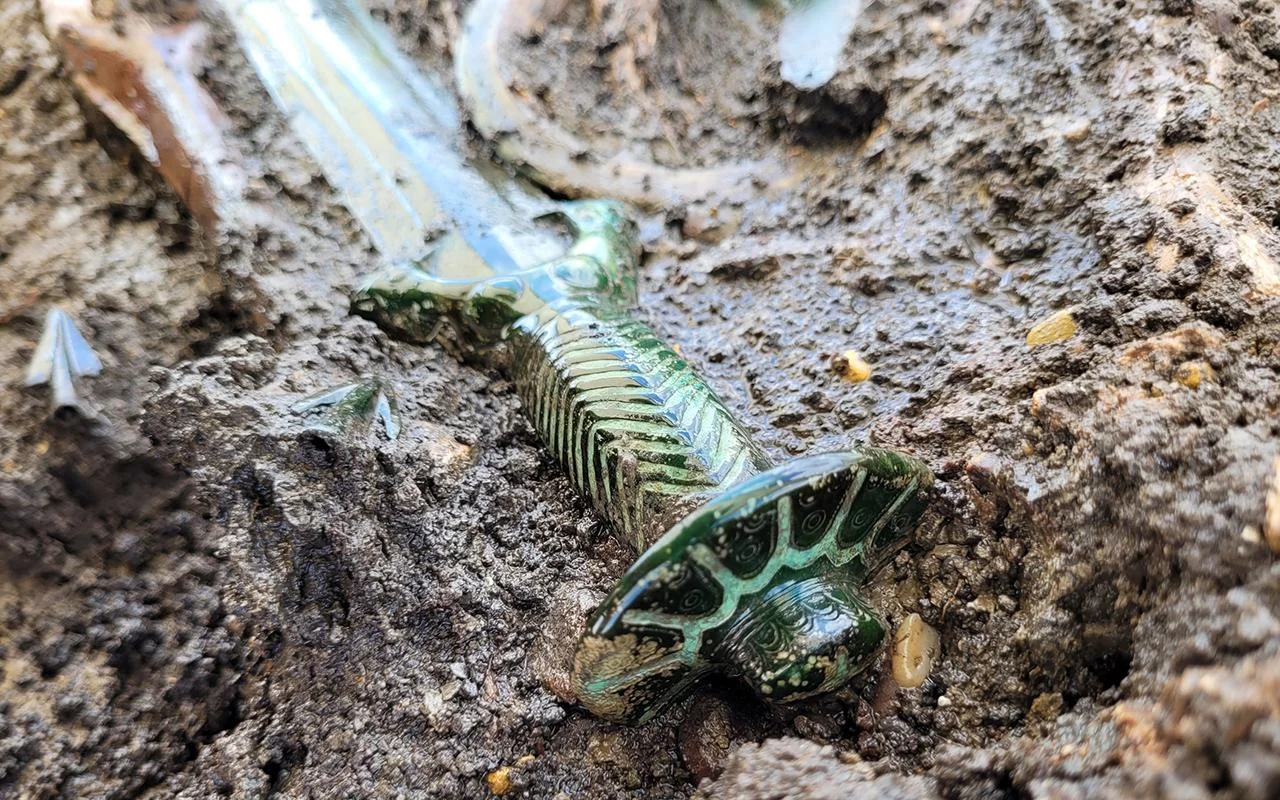
The sword’s exceptional condition justified such close examination. Sections of the blade still show a metallic sheen, and the cutting edge remains nearly sharp. The pommel and pommel plate are decorated with deep, precisely arranged geometric grooves, prompting questions about how the weapon was assembled and how the decoration was applied.
Computed tomography revealed that the blade extends into the hilt as a tang, which was clamped in place and secured with rivets. The three-dimensional scans reached a resolution high enough to show subtle tool marks and variations in material density, offering insights into shaping and finishing techniques used by Bronze Age metalworkers.
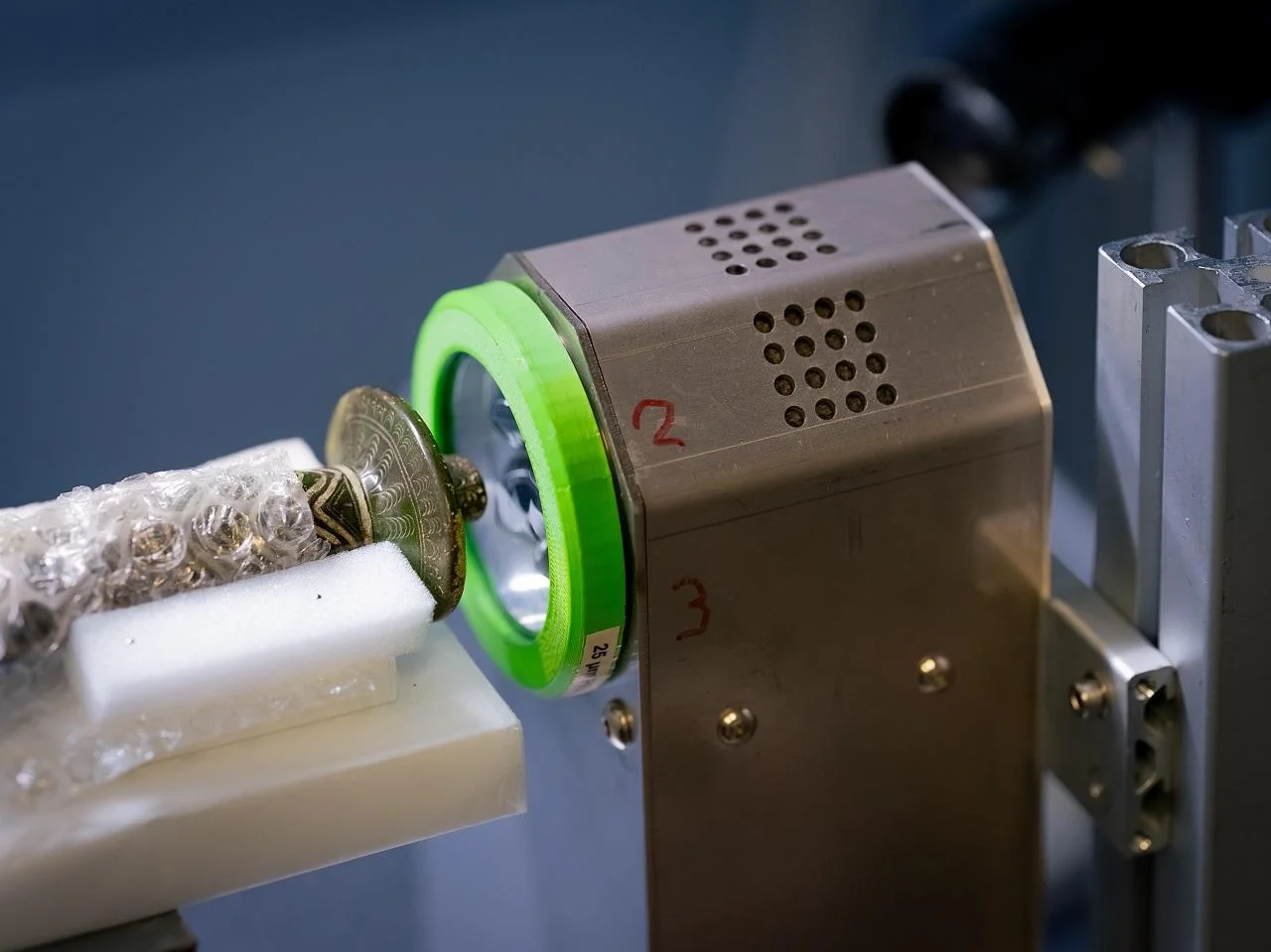
The grooves on the pommel appeared to contain an inlaid material. While tin was initially suspected because of its softness, X-ray fluorescence analysis showed that the inlays consist of copper wires joined together. Only small traces of tin and minor amounts of lead were detected, likely originating from the bronze alloy itself rather than the decorative elements.
Using copper for inlay required considerable precision. Similar wire inlays are known from other Bronze Age objects, but they reflect advanced craftsmanship. To heighten visual contrast between the reddish copper and the golden bronze surface, researchers suggest that the sword may have undergone intentional chemical darkening, possibly through controlled patination.
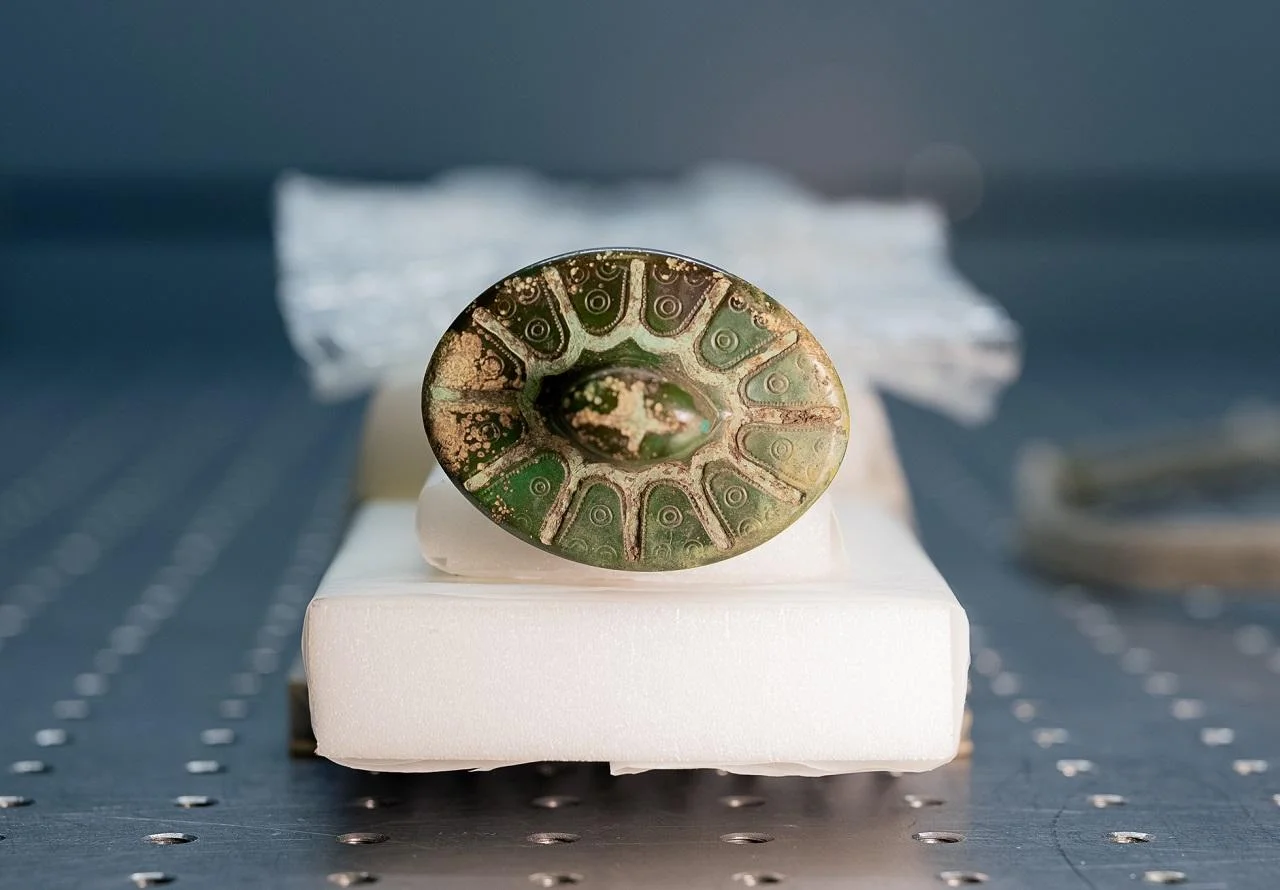
Additional tests examined residual stresses locked into the metal’s crystalline structure. Processes such as casting, heating, hammering, forging, and quenching leave distinctive stress patterns. By mapping these, the team reconstructed parts of the production sequence, including forging and final finishing stages.
Analysis of the data is ongoing, but early results point to southern Germany as the sword’s most likely place of manufacture—one of the main distribution centers for octagonal swords during the Bronze Age. Researchers hope further study will narrow the origin to a specific workshop. Through advanced imaging and spectroscopy, the Nördlingen sword now provides rare technical insight into metalworking expertise in the second millennium BCE.