Strange Metal From Beyond Earth Found in Ancient Iberian Treasure
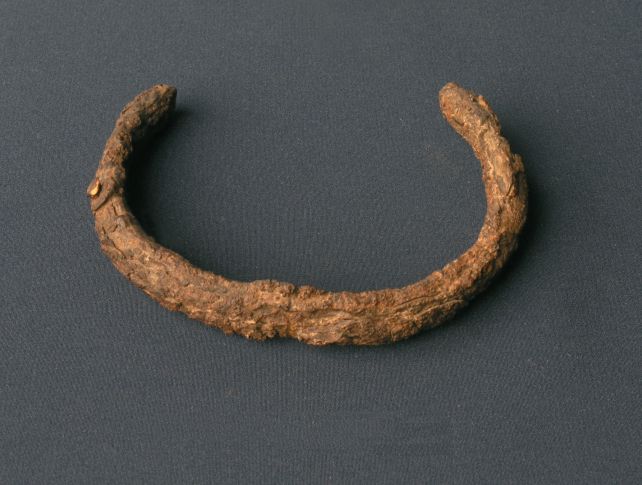
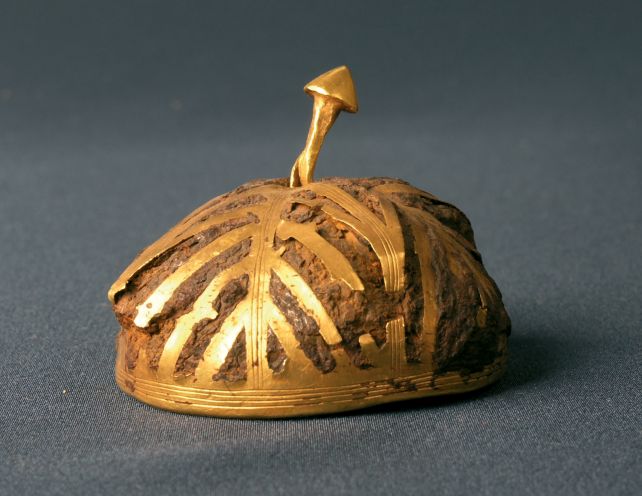
Among a dazzling collection of golden artifacts from the Iberian Bronze Age, two unassuming, heavily corroded objects may be the most extraordinary of all. A plain bracelet and a rusted hollow hemisphere decorated with gold were not forged from metal mined on Earth, researchers say, but from iron that fell from the sky in the form of meteorites.
The discovery was led by Salvador Rovira-Llorens, former head of conservation at the National Archaeological Museum of Spain, and published in 2024. The findings suggest that metalworking knowledge in Iberia more than 3,000 years ago was significantly more advanced than previously believed.
The Treasure of Villena mystery
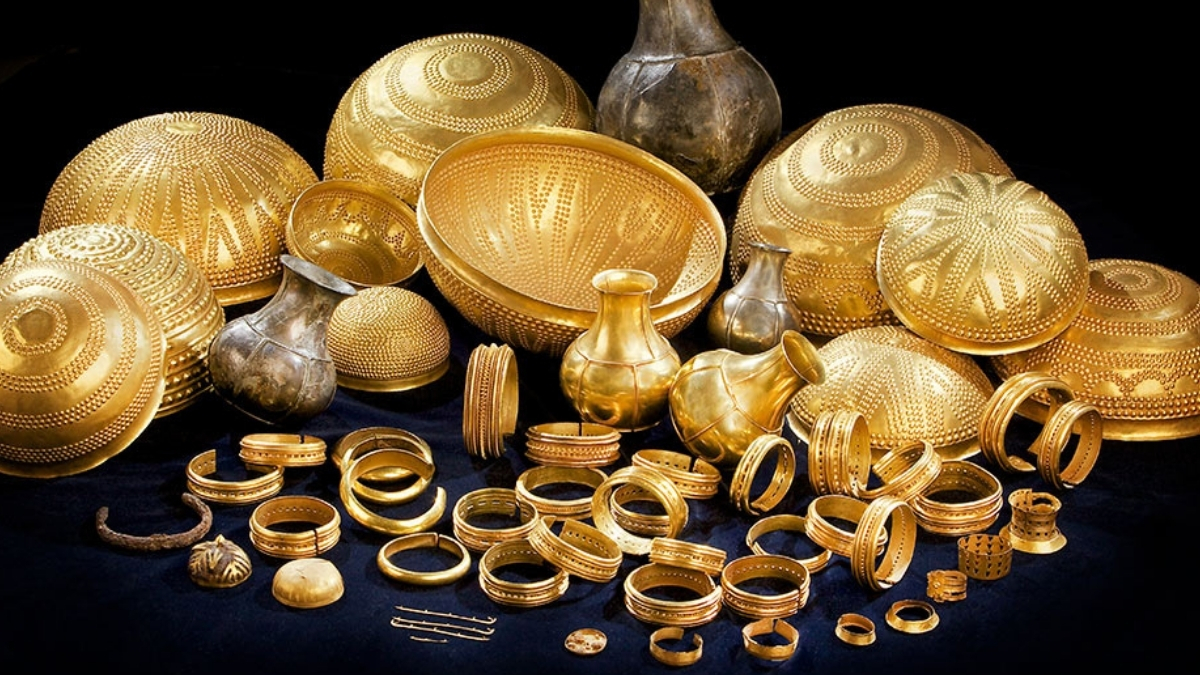
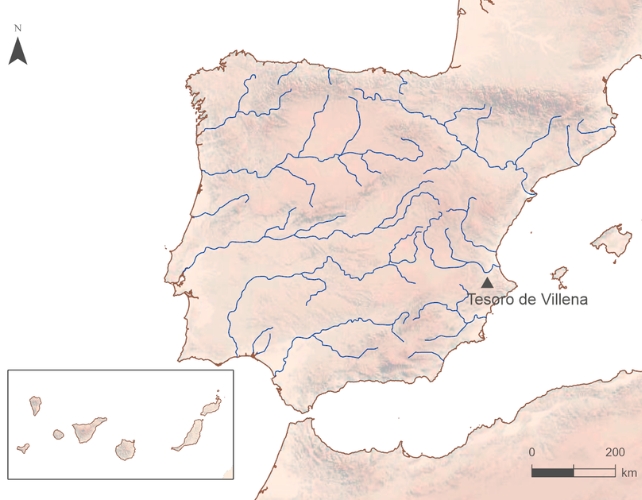
The objects are part of the Treasure of Villena, a cache of 66 artifacts—mostly gold—discovered in 1963 in what is now Alicante, Spain. The hoard is widely regarded as one of the most important examples of Bronze Age goldsmithing in both the Iberian Peninsula and Europe as a whole.
Dating the collection, however, has long posed a challenge. Two items stand out: a small hollow hemisphere, thought to be part of a scepter or sword hilt, and a torc-like bracelet. Both display a distinctly “ferrous” appearance, suggesting they are made of iron.
This is puzzling because the Iron Age in the Iberian Peninsula did not begin until around 850 BCE, while the gold objects in the treasure have been dated to between roughly 1500 and 1200 BCE.
Iron from the heavens
Iron mined from Earth is not the only source of workable iron. Across the world, a small number of pre–Iron Age artifacts have been identified as being made from meteoritic iron—material formed in space and delivered to Earth by falling meteorites.
The most famous example is the meteoritic iron dagger of Tutankhamun, but other highly prized Bronze Age weapons and ornaments made from this material are also known.
Meteoritic iron can be distinguished from terrestrial iron by its high nickel content. With permission from the Municipal Archaeological Museum of Villena, which houses the collection, researchers carefully sampled the two artifacts and analyzed them using mass spectrometry.
Despite extensive corrosion—which can alter an object’s elemental composition—the results strongly indicate that both the bracelet and the hemisphere were made from meteoritic iron.
A solution to a long-standing puzzle
This discovery resolves the long-standing chronological problem. Rather than being later intrusions from the Iron Age, the two objects likely date to the same period as the rest of the treasure, around 1400–1200 BCE.
“The available data suggest that the cap and bracelet from the Treasure of Villena would currently be the first two pieces attributable to meteoritic iron in the Iberian Peninsula,” the researchers write, “which is compatible with a Late Bronze Age chronology, prior to the widespread production of terrestrial iron.”
Because the artifacts are so badly corroded, the authors note that the conclusions are not yet definitive. They recommend applying newer, non-invasive analytical techniques to obtain more detailed data and further confirm the findings.
The study was published in the journal Trabajos de Prehistoria.