Oldest Known Rock Art, Dated to 67,800 Years Ago, Discovered in Sulawesi Cave
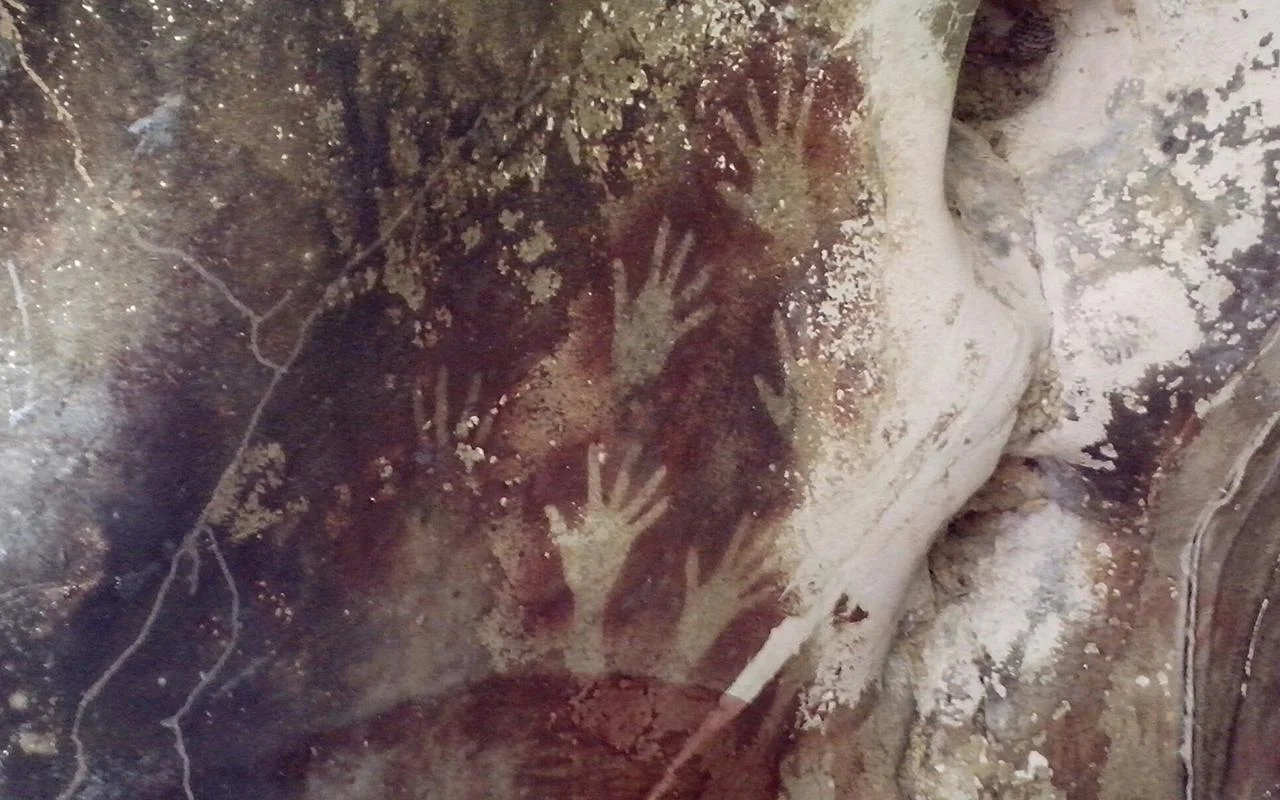
A faint hand stencil preserved on a limestone wall in Sulawesi, Indonesia, has been dated to at least 67,800 years ago, making it the oldest confirmed example of rock art in the world. The discovery pushes the origins of symbolic human expression further back in time than any previously verified cave art.
The hand outline was found inside Liang Metanduno cave on Muna Island. Although the cave is accessible to tourists today, many of its earliest images remained concealed beneath later layers of painting. Researchers identified the ancient stencil by focusing on mineral deposits that formed naturally over the artwork long after it was created.
Dating ancient creativity
Scientists analyzed calcium carbonate formations—often called “cave popcorn”—that grew on top of the hand stencil. Because these deposits formed after the pigment was applied, dating them provides a minimum age for the image beneath. Using laser ablation uranium-series dating, the team determined that the mineral layer formed at least 67,800 years ago, with a margin of error of about 3,800 years.
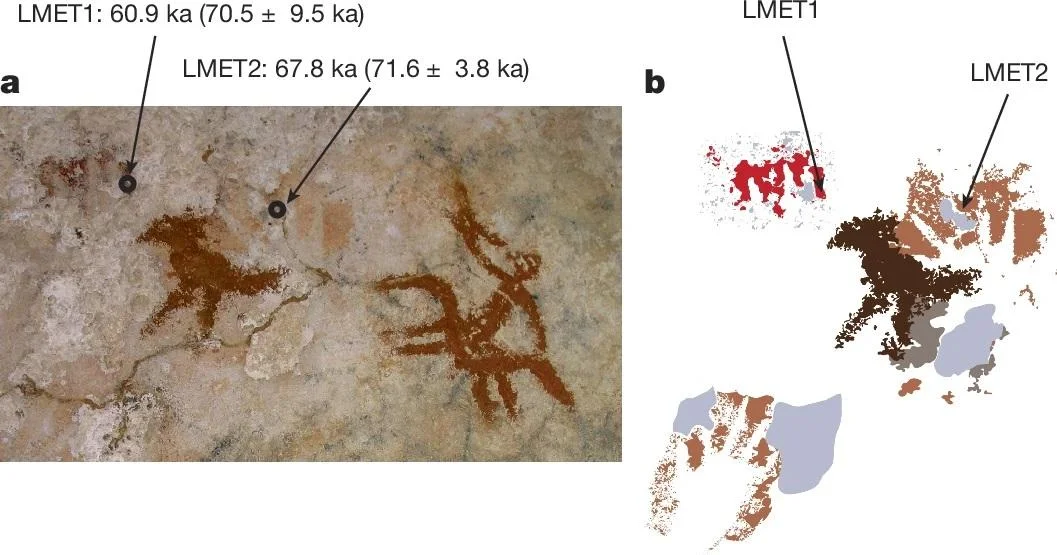
This date exceeds previous records from Sulawesi by more than 16,000 years and surpasses a well-known hand stencil from Spain dated to roughly 66,700 years ago, which some researchers associate with Neanderthals.
Technique and long-term use
The stencil measures approximately 14 by 10 centimeters and displays a distinctive feature seen only in Sulawesi examples: narrowed finger shapes. This suggests that the artist deliberately placed a hand against the wall and sprayed pigment—likely ochre mixed with water—by blowing it from the mouth. The method produces sharp outlines and indicates intentional planning rather than a spontaneous mark.
Nearby walls contain younger hand stencils. One darker example located just 11 centimeters away has been dated to no earlier than 32,800 years ago. This contrast demonstrates repeated use of the same cave over a span of at least 35,000 years, offering a rare, continuous record of human activity at a single site.
Implications for human migration
The discovery carries important implications for early human movement. Sulawesi lies between the prehistoric landmasses of Sunda and Sahul. While lower Ice Age sea levels connected parts of Southeast Asia, deep ocean channels remained. Evidence of humans on Sulawesi before 65,000 years ago supports the idea of an early northern migration route toward New Guinea and Australia, aligning with archaeological dates from northern Australia approaching 65,000 years.
Researchers attribute the artwork to Homo sapiens, based on the technical execution and prolonged use of the site. However, other human groups such as Denisovans lived in parts of Asia during this period, and some debate remains over whether finger shapes reflect artistic choice or movement during painting. Despite these discussions, the dating results themselves are considered robust.
A broader artistic tradition
Sulawesi was already known for early figurative cave art, including a scene depicting a human figure interacting with a wild pig dated to about 51,200 years ago. Together with the newly dated hand stencil, these discoveries reveal a long and continuous tradition of symbolic behavior spanning tens of thousands of years.
The findings strengthen evidence for an early human presence in island Southeast Asia and underscore Sulawesi’s central role in the development of prehistoric art. The 67,800-year-old hand stencil provides firm chronological proof that complex cultural practices emerged in the region far earlier than previously confirmed, refining timelines for early human migration toward New Guinea and Australia.