Lioness Head from the Ritual Bed of Tutankhamun (JE 62011)
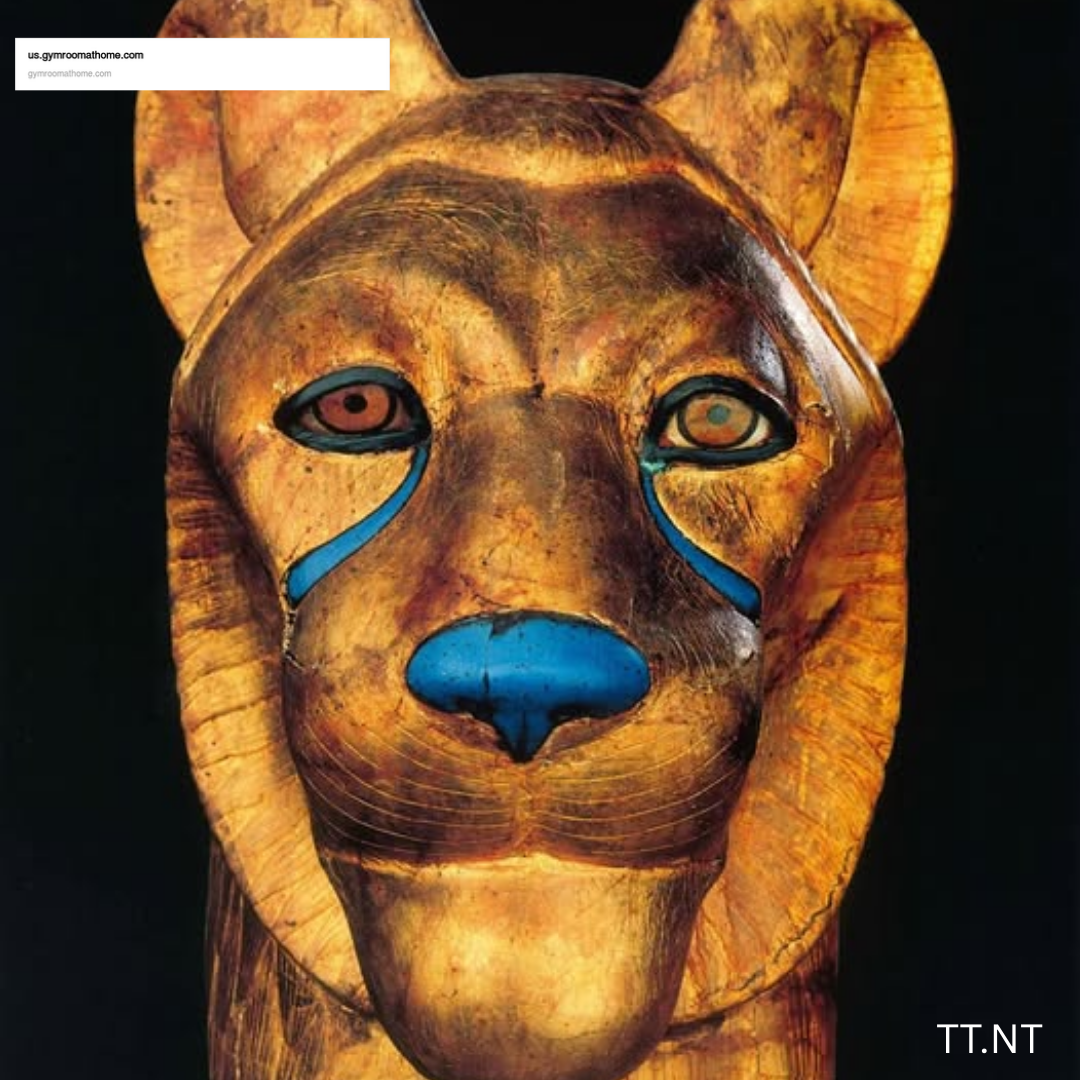
Lioness Head from the Ritual Bed of Tutankhamun (JE 62011)
This striking lioness head once adorned one of the ritual beds discovered in the tomb of Tutankhamun (reigned 1336–1327 BCE) during Egypt’s 18th Dynasty. Identified with the goddess Mehyt, the lioness embodies protection, power, and divine guardianship.
Carved from solid wood, the head was carefully coated with gesso and then gilded, creating a luminous golden surface appropriate for royal funerary equipment. The craftsmanship is exceptionally refined. Bright blue glass inlays form the nose and tear markings, while darker glass outlines the eye frames.
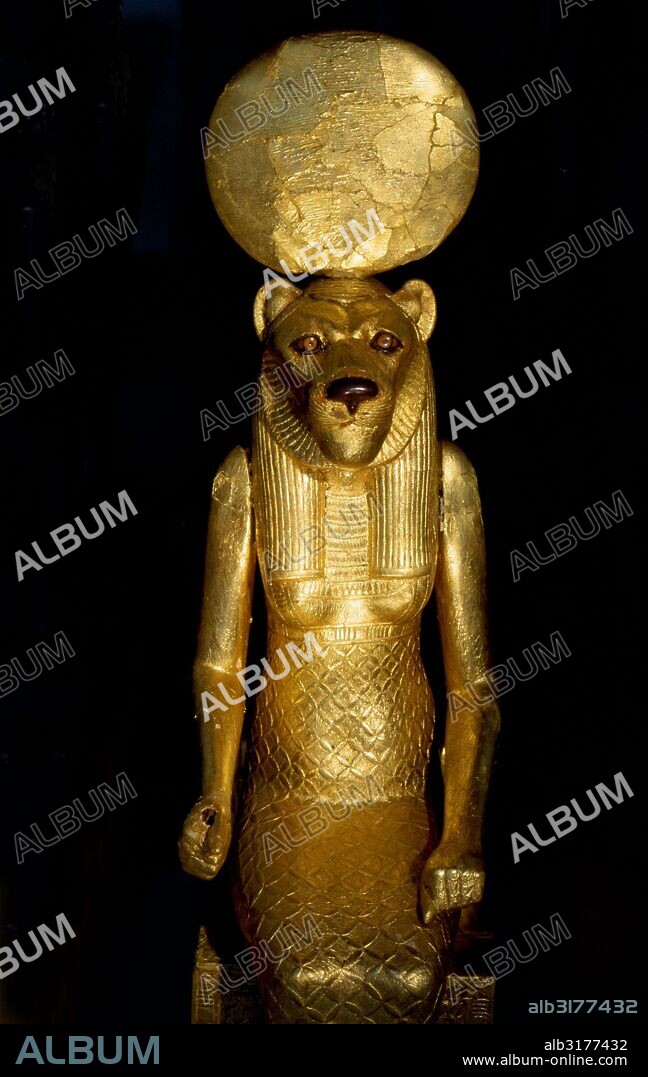
The eyes themselves are particularly remarkable. Made of translucent crystal, they achieve lifelike depth through painted details placed behind the crystal surface: brown irises, black pupils, and subtle red accents at the corners. The result is a vivid gaze that appears almost animate — a hallmark of New Kingdom artistry.
The ritual beds found in Tutankhamun’s tomb were symbolic objects linked to rebirth and transformation in the afterlife. The presence of the lioness deity Mehyt would have reinforced protective forces surrounding the young king on his journey beyond death.
Cataloged as JE 62011, this extraordinary artifact is now housed in the Grand Egyptian Museum, where it stands as a testament to the technical mastery and spiritual symbolism of ancient Egyptian craftsmanship.